

APPL Pickleball League: How Arizona Built a Thriving Statewide Model
In a sport that’s growing as fast as pickleball, structure often struggles to keep up with demand. Courts fill. Communities form. But consistent, organized play? That’s a harder task to scale.
That’s where the Arizona Pickleball Players League (APPL) has set the standard.
Across Arizona, thousands of players aren’t just showing up for open play. They’re part of something bigger: a team, a season, and a shared experience that feels much closer to traditional league sports than casual rec play. And it’s working.
Here’s how the APPL pickleball league built one of the most successful statewide pickleball league models in the country—and why other states are starting to take notice.
A Pickleball League That Feels Like a League
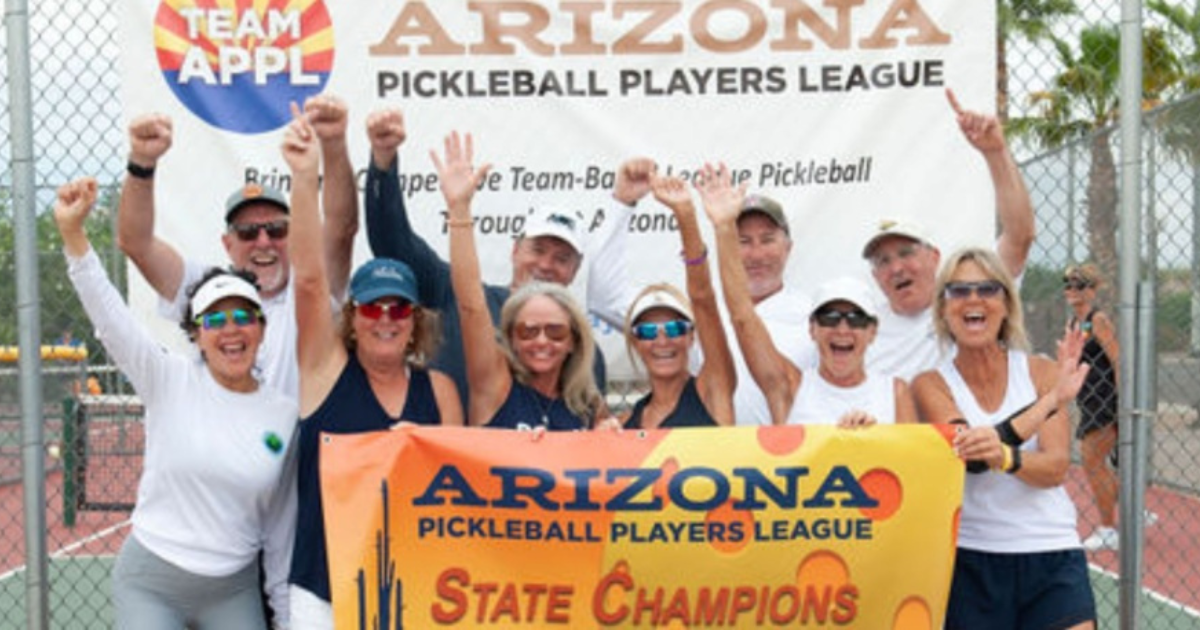
At its core, APPL solves one of pickleball’s biggest challenges: turning pickup play into something more consistent and meaningful.
Instead of one-off games, players join teams. Instead of random matchups, there’s a schedule. And instead of loosely tracked skill levels, there’s a system designed to keep competition fair.
It’s simple in concept, but powerful in execution.
APPL operates across multiple regions in Arizona—from the Phoenix metro area to Tucson and beyond—giving players a local feel with statewide structure. The result is a league that feels both community-driven and highly organized—a balance that’s not easy to strike.
League Structure: Built to Scale, Designed for Community
What makes APPL stand out isn’t just its size—it’s how it’s built.
The league is divided into regional divisions, allowing it to grow without losing its local identity. Players compete close to home but within a larger, connected system that culminates in postseason play.
It’s a model that mirrors traditional sports leagues: local regular seasons followed by championship opportunities that bring the broader community together.
Just as importantly, the league is run largely by volunteers—captains, coordinators, and organizers who are invested in the experience. That shows up in everything from communication to match-day energy.
Team Format: Where Pickleball Becomes a Team Sport
Pickleball is typically played as doubles, but APPL turns it into something bigger—something that feels much closer to a true team sport.
Each roster is made up of roughly 10 to 14 players, with six competing on any given match day. Those players are split into three doubles lineups, each contributing to the overall team score.
What really elevates it is how thoughtfully APPL layers in skill level, age, and structure.
Teams compete in organized flights defined by gender, age group, and skill level, ranging from 2.5 to 5.0, with divisions for Men’s, Women’s, and Mixed play. Within those, players are grouped into 18+, 50+, and 65+ brackets, helping ensure matchups feel both competitive and comfortable.
Each region—West Valley, East Valley, Southern Arizona, and Casa Grande—runs its own set of flights, with top teams advancing to the State Championships at the end of the winter season.
Across an 8 to 10 match schedule, teams alternate between home and away venues, traveling within their region and connecting with new courts and communities along the way.
And that’s where the magic really happens.
You’re not just playing for your own result—you’re playing for your team. Wins and losses carry a little more weight, and every point starts to matter just a bit more. At the same time, the larger roster gives more players a chance to be involved.
Scheduling: Consistency Without Burnout
One of APPL’s biggest strengths is how it structures its seasons.
The primary winter season runs from January through March, with a clear rhythm of weekly matches and a defined endpoint in the State Championships. There’s also a summer league in cooler parts of the state, keeping play going without forcing year-round intensity.
Most teams play between eight and ten matches per season—enough to build momentum without becoming overwhelming.
It’s a small detail, but an important one. The schedule keeps players engaged without turning the league into a full-time commitment.
Rating System: Keeping Competition Honest
Skill gaps can make or break a league. Too uneven, and games stop being fun.
APPL addresses this with its own rating system, the APPL Index. This follows a pickleball skill rating algorithm that begins with self-assessment and evolves based on match results.
Indexes are adjusted at the end of the season, making the system localized, responsive, and built specifically for league play.
The goal isn’t perfection—it’s balance. And, it works.
Why the APPL Pickleball League Works
Plenty of leagues have structure. Plenty have community. APPL combines both—and that’s where it separates itself.
It works because:
It prioritizes teams. People come back for people. Team dynamics create accountability and connection.
It creates rhythm. Weekly matches and defined seasons give players something to commit to.
It keeps things fair. A responsive rating system avoids lopsided play.
It stays accessible. Multiple divisions, age brackets, and regions make it easy to join.
Most importantly, it doesn’t lose sight of why people play in the first place.
Competition matters—but so does community.
What Other States Can Learn from APPL
APPL isn’t successful because it’s in Arizona. It’s successful because the model works.
And it’s a model that can travel.
For states looking to build stronger pickleball communities, the blueprint is clear:
Start regional, then connect those regions into something larger.
Lean into team-based formats that give players a reason to stay.
Build a rating system based on real match play, not just self-perception.
Keep scheduling consistent and manageable.
And don’t underestimate the role of volunteers in shaping the culture.
Pickleball doesn’t need to reinvent organized sports—it just needs to adapt what already works.
APPL has done exactly that.
And in the process, it’s shown that pickleball can be structured, competitive, and still deeply social—all at the same time.
