

Does Pickleball Work as a Spectator Sport? What TV, Movies, and Streaming Reveal About the Sport’s Future
Pickleball doesn’t need help attracting players anymore. Courts are packed, tournaments are waitlisted, and new facilities seem to open every month like new Chipotle locations. But attention from participants and attention from viewers are two very different things—and right now, pickleball is trying to figure out if it belongs on TV and in streaming feeds the same way it belongs on the court.
But the real question isn’t whether pickleball is visible. It’s whether people who don’t already play the sport are actually sticking around to watch it. That’s the difference between a fad and a future.
Pickleball on TV: Is Anyone Actually Watching?
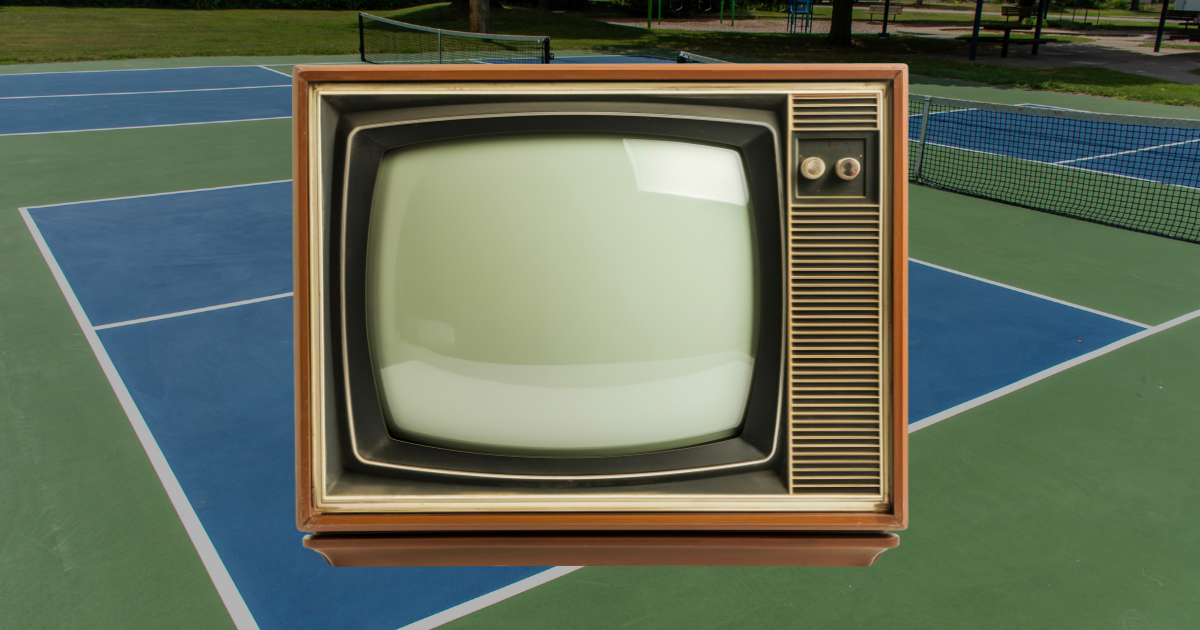
Professional pickleball is already testing its place in televised sports. The PPA Tour and APP stream regularly, including appearances on major sports networks like ESPN. Production quality has improved, access exists, and the sport clearly wants legitimacy within the broader sports ecosystem.
But visibility does not equal viewership, and that gap is where pickleball is now struggling to convert curiosity into loyalty.
A sport “works” on television when casual viewers—people who don’t already play—stick around longer than a few minutes. That hasn’t consistently happened yet with pickleball. The obstacle is not distribution, its connection. For many non-players, televised pickleball feels visually restrained and emotionally flat. The court is compact, rallies can look repetitive at a distance, and scoring changes rarely feel consequential unless you’re already familiar with the competitive landscape.
Right now, pickleball broadcasts tend to inherit the presentation style of legacy sports like tennis and golf. That approach brings polish, but it also flattens personality and underplays drama. A neutral tone might signal professionalism, but it doesn’t build fandom.
What Makes a Sport Watchable on TV (And Where Pickleball Falls Short)
Spectator sports don’t succeed simply because skill is involved—if that were true, practice would be more popular than playoffs. They succeed because outcomes feel expensive. Viewers want to sense risk before they understand rules.
The most successful spectator sports share a few core traits:
The stakes feel clear without explanation.
Momentum shifts are obvious and emotionally charge the match.
Players show frustration, urgency, or confidence in ways that viewers can instantly read.
Mistakes feel painful. Wins feel earned.
The audience knows who to root for—or against.
Right now, pickleball struggles most with the last point. Player personalities are muted. Rivalries rarely carry from one event to the next. Losses fade quickly instead of reshaping storylines.
Why Reality TV Might Succeed Where Broadcast Hasn’t
While professional tours experiment with traditional sports coverage, pickleball has found a surprising ally: reality television.
In January 2026, Pickleball Kingdom will debut Pickleball Kingdom Paddle Battle, the first competition-based reality series that moves away from rankings and toward real-world consequences.
Sixteen players will compete for four life-shifting outcomes:
Two winners receive professional pickleball contracts.
Two are awarded Pickleball Kingdom franchise locations.
Viewers vote on part of the outcome.
That framing matters more than any amount of camera quality, slow-motion replays, or dramatic lighting. Reality television works when the audience understands what winning and losing actually mean to participants. Paddle Battle is built on that foundation. Instead of focusing solely on athletic execution, the series centers on personal history, rivalries, business pressure, emotional risk, and future-altering outcomes.
This is the biggest pivot pickleball has made into entertainment because it finally speaks the language viewers already understand: people don’t emotionally attach to games, they attach to people.
Pickleball Movies and Hollywood’s Role in Making the Sport Watchable
While broadcast television tries to make pickleball look like a legacy sport, movies have taken a different approach: they use pickleball as an emotional device rather than a competitive showcase.
A wave of pickleball-centered movies is in development or release, including:
The Dink, produced by Ben Stiller and starring Jake Johnson, Chloe Fineman, Ed Harris, and Stiller himself, about an aging tennis pro who reluctantly pivots into pickleball to save a dying club. The sport becomes a story about relevance, change, and ego.
Pickleheads, following a former ping-pong player who attempts redemption through pickleball after a humiliating public downfall.
Dreambreaker, a documentary-style look at pickleball’s economic surge, exploring celebrity investment, corporate influence, and the financial engine behind the game.
A Pickleball Christmas, blending romance and competition.
What stands out isn’t that these movies feature pickleball. It’s that Hollywood quietly understands something most broadcasts still don’t.
In these films, pickleball functions as a metaphor for transition, failure, redemption, ambition, community collapse, and generational tension, not just as a game being played onscreen.
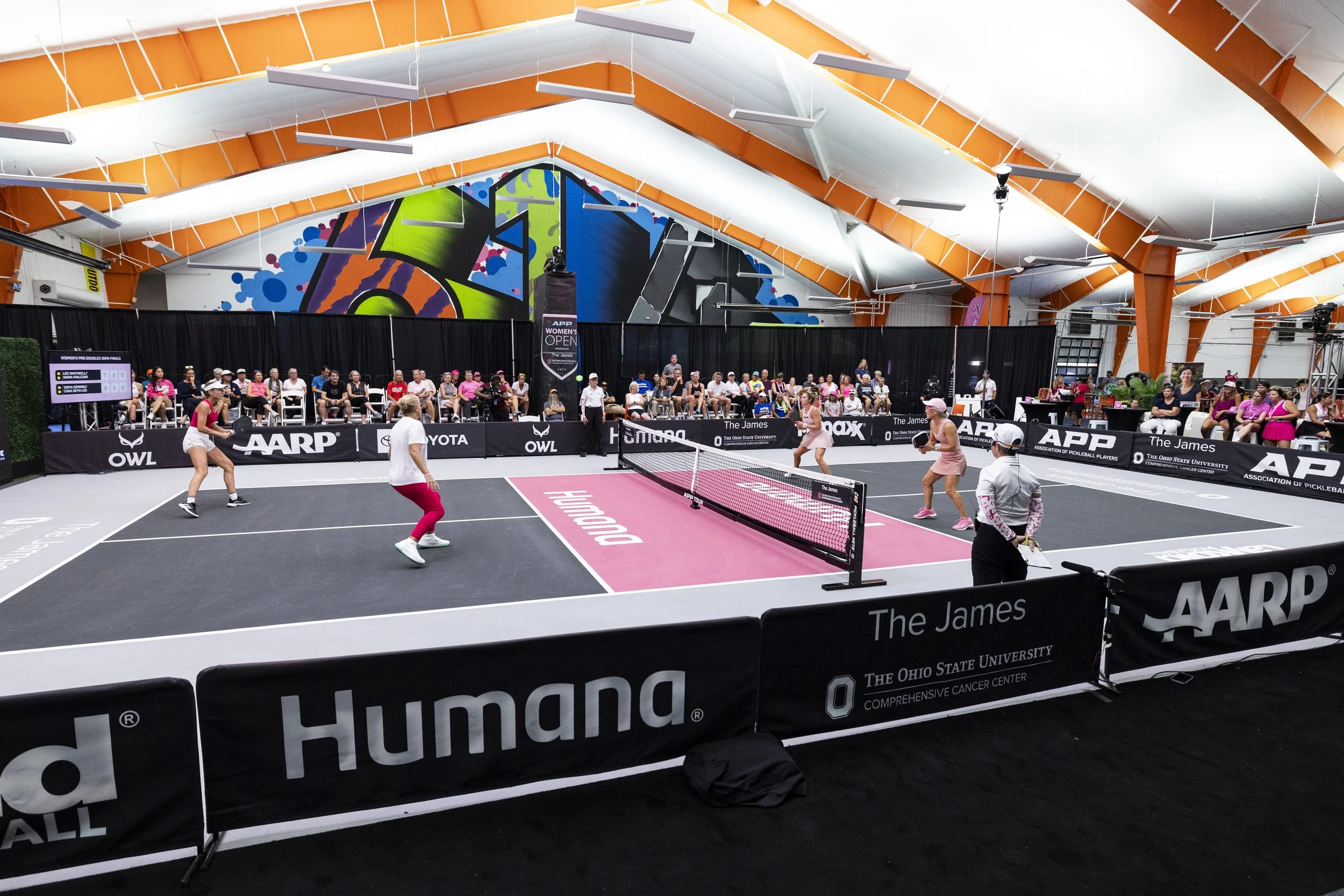
Photo by The APP
Pickleball on Social Media: Where the Sport Actually Wins Viewers
If you want proof that pickleball can entertain, look at social media.
Short-form video thrives because it highlights reactions, trash talk, behind-the-scenes moments, unpredictable points, fan interaction, and personality.
And that’s why pickleball content spreads best when players are loud, emotional, unpredictable, and human. The same energy that feels “unprofessional” on broadcast is exactly what builds loyalty online.
Can Pickleball Survive as Entertainment—Not Just a Participation Sport?
Pickleball’s success as a game doesn’t automatically guarantee success as media. A sport can dominate parks and still fail on television, and can grow culturally without ever building a true spectator base.
Pickleball’s future as entertainment depends on one decision: Will it continue trying to look like a polished legacy sport or will it let itself become emotionally visible?
Being “nice” is not a media strategy. Emotion, risk, and rivalry are not liabilities; they are fuel.
So… Does Pickleball Work as a Spectator Sport?
Pickleball shines in films, short-form content, and reality-style formats where human narrative comes first. As a traditional broadcast product, it is still evolving. It hasn’t consistently translated its real-world intensity into must-watch television.
Pickleball has already proven it belongs in culture.
If it leans into personality, consequence, and story, it can outgrow the novelty phase. If it clings to safe presentation and borrowed broadcasting models, it will remain easy to play and easy to ignore.
Pickleball has earned attention. Now it has to earn attachment—and that’s the harder job.
