

Green Flags Only: How to Find a Pickleball Partner Who Helps You Level Up
Who you play with matters almost as much as how you play.
We spend a lot of time talking about toxic partners in pickleball. The sighers. The eye-rollers. The unsolicited mid-point coaches. The ones who make a missed drop feel like a moral failure.
So let’s flip it.
This is about green flags. Not just “nice people,” but growth-minded partners. The kind who let you fail safely, reset quickly, and actually get better over time. Long-term improvement beats short-term ego every time.
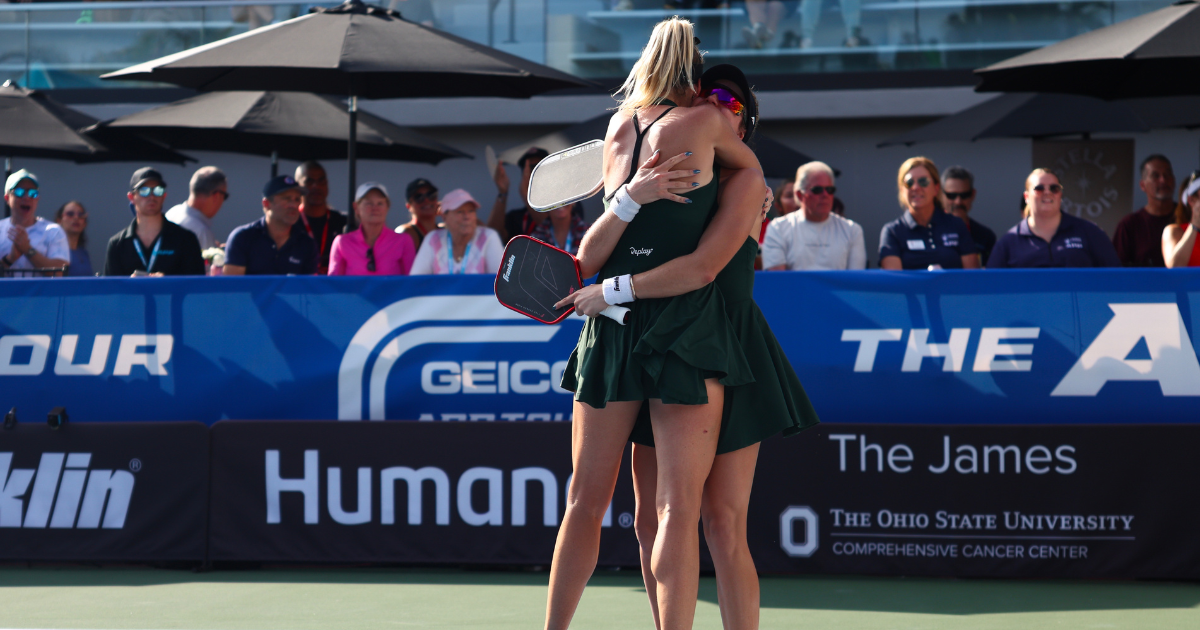
Photo by The APP
If you’re serious about leveling up, this is what the right partner actually looks like.
Green Flag #1: They Make It Safe to Fail
If you can’t miss a shot without feeling judged, you’re not going to improve. Period.
A green-flag partner does not sigh when you try a new third shot and dump it into the net. They don’t mutter. They don’t go quiet. They don’t immediately “fix” you.
Instead, you get:
A paddle tap
A “good idea”
A quick “keep going”
That matters more than people realize. When a partner reacts negatively to mistakes, your brain shifts from playing to protecting. You stop experimenting. You play smaller. You avoid risk. And suddenly you’re stuck at the same level, wondering why nothing’s clicking.
Growth requires reps. Reps require mistakes. A partner who understands that creates space for development instead of fear.
Bottom line: If you’re scared of your partner’s reaction, that’s not a partnership. That’s pressure.
Green Flag #2: They Know the Difference Between Coaching and Strategizing
This one’s huge.
Mid-game coaching is almost always a problem. Even when it’s “technically right.”
Nothing kills instinct faster than someone telling you what you should’ve done while you’re still processing the last point. It pulls you out of flow, creates doubt, and quietly shifts the dynamic from teammates to teacher/student. No thanks.
A green-flag partner understands timing.
During play, communication stays simple:
“Mine / yours”
“Switch”
“Let’s go”
Maybe a quick agreed-upon cue you both discussed ahead of time.
Between points, during timeouts, or after the game, that’s where strategy lives:
“What are you seeing?”
“Do we want to target differently?”
“Should we reset and slow this down?”
That kind of exchange creates a real feedback loop instead of someone talking at you.
And when they do offer input, it’s framed collaboratively:
“What if we try…”
“I think we’re getting rushed, want to slow it down?”
“I liked that idea, maybe a little more margin next time?”
Same information. Totally different impact.
If someone constantly tells you what you’re doing wrong, it stops feeling like communication and starts feeling like control.
Green Flag #3: You Want the Same Thing
This sounds obvious. It’s not.
A lot of pickleball frustration comes from misaligned goals, not bad play.
Ask yourself:
Are you trying to drill and improve, or just win rec games?
Are you experimenting, or playing safe?
Are you building toward tournaments, or just chasing today’s scoreboard?
There’s no wrong answer. Both partners need to be aligned.
A growth-minded partner is willing to lose a few games while testing new shots, talk about patterns instead of blaming execution, and genuinely say “That didn’t work—let’s learn from it” without turning it into a post-mortem. That focus stays on progress, not protecting egos.
After a loss, the conversation sounds like:
“What kept breaking down?”
“Was that a strategy issue or an execution issue?”
“What do we want to work on next?”
Not:
“If you hadn’t missed that…”
“They kept targeting you…”
“We should’ve won that.”
Shared goals create trust. Trust creates better play. Ego kills both.
Green Flag #4: They Help You Reset Instead of Spiral
Bad points happen. You’re going to miss easy balls. You’re going to have points you want back.
What matters is what happens next.
A green-flag partner doesn’t let one mistake turn into five. They don’t feed frustration. They don’t amplify tension.
They reset the energy:
Paddle tap after a rough miss
A quick smile or joke
“Next point”
“We’re good”
That tiny moment matters. It interrupts the mental spiral before it takes over.
Watch high-level doubles and you’ll see it constantly. Partners increase encouragement when one player is struggling. Not less.
If someone responds to mistakes with silence, sarcasm, or visible annoyance, that tension leaks into every point. Confidence drops. Decisions slow down. Everything tightens.
The right partner keeps the emotional temperature steady. That’s mental toughness showing up in real time.
Green Flag #5: They Trust You (and Act Like a Teammate)
Trust is quiet, but it’s everything.
A green-flag partner:
Trusts your calls
Commits when you say “mine”
Covers behind you when you poach
Has your back when things go sideways
They don’t second-guess every decision or play “just in case you mess up.” That hesitation is contagious.
They also don’t throw you under the bus after losses. Ever.
“We win together, we lose together” isn’t a cliché. It’s how strong teams stay strong.
If someone is quick to explain losses in terms of your mistakes, it usually has more to do with them than the match itself.
Real partners adapt. They adjust. They ask how they can help the team function better.
Why the Right Partner Helps You Improve
Mistakes will always matter—the difference is having a partner who knows how to move on from them with you.
The right partner helps you:
Fail safely
Learn quickly
Reset emotionally
Stay future-focused instead of score-obsessed
And here’s the part people skip: you have to be this partner too.
Encouragement goes both ways. So does patience. So does accountability.
You can’t always control who you play with. But when you can choose, choose the person who helps you grow instead of shrink.
That’s the real green flag.
Because at the end of the day, you might not always be the best player on the court. But you can always be the best partner.
