

Pickle Latino Is What “Growing the Game” Actually Looks Like
If you want to see where pickleball is really heading, stop zooming in on pro drama for five minutes and look at what’s happening on public courts and inside local facilities.
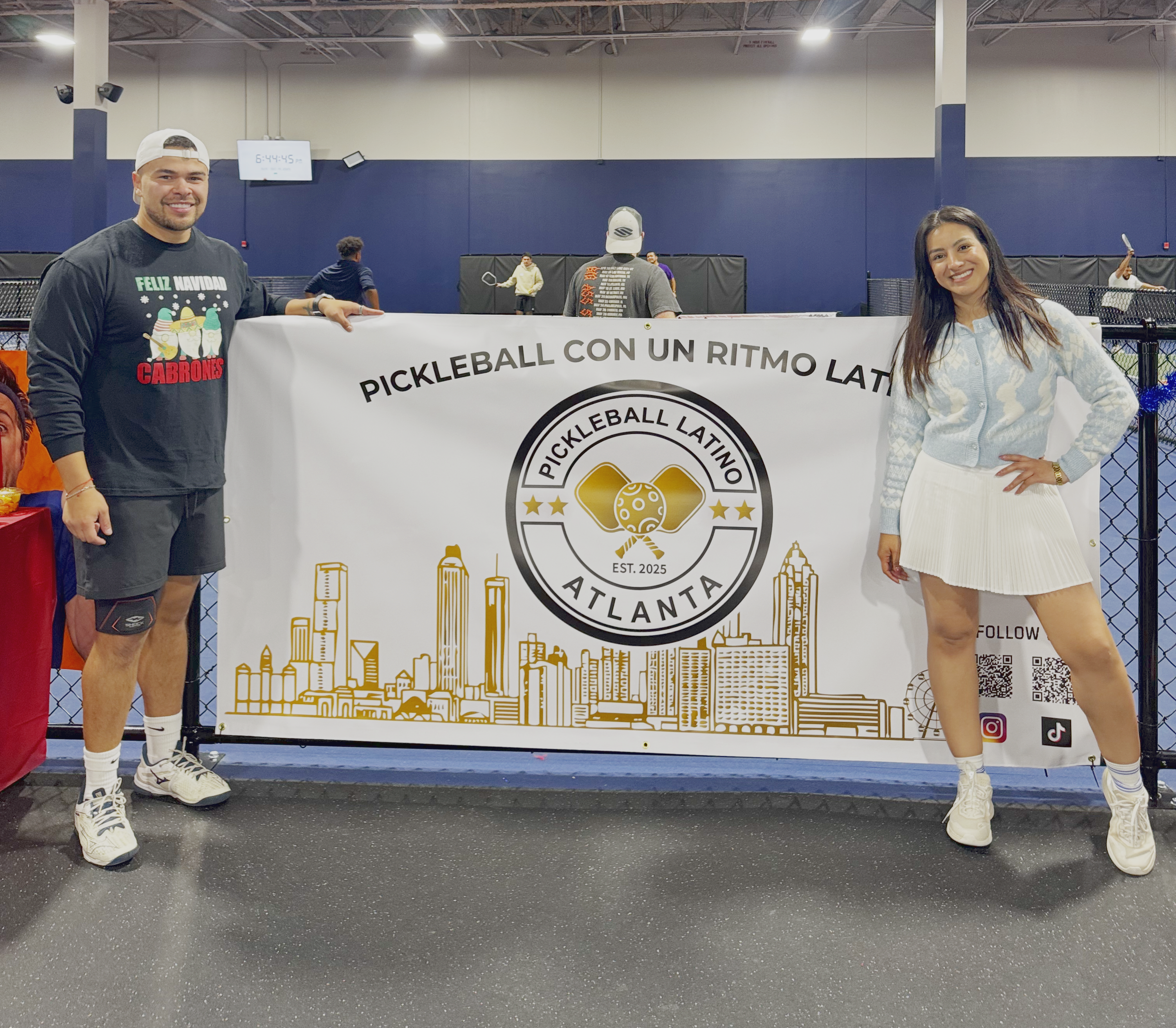
Maria and her husband Jesus at a Pickleball Latino event in Atlanta, GA.
In Georgia, Pickle Latino has grown fast—like “we need a bigger registration cap” fast. It’s not a franchise. It’s not a pro tour activation. It’s a community built by a husband-and-wife team, Maria and Jesus Escobedo, both originally from Mexico and now living in Georgia. They saw a gap, filled it, and people showed up.
A lot of people.
A beginner who built something big
One of my favorite parts of this story: Maria is not coming at this as some lifelong competitive player. She says it plainly:
“I’m a beginner.”
And honestly, that’s the point. The sport doesn’t grow because everyone becomes “advanced.” It grows because beginners feel welcome enough to walk onto the court in the first place—and because someone creates a space where it feels normal to show up.
Pickle Latino is exactly that kind of space.
The “wait… this is real” moment
Maria started Pickle Latino in October. The first event brought 45 people—which is already a great turnout, especially when you’re building from scratch.
Then she ran a second event in November, and it jumped to 73 people. That’s when it hit her:
“That’s when it clicked… and I was like, ‘Oh my gosh, this is crazy.’”
By the third event (moved indoors due to weather), she set the cap at 100… and it still pushed beyond that. She later shared they ended up around 130 people.
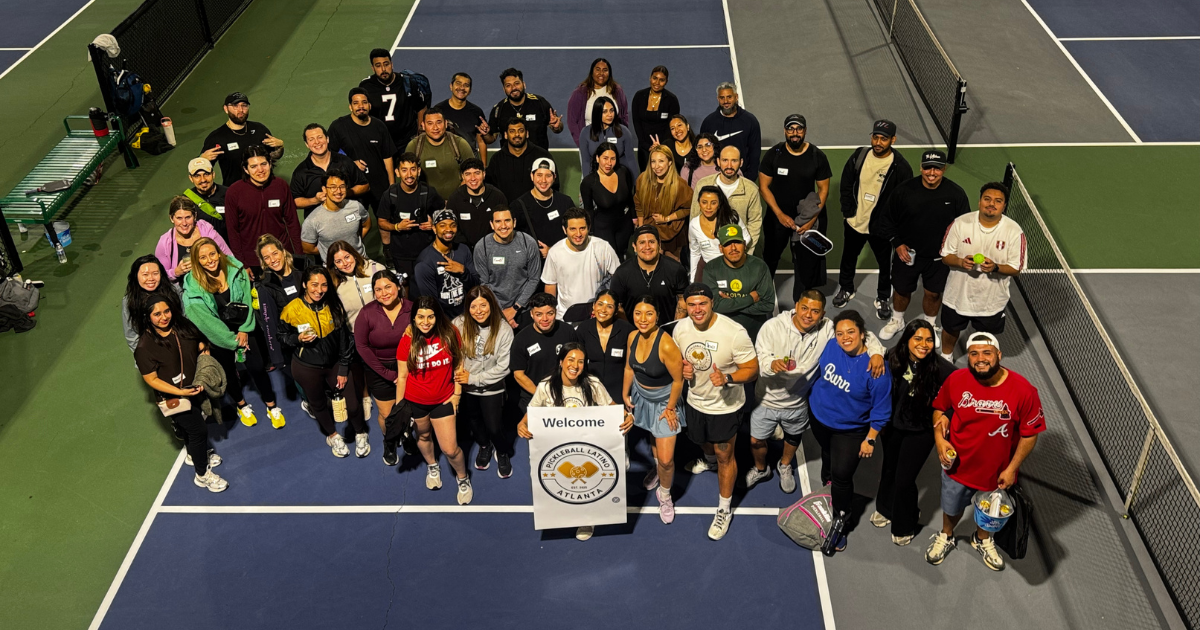
A large turnout at one of the Pickleball Latino events.
Three events. Three months. Real momentum.
Why it’s working: it’s not just pickleball
The formula isn’t complicated. It’s just what people actually want.
Pickle Latino events have included:
Open play (simple, social, easy entry)
Music during play (yes, this matters)
A DJ at the indoor event
Raffles (paddles, bottles, gear, a pickleball bag)
Pizza and community sponsors
Thoughtful extras like fruit and small giveaways that make it feel like a gathering, not a transactional court rental
Maria also understands the “win-win” that facilities should understand: she brings new people into their building, and they get exposure and potential new members. Everyone benefits when it’s done right.
The facility cost issue: some quotes are… not normal
Here’s the part community builders run into fast: pricing.
Maria shared that some facilities have quoted extremely high rates, including one example of $600 per hour. That’s not “standard community programming.” That’s a barrier.
And it’s not even smart business.
Facilities have dead hours. They need programming. They need new customers walking through the door. A community leader who can bring 100+ people into a facility has leverage—especially when even a handful of memberships can outperform the “hourly rate” math.
She put it simply: she’s trying to keep it affordable and doesn’t want to charge players more than around $30 per event. That’s how you keep the door open for more people—and that’s how you grow long-term.
What’s next: food trucks + kids programming
The best part? They’re just getting started.
Maria mentioned future events could include:
A food truck (the “tacos + pickleball” idea is already in motion)
Youth programming, including a potential kids event down the road
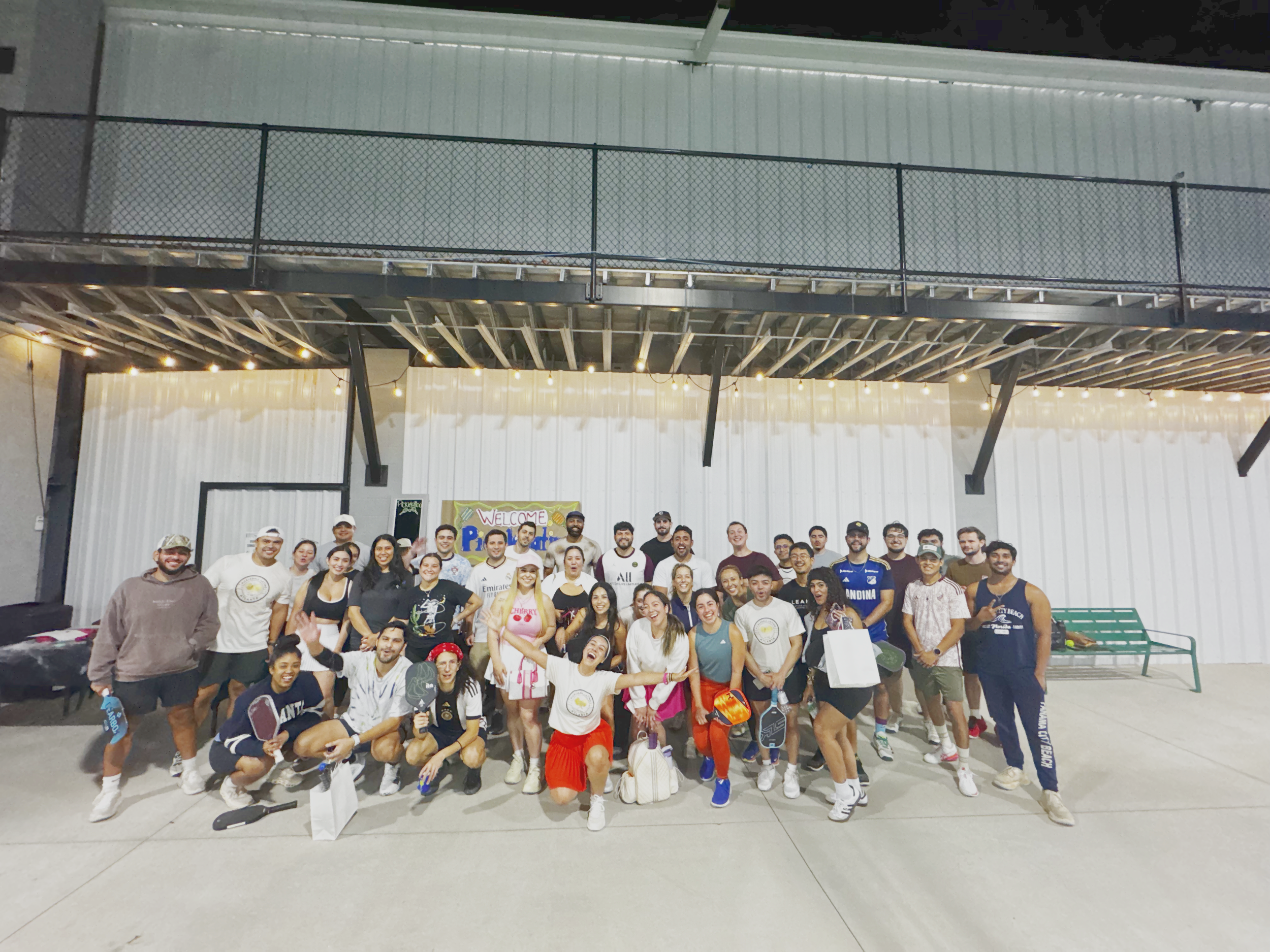
Pickleball Latino experienced huge growth celebrating Latino culture.
This is where things get really interesting, because kids programming isn’t just “cute.” It’s how communities become sustainable. Families show up. Beginners stick. Facilities benefit because hard-to-fill time slots suddenly become valuable.
Why Pickle Latino matters
Pickleball is in a funny phase right now. The top-level conversation can feel loud, gear-obsessed, and weirdly exclusive for a sport that started as a backyard game.
Pickle Latino is the opposite of that.
It’s welcoming. It’s energetic. It’s community-first. It’s run by people who are building something real—not chasing clout. And the growth proves there’s demand for exactly this kind of programming.
Maria and Jesus didn’t wait for the sport to “make space.” They made it themselves—and Georgia showed up.
