

Elongated vs. Widebody vs. Hybrid: Which Paddle Shape Matches Your 2026 Goals?
As paddle engineering has evolved over the last five years, three shapes have emerged as the clear standards: elongated, widebody, and hybrid.
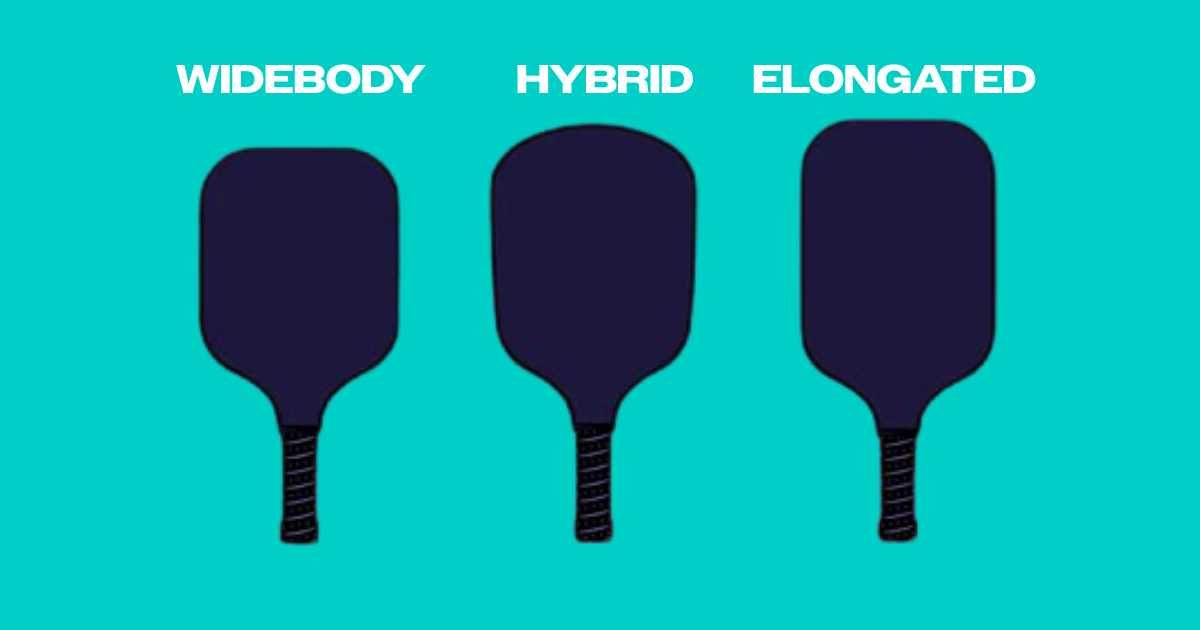
Each has developed a loyal following. Some players swear by the reach of elongated paddles, while others won’t give up the forgiveness of a widebody, and plenty have settled into the balanced feel of hybrid designs.
And it’s not just preference. Pickleball paddle shape influences power, control, stability, and hand speed, which can subtly shape the way you play.
If you’re looking at new gear for 2026, understanding these three profiles is a good place to start.
Elongated: Built for Reach and Power
Elongated paddles are easy to recognize. They’re longer and narrower, typically measuring close to the 17-inch maximum allowed by USA Pickleball.
That extra length gives players a little more reach—something that can make a noticeable difference when stretching for wide dinks or defending hard drives.
But the biggest advantage is power and leverage.
The longer paddle face creates a whip-like effect during swings, helping generate more pace on drives, speed-ups, and overheads. Many aggressive players prefer elongated paddles for this reason.
However, there are trade-offs.
Because the paddle face is narrower, elongated paddles tend to have smaller sweet spots and can feel slightly less stable on off-center hits.
Best for players who:
Like driving the ball from the baseline
Want extra reach at the kitchen
Prefer aggressive offense and speed-ups
Have solid mechanics and consistent contact
If your 2026 goal is adding more firepower to your game, elongated paddles are worth a look.
Widebody: Maximum Forgiveness and Control
Widebody paddles take the opposite approach.
Instead of stretching the paddle vertically, they expand the hitting surface horizontally, creating a larger face and a wider sweet spot.
That extra surface area makes widebody paddles incredibly forgiving, especially on blocks, resets, and defensive shots.
They also tend to feel more stable during hand battles, which is why many control-oriented players like them at the kitchen line.
The trade-off is reach. Because the paddle face is wider, it’s usually a little shorter overall. That means slightly less extension on volleys and overheads.
Still, for many players, the improved consistency more than makes up for it.
Best for players who:
Prioritize control and consistency
Want a larger sweet spot
Play a soft, strategic kitchen game
Value stability in fast hand exchanges
If your 2026 goal is fewer mishits and better touch, widebody paddles are designed for exactly that.
Hybrid: The Best of Both Worlds
Hybrid paddles are the fastest-growing category among pickleball paddle shapes.
As the name suggests, they combine elements of both elongated and widebody designs. They’re typically slightly longer than traditional paddles, but not as narrow as true elongated shapes.
The result is a paddle that offers balanced performance across the board.
You get a bit more reach than a widebody paddle, along with a sweet spot that’s more forgiving than most elongated models. Hybrid paddles often feel comfortable in almost every situation—drives, drops, dinks, and fast exchanges.
That versatility is why many modern paddles are moving toward hybrid shapes.
Best for players who:
Want balanced power and control
Don’t want to specialize in one style
Play both aggressive and soft games
Like paddles that feel versatile across the court
If your 2026 goal is overall improvement without sacrificing versatility, hybrid shapes are often the safest choice.
How to Choose the Right Paddle Shape
Before picking your next paddle, ask yourself one simple question:
What part of your game are you trying to improve this year?
More power and reach → Elongated
More forgiveness and control → Widebody
Balanced performance → Hybrid
No paddle shape will magically transform your game, but the right one can support the style of play you’re trying to develop.
And in a sport where milliseconds and millimeters often decide points, that small advantage can make a real difference.
So if you’re setting pickleball goals for 2026, don’t just think about drills and strategy.
Your paddle shape might deserve a spot on that improvement plan, too.
