

Pickleball Strategy Terms Every Player Should Know: The Dictionary of Winning Pickleball Tactics
Pickleball might look simple at first—hit the ball over the net and keep it in play.
But once you start playing more often, you quickly realize something:
Strategy is everything.
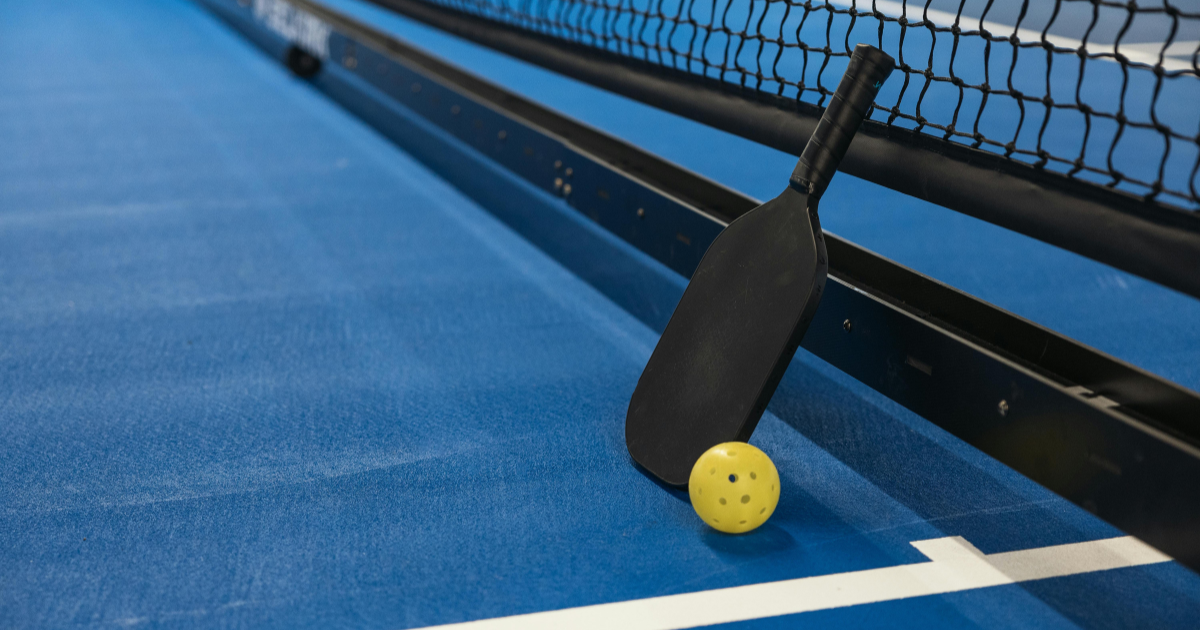
From stacking and poaching to transition play and the famous third shot drop, experienced players rely on specific pickleball strategies to control rallies and win points.
Here’s a cheat sheet of the most common pickleball strategy terms you’ll hear from coaches and competitive players.
Positioning Strategies
Stacking
A doubles strategy where teammates line up on the same side of the court before the serve or return to maintain a preferred court position.
Players often stack to keep a stronger forehand in the middle or create better matchups.
Poaching
When a doubles player crosses the centerline to intercept a ball that was heading toward their partner.
Used to apply pressure and finish points at the net.
Pinching the Middle
A strategy where both players move slightly toward the center of the court to protect the highest-percentage shot location.
Because most balls travel down the middle, pinching helps reduce open angles.
Court Coverage
Refers to how players move and position themselves together to protect open space and defend against attacks.
The Transition Game
Transition Zone
The area of the court between the baseline and the kitchen line.
Often the most difficult part of the court to play from, as players are more vulnerable to fast shots.
Transition Play
The process of moving from the baseline toward the kitchen while controlling the rally with drops and resets.
Split Step
A small hop used as the opponent makes contact with the ball, helping players react quickly in any direction.
Shot Selection Strategies
Third Shot Drop
A soft shot played by the serving team designed to land in the opponent’s kitchen.
The goal is to neutralize the rally and allow the serving team to move forward.
Third Shot Drive
Instead of a soft drop, the serving team hits a fast drive to pressure opponents and force a weak return.
Fifth Shot Drop
If the third shot drive doesn’t win the point, players often follow with a fifth shot drop to regain control and reach the kitchen line.
Attackable Ball
A ball that sits high enough above the net to be hit aggressively.
Recognizing attackable balls is key to winning points.
Kitchen Line Strategy
Kitchen Line Dominance
The team controlling the kitchen line usually has the advantage.
Players at the net can volley and apply pressure while forcing opponents to hit upward.
Dink Rally
A sequence of soft dinks exchanged between players at the kitchen line.
The goal is often to create an opening or force an opponent into a pop-up.
Speed-Up
An aggressive shot used to break out of a slow dink rally and initiate a fast exchange.
Offensive Strategies
Shake and Bake
A coordinated doubles play where one partner hits a powerful drive and the other partner anticipates a weak return to finish the point.
Putaway
An aggressive finishing shot used when the opponent hits a ball that sits too high.
Targeting the Middle
A tactic where players hit between opponents to create confusion about who should take the shot.
Defensive Strategies
Reset
A soft shot used to slow down a fast rally and regain control of the point.
Often used when under pressure.
Blocking
Using the paddle to absorb the pace of a hard shot and redirect it softly into the kitchen.
Counterattack
A quick offensive response after successfully defending an opponent’s attack.
Why Pickleball Strategy Matters
Pickleball is sometimes described as “chess at the kitchen line.”
The best players don’t just rely on power—they rely on positioning, patience, shot selection, and teamwork.
Understanding these pickleball strategies can help players:
win more points
improve consistency
communicate better with partners
develop smarter game plans
As the sport continues to evolve, new tactics will emerge—but mastering these fundamentals is a strong place to start.
Pickleball Strategy Index (A–Z)
Attackable Ball — Ball high enough to attack
Blocking — Absorbing pace defensively
Court Coverage — Positioning to protect open space
Counterattack — Turning defense into offense
Dink Rally — Soft rally at the kitchen line
Fifth Shot Drop — Soft shot after a third-shot drive
Kitchen Line Dominance — Controlling the net area
Pinching the Middle — Protecting the center of the court
Poaching — Crossing to intercept a ball
Putaway — Finishing shot on a high ball
Reset — Neutralizing a fast rally
Shake and Bake — One player drives, the other attacks the next ball
Split Step — Small hop preparing for movement
Stacking — Doubles positioning strategy
Speed-Up — Accelerating a dink rally
Targeting the Middle — Hitting between opponents
Third Shot Drive — Fast third shot
Third Shot Drop — Soft third shot into the kitchen
Transition Play — Moving toward the kitchen line
Transition Zone — Area between baseline and kitchen
