

The False Stigma Around Tile Courts: Why It’s Time to Rethink the Narrative
If you’ve been around the pickleball world long enough, you’ve probably heard it: “Tile courts? I’ll pass.” Somewhere along the way, tile courts picked up a reputation that doesn’t match reality. People call them slippery or loud, or say the bounce feels off. The truth is that most of these ideas come from secondhand opinions, not from people who’ve actually spent time playing on tile courts.
Tile courts are appearing everywhere because communities need more places to play. They’re practical, accessible, and they solve real problems for local pickleball scenes. Yet they’re often dismissed before players even give them a fair chance. It’s worth understanding how the stigma formed and why it no longer reflects today’s experience.
Where the Stigma Comes From
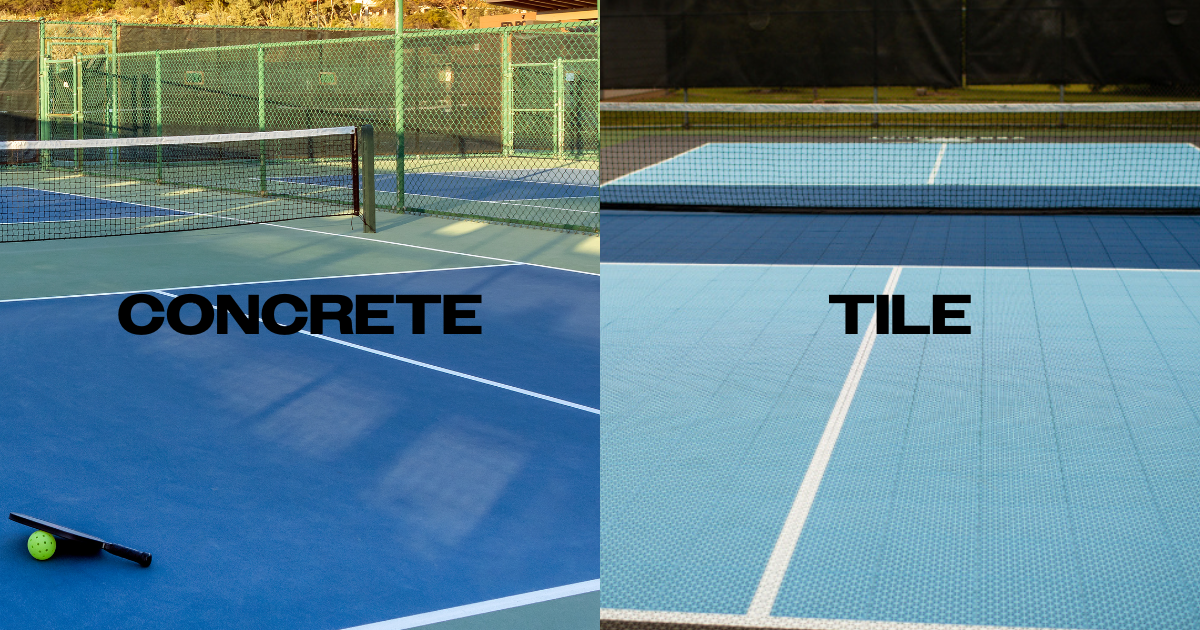
An up close comparison of concrete courts and tile courts.
Pickleball grew up on outdoor concrete and asphalt. For many players, that surface became the benchmark for what pickleball was supposed to feel like. Anything different was quickly viewed as not quite measuring up.
The most common complaints about tile courts come from players who have never played on a modern system.
Myth 1: Tile courts are slippery.
Older tiles could feel slick, especially if they collected dust. Modern tile surfaces are textured, engineered for traction, and often provide better grip than worn concrete.Myth 2: The bounce isn’t right.
Today’s tile courts are tested for consistent bounce. Outdoor concrete often varies more because of cracks, low spots, or weather wear.Myth 3: They’re harder on the body.
It’s actually the opposite. Tiles have built-in cushioning that reduces impact on knees and ankles. Many players find they can play longer and feel better afterward.Myth 4: They’re too loud.
Older tiles could echo, but current designs are more sound-controlled. Indoors, any surface will reflect sound. Outdoors, the difference is minimal.
Most of these concerns are based on outdated designs. Modern tile systems are created specifically for sports like pickleball and perform far better than people expect.
Why Tile Courts Are a Win for Players
Pickleball is growing faster than new concrete can be poured. Cities, rec centers, and private facilities need surfaces that can be installed quickly and used immediately. Tile courts solve problems that concrete can’t.
They’re consistent. No cracks, dead spots, or uneven patches. The bounce is reliable from edge to edge.
They’re easier on joints. That slight flex absorbs impact and reduces wear on the body.
They’re weather-resistant. Tiles handle temperature changes better than painted outdoor courts.
They install quickly. Spaces that would otherwise go unused can become fully functioning pickleball courts in days.
More courts means more play, and more play means more people joining the sport. Tile courts are helping meet demand where traditional surfaces can’t.
When Concrete Shines
Concrete will always have a place in pickleball. It’s durable, familiar, and ideal for outdoor facilities that can invest in long-term infrastructure. Many players love the natural feel, the speed of the ball, and the traction of a well-maintained concrete or asphalt court.
Concrete is also the preferred choice for permanent municipal builds where large budgets and multi-year planning make sense. When resurfaced regularly and protected from cracking and weather wear, concrete provides an excellent playing experience.
Tile courts aren’t meant to replace concrete. They expand the options, especially in places where permanent construction isn’t possible or demand for courts is rising faster than cities can keep up.
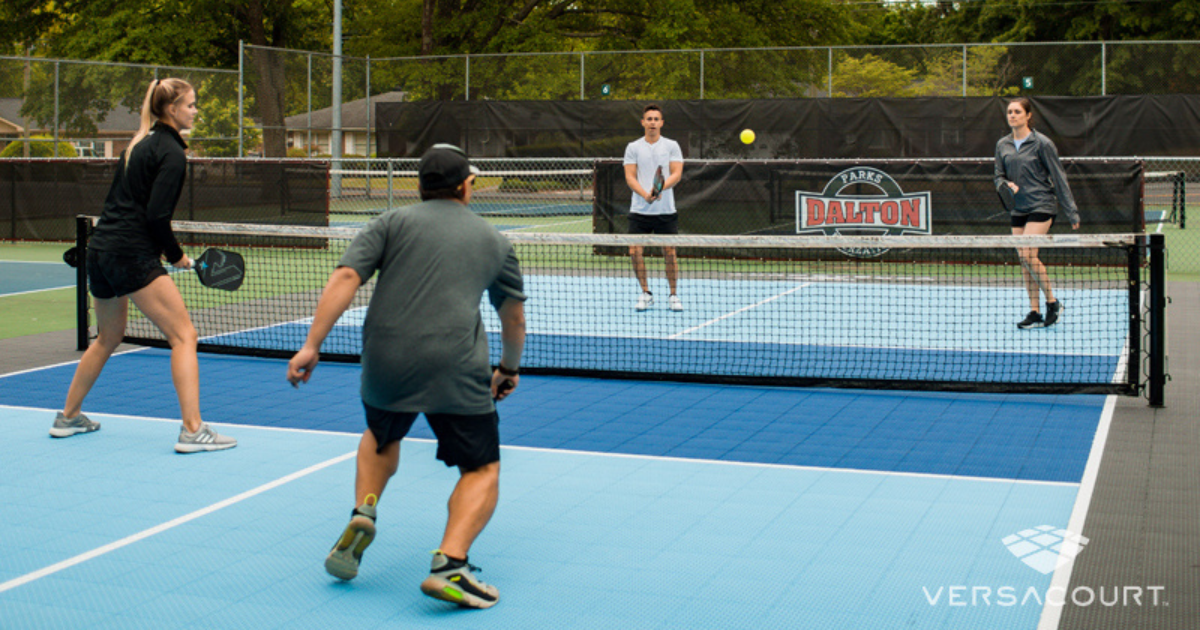
Use code EMPOWER for 10% off VersaCourt performance pickleball tiles.
Players Often Change Their Minds After Trying Tile
Talk to players who regularly use tile courts and you’ll hear a familiar story: “I didn’t think I would like it, but now I actually prefer it.” Bodies feel better. The bounce is clean. The lines are bright. And perhaps most importantly, courts are available.
The hesitation usually comes from players comparing tile to the courts they first learned on. Once they give tile courts a real chance, their perspective often shifts.
Tile Courts Help the Sport Grow
At Empower Pickleball, we care about supporting the players, volunteers, and organizers who make this sport what it is. Tile courts help them do what they do best.
Beginners get more places to learn. Older players get a softer surface that keeps them playing longer. Communities get affordable ways to expand. Organizers get dependable courts without constant repair issues. Indoor facilities can run sessions all year. And players have more opportunities to connect and play.
Tile courts don’t compete with concrete. They expand what’s possible and allow pickleball to reach places where permanent courts would never be built.
A Future With More Play and Fewer Barriers
Tile courts aren’t a downgrade. They’re a solution that makes the sport more accessible and sustainable. As more players experience today’s tile technology, the old stigma continues to fade.
If you’re a player who wants more consistent games, a newcomer looking for a comfortable place to start, or an organizer trying to keep up with rising demand, tile courts offer real advantages. And the more we embrace them, the faster pickleball can grow and the more people can find their community on the court.
