

2026 Shake-Up: Why Pro Pickleball Is About to Look Very Different
If you think the pro pickleball landscape is settled, think again. The 2026 season is already quietly rewriting the script—and the ripple effects are about to hit everything from paddle sponsorships to mixed doubles partnerships.
We’re entering an era of movement, momentum, and major power plays. And it starts at the top.
The Franklin Power Move
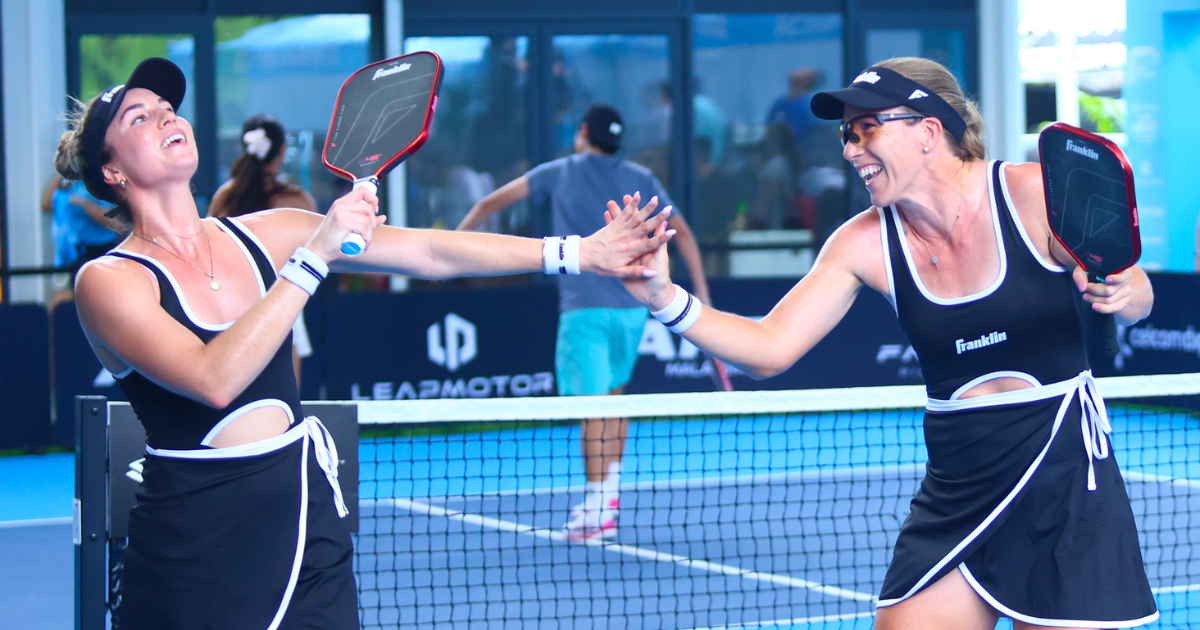
Sofia Sewing and Megan Fudge on court at the 2026 APP Kuala Lumpur Open
Photo by APP Malaysia
Megan Fudge is entering 2026 with a new female partner. She’s teaming up with Sofia Sewing on the APP Tour for the upcoming season. Franklin has been steadily building its roster and visibility, and pairing Megan with another top-tier Franklin athlete immediately strengthens their competitive footprint.
This isn’t about paddles anymore. It’s about building teams within teams—ecosystems of players, content, and influence. Expect more brands to follow suit, stacking talent and creating unified athlete identities.
The Era of Changing Partnerships
Here’s the part most fans don’t see coming: a widespread reshuffling of long-term partnerships.
Mixed doubles teams that have felt permanent? Suddenly negotiable. Longtime partnerships? Up for grabs.
Don’t be surprised if familiar pairings disappear almost overnight. Take Christian Alshon and Hurricane Tyra Black, for example. They won gold together at the PPA Indoor National Championships in January—then split up the very next day.
Why? Because players are no longer choosing partners based solely on chemistry. They're weighing brand alignment, media exposure, league opportunities, and long-term earning potential. Mixed doubles is becoming chess, not checkers.
Expect bold switches. Expect surprise alliances. And expect a few fan-favorite teams to break up in pursuit of the bigger picture.
The Youth Movement Is Real
The next generation isn’t waiting their turn—they’re stepping directly into the spotlight.
Young players like Hayden Patriquin are proving that elite performance has nothing to do with age. He’s joined by rising talents such as Camden Chaffin (14, Ohio), who recently took down the #1-ranked singles player Federico Staksrud, along with Elsie Hendershot (12, Utah) and Tama Shimabukuro (15, Hawaii).
This wave of athletes brings speed, adaptability, and fearless shot selection that’s reshaping the tempo of high-level pickleball.
Veterans still carry experience and strategy. The younger group counters with pace, creativity, and immediate commitment to every swing. In 2026, that contrast won’t just coexist—it will collide.
This isn’t a slow handoff; it’s an active changing of the guard.
The Global Breakthrough
In our view, 2026 will be the year an international player—possibly from Asia—cracks the top five in singles.
Pickleball is no longer an American experiment. Training academies are popping up worldwide. International tournaments are growing. Athletes with strong racquet-sport backgrounds are entering the sport with advanced technical foundations.
When that first global star breaks through, it won’t just shift rankings. It will influence recruiting pipelines, sponsorship strategies, and how players prepare for competition. The sport is about to feel much bigger than the United States alone.
The Inflection Point
What makes 2026 so different isn’t just talent—it’s timing.
Dissolving partnerships. Emerging youth. Evolving brand strategies. Global expansion. Athletes who understand their value beyond wins and losses.
Pro pickleball is shifting from rapid grassroots growth to a structured professional ecosystem.
And the players who adapt fastest—on the court and off—will define what comes next.
