

Benjamin Coleman Is Playing for More Than Wins
Some athletes chase titles. Some chase rankings. And some are playing for something much bigger.
For Benjamin Coleman, pickleball isn’t just a sport. It’s purpose, healing, community, and a path toward something larger than himself.
Born and raised in Ohio, Benjamin’s journey has never followed a conventional line. After high school, he attended Gallaudet University in Washington, D.C., the world’s only university designed specifically for deaf and hard-of-hearing students. He stayed on the East Coast, built a life, started a family, and today lives in Frederick, Maryland, with his two children. But long before pickleball entered the picture, sports were already shaping who he was becoming.
Basketball was his first love. A three-time medalist in Deaf international competition, Benjamin competed at the Deaf World Cup and Deaflympics and served as a three-year captain at Gallaudet. He also played football and baseball. Athletics gave him structure, identity, and a way to push through the frustrations that came with growing up Deaf in a world that often didn’t know how to meet him halfway.
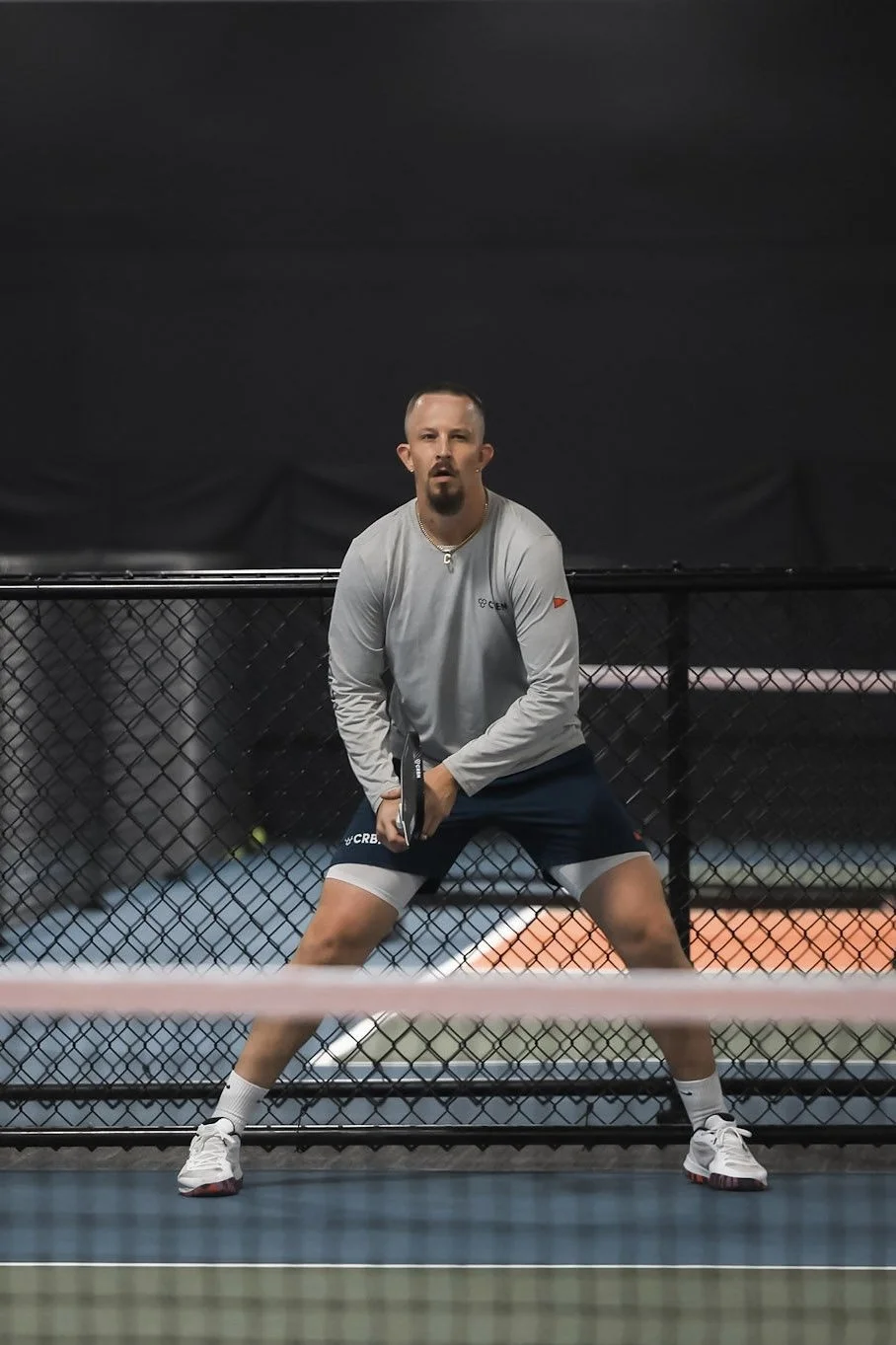
His mother, who is also Deaf, enrolled him in speech therapy for 15 years so he could speak clearly. But hearing and receiving information remained a daily challenge. Benjamin explained that speaking is only one part of communication. Processing what others are saying—especially in noisy spaces or fast-moving environments—is something entirely different. He relies on technology, lip reading, quiet spaces, and intense focus just to keep up with conversations many people take for granted.
That reality shaped him early. So did the emotional weight of feeling different.
For much of his life, Benjamin wrestled with anger, frustration, and the question of why. Why did communication have to be so hard? Why did so many interactions feel like obstacles? Why did it so often feel like the burden of adapting fell on him?
Over time, those questions didn’t disappear. But they transformed.
And somewhere along the way, pickleball became part of that transformation.
The Sport That Kept Him Going
Benjamin’s relationship with pickleball runs deep. He doesn’t speak about it casually. He speaks about it like it’s something that truly saved him.
There was a period in his life marked by hardship, loss, and emotional darkness. He went through a divorce. COVID hit. Life felt heavy. He was trying to find stability while carrying the weight of everything around him. And through that stretch, pickleball gave him a reason to show up again the next day.
A game. A friend asking him to play. A routine. A court. A purpose.
Then another day. Then another.
“Pickleball kept me here,” he said.
That line says everything.
What started as a competitive outlet became a lifeline. It became the thing that kept him moving forward in life when everything else felt uncertain.
From the Deaf Community to the Pickleball Community
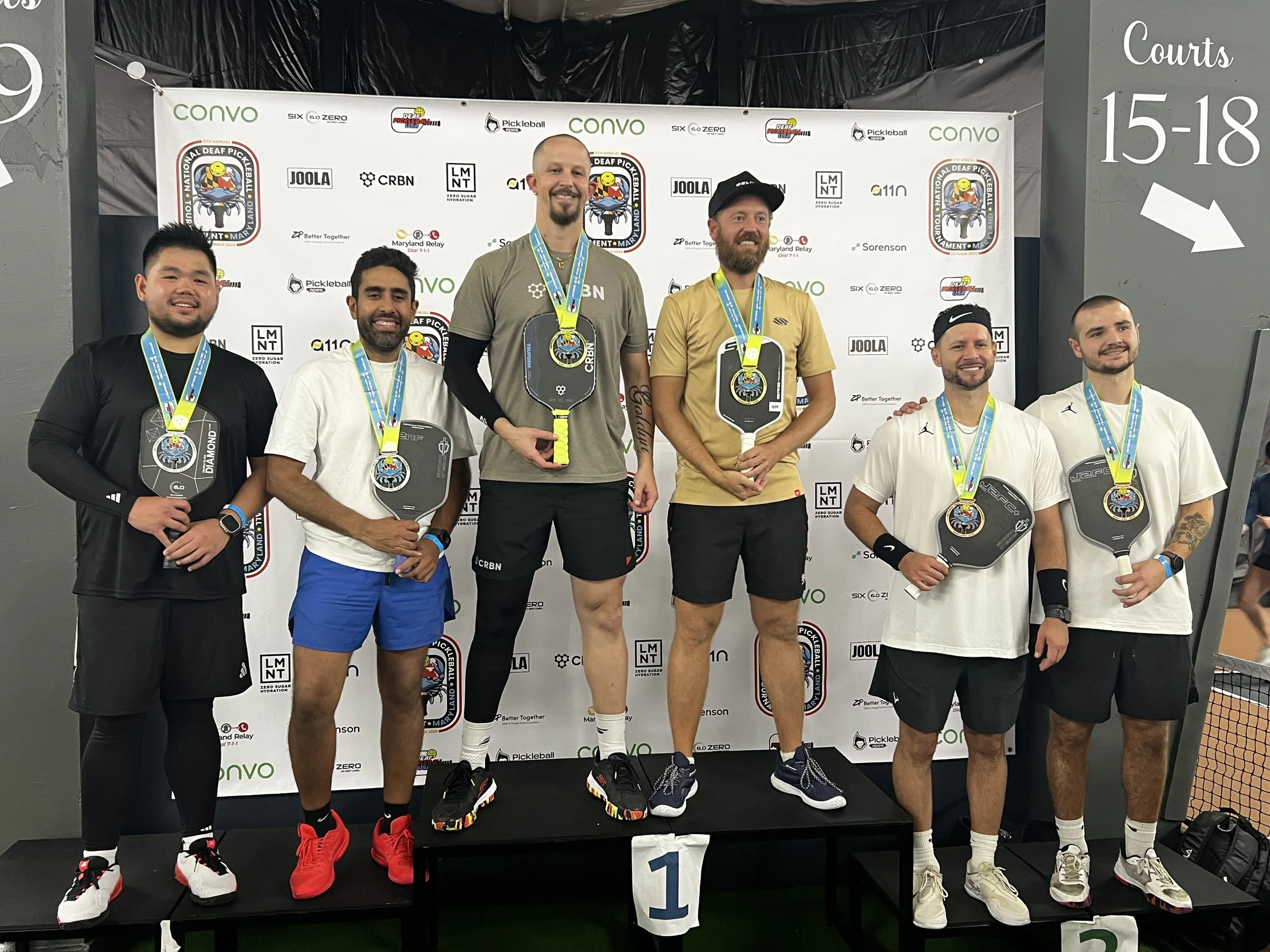
Benjamin first entered the National Deaf Tournament in Florida after missing the inaugural event in California years earlier. At the time, he was already known in Deaf pickleball circles as a strong player, but there were people who doubted him because he had not yet shown up on that stage.
Florida changed that.
The experience was deeply emotional for him. It validated his skill, connected him with other Deaf athletes, and reminded him how meaningful it is to compete in spaces where communication and identity are understood—not explained. He left with more than results. He left with momentum.
After that tournament, he started reaching out to paddle brands, hoping to find a partnership that aligned with both his game and his story. Some responses felt impersonal. Some didn’t feel like the right fit. But when he contacted CRBN, things were different.
It was personal.
He connected with Brodie at CRBN, and the response felt human. Benjamin shared his story, his experience, and his vision. CRBN saw more than a player. They saw a person with purpose. That mattered to him.
Because for someone like Benjamin, fit matters.
What Inclusion Really Looks Like
Benjamin is honest about the realities of being Deaf or hard of hearing in sport. People often assume lip reading fills in all the gaps. It doesn’t. Communication in fast-paced athletic environments can still be exhausting, especially at high levels.
In advanced pickleball, so much of the game depends on split-second partner communication. Hand battles happen quickly. Players call balls, shift, react, and adjust in real time. For Benjamin, those moments can present a challenge. It isn’t about his ability to play—it’s about access to communication at the speed the game demands.
That is part of why inclusion matters so much to him.
In the Deaf pickleball community, he often finds a more naturally visual style of communication. Players can explain rules, clarify confusion, and connect in ways that feel immediate and respectful. He wants more of that in the sport overall. More awareness. More accessibility. More intentionality.
He also sees a major gap: educational pickleball content in ASL.
Much of the game’s instructional content lives on YouTube, where auto-generated captions often miss nuance or fail altogether. Benjamin wants to help change that—not only because the Deaf community deserves access to high-quality instruction, but because the game becomes clearer when it’s delivered visually.
That mission is personal. And it’s needed.
A Teacher at Heart
Long before he was thinking about ASL pickleball content, Benjamin was already doing the work.
He taught at the Maryland School for the Deaf, working across both the Frederick and Columbia campuses. During a difficult period in his life, he poured himself into those students and took on far more than was required. He taught physical education. He became an athletic director. He coached multiple sports. He helped build programs.
At the Columbia campus, he saw students who needed more support, more belief, and more opportunity. So he stepped in.
He created structure, belonging, and momentum for kids who needed someone to believe in them.
That work clearly still lives in him.
Even now, as a Frederick County Parks and Recreation specialist overseeing adult sports leagues, Benjamin is still focused on impact. He still wants to build systems that help people thrive.
The Horse, the Stride, the Mentality
Benjamin’s personal logo includes a horse, and the symbolism behind it says a lot about how he moves through life.
The horse represents endurance, work, grit, and forward motion. He described himself as the one doing the work, the one striding, the one pushing through obstacles no matter what is in front of him. If he loses, he keeps moving. If he struggles, he keeps stepping. If life hits hard, he keeps going.
That mentality shows up in his training, too.
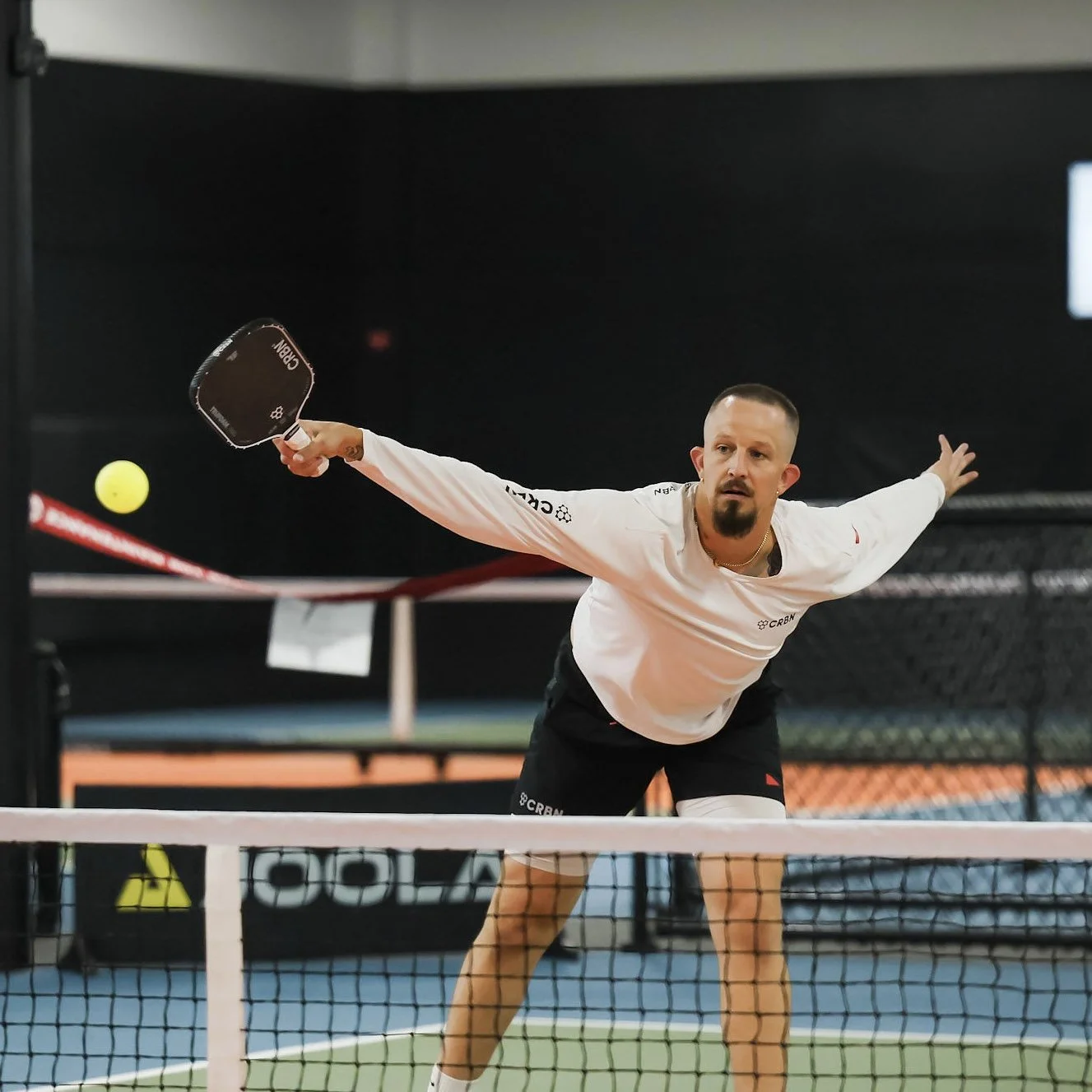
Benjamin drills late at night, often from 10 p.m. to midnight, four or five times a week—after a full workday and after getting his children settled for bed. He talks about reps, muscle memory, and pressure with the intensity of someone who has lived in competitive sports his whole life. He does not just want to improve casually. He wants to master skills through repetition until they become instinct.
That same drive fueled his basketball career. It fuels his pickleball game now. But today, the mindset is more grounded.
Fatherhood changed him.
He still competes hard. He still has the mentality of a defender who doesn’t want to give up anything easily. But now, success looks different.
What Success Looks Like Now
When asked what success means to him today, Benjamin’s answer was simple: impact.
He wants to elevate the Deaf community. He wants to make pickleball more accessible. He wants more people to understand that inclusion is not a buzzword—it is built through actions.
He wants to teach. He wants to build. He wants to make sure the next generation has more access than he did.
And maybe most importantly, he wants to use his story to help someone else feel less alone.
