

How Pickleball Scoring Works: Singles and Doubles Explained
If you’re new to pickleball, scoring can feel like the most confusing part of the game.
The good news is that once you understand the basic pattern, it becomes much easier to follow.
Whether you play singles or doubles, pickleball scoring comes down to three things:
Who is serving
Who can score
When the serve changes
The Basic Rule of Pickleball Scoring

Photo by USA Pickleball
In traditional pickleball scoring, only the serving side can score a point.
If the serving team wins the rally → they score and continue serving
If they lose the rally → no point is awarded, and the serve changes
Before every serve, the score is called out loud.
In doubles, three numbers are used:
Serving team score — receiving team score — server number
Example:
“5-3-2”
This means:
Serving team has 5 points
Receiving team has 3 points
Second server is serving
In singles, only two numbers are called:
Server’s score — receiver’s score
Example:
“5-3”
How Doubles Pickleball Scoring Works
Doubles is where most players get confused.
Each team has two players, and both players typically get a chance to serve before the serve goes to the other team.
The Starting Exception
At the beginning of the game, only one player serves. This is called “second server” even though that team hasn’t had a first server yet.
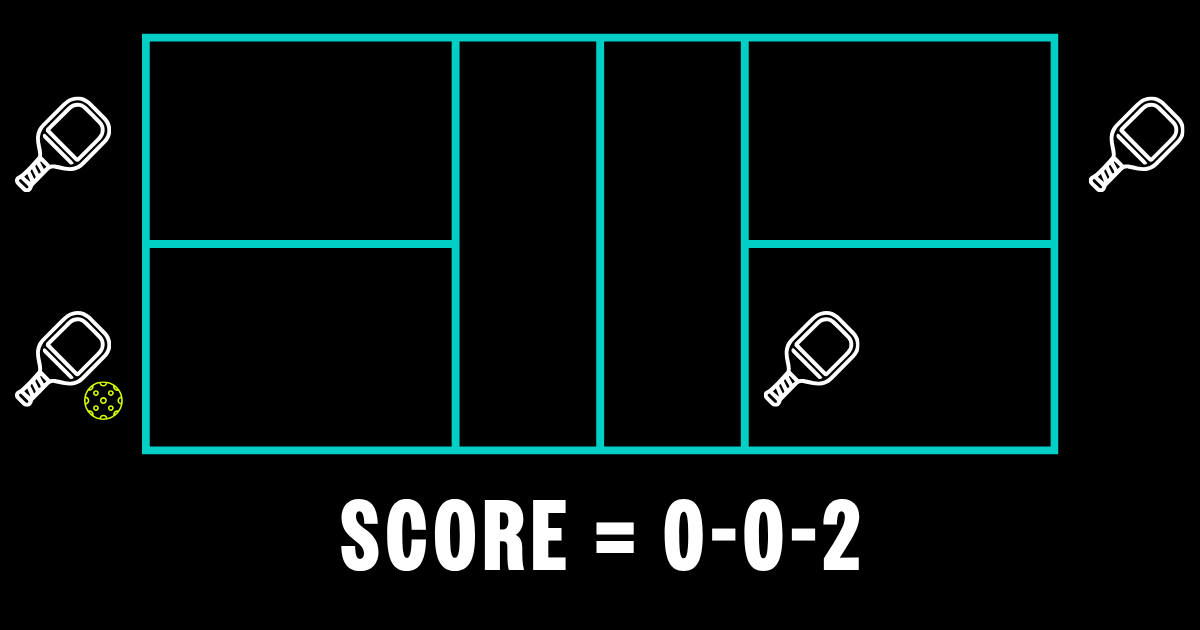
The first score is:
“0-0-2”
This is a special rule used only to start the game.
How Serving Works in Doubles
If the serving team wins the rally → they score and switch sides with their partner
If they lose → the serve goes to their partner
If both players lose → side out (serve goes to the other team)
Server numbers:
Server 1 = first server
Server 2 = second server
Example:
Score: 4-2-1
Serving team: 4
Receiving team: 2
First server is serving
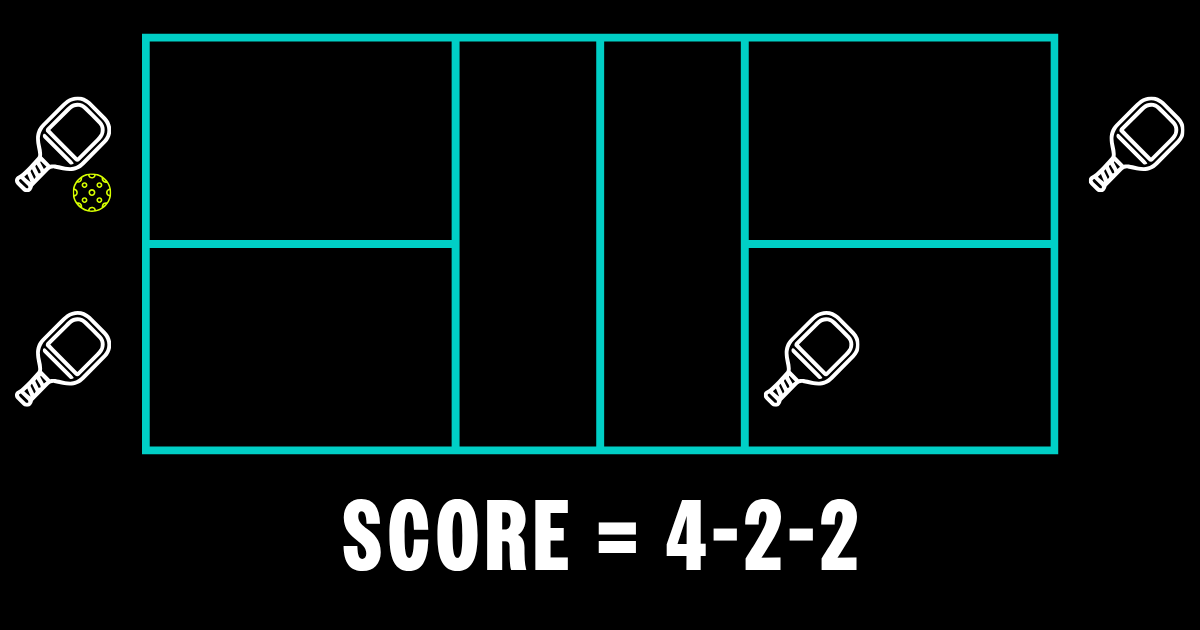
If they lose the rally:
→ Score becomes 4-2-2 (second server)
If they lose again:
→ Side out
Side Switching Rule
In doubles, players switch sides every time they score a point.
This helps track serving position and keeps the rotation consistent.
How Singles Pickleball Scoring Works
Singles scoring is simpler.
Only one server per side
No server numbers
Only two numbers called
Key Rule: Your Score Determines Your Position
Even score → serve from the right
Odd score → serve from the left
Example:
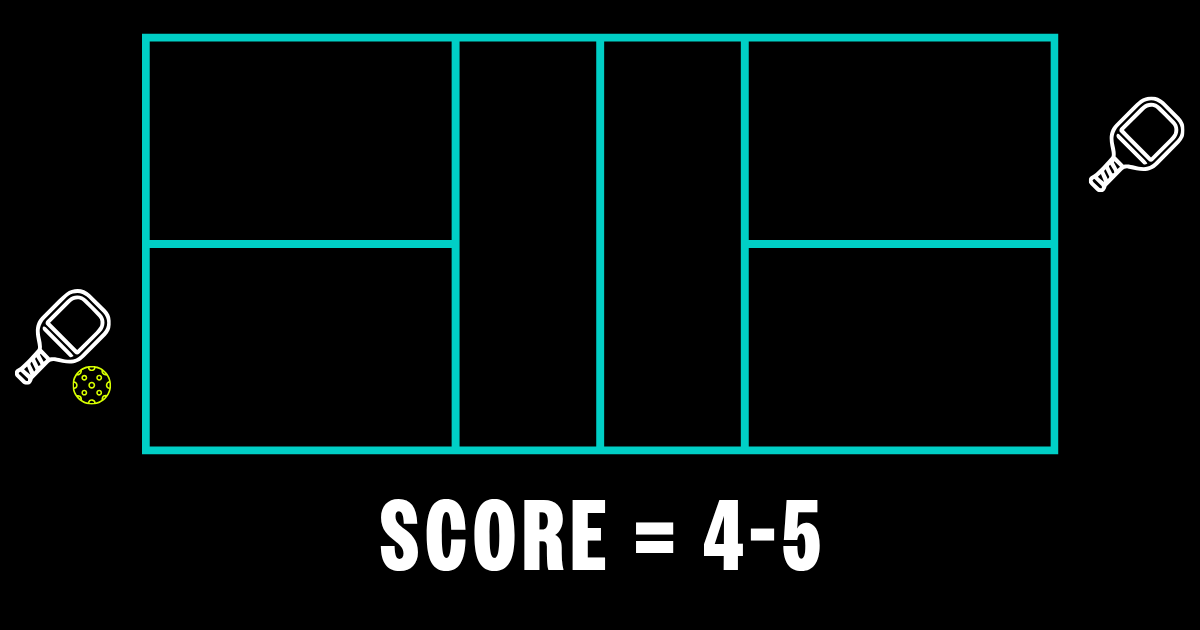
Score = 4 → serve right
Score = 5 → serve left
How It Works
Win rally → score point + switch sides
Lose rally → side out
What Is a Side Out?
A side out means the serve changes teams.
In doubles → after both players lose serve
In singles → after one lost rally
Quick Doubles Example
Score: 2-1-1
Team A has 2
Team B has 2
First server serving
Sequence:
Team A wins → 3-1-1 (switch sides)
Team A loses → 3-1-2
Team A loses again → side out
Team B serves
Quick Singles Example
Score: 4-3
Server has 4 → serves from right
If they win:
Score = 5-3
Switch sides → serve left
If they lose:
Side out
Opponent serves
Common Pickleball Scoring Mistakes
These happen all the time:
Forgetting only the serving side scores
Mixing up server 1 and server 2 in doubles
Standing on the wrong side in singles
Even = right
Odd = left
Not calling the full score before serving
Keep It Simple
Pickleball scoring sounds more complicated than it is.
Once you understand:
The score call
Server order
When a side out happens
…it becomes second nature.
The fastest way to learn is simple: play, listen, and don’t be afraid to ask questions.
