

How to Hit Better Resets in Pickleball
If you feel stuck on defense—constantly absorbing speed-ups without ever regaining control—your reset game is likely the missing piece.
The best players don’t just survive fast exchanges. They slow the game down on their terms.
A great reset turns chaos into calm and gives you a path back to the kitchen line.
Here’s how to hit better resets and start dictating points instead of reacting to them.
What Is a Reset (and Why It Matters)?
A reset is a soft shot from a defensive position—typically from midcourt or the transition zone—designed to land in your opponent’s kitchen and force a neutral rally.
Instead of trying to win the point, you’re:
Absorbing pace
Dropping the ball low
Buying time to move forward
Think of it as hitting the “pause button” on a point that’s speeding up.
The #1 Reset Mistake: Swinging Too Hard
Most players miss resets because they treat them like drives or drops.
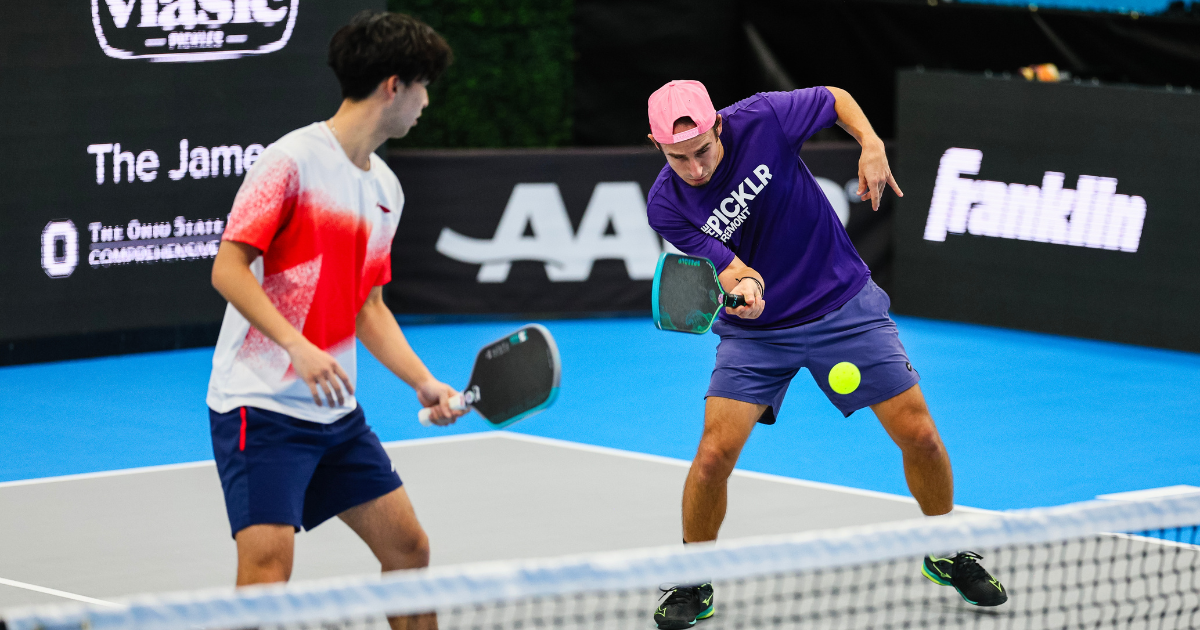
Photo by The APP
A reset is not a swing—it’s a cushion.
When you take a big backswing or try to “guide” the ball aggressively:
The ball pops up
Your opponent attacks
You stay stuck on defense
Fix it:
Shorten everything. Your backswing should be minimal, and your focus should shift from hitting the ball to absorbing it.
Soft Hands Win (Every Time)
Great resets come from soft hands, not perfect mechanics.
What that actually means:
Relax your grip (3–4 out of 10)
Let the ball “sink” into the paddle
Match the pace instead of fighting it
Pro tip:
Imagine catching an egg with your paddle and gently tossing it back over the net.
Body Position Matters More Than You Think
Your body does a lot of the work for you—if you let it.
For consistent resets:
Stay low and balanced
Keep the paddle out in front
Use your legs to stabilize
Avoid leaning back or reaching. That’s when resets float high.
Where to Aim Your Resets
You don’t need perfect placement—but you do need intention.
Your primary targets:
The middle of the kitchen (biggest margin for error)
Your opponent’s backhand side
Avoid: the sidelines and low-percentage angles when you’re under pressure.
How to Reset Different Balls
Hard Drives
Absorb pace with soft hands
Keep the paddle stable (don’t flick)
Let the ball rebound gently into the kitchen
Low Balls at Your Feet
Bend your knees (not your back)
Open the paddle face slightly
Lift with control, not force
Shoulder-Height Balls
Don’t panic
Block with a firm but soft touch
Focus on keeping it low rather than perfect
Footwork: The Hidden Reset Advantage
Your goal isn’t just to reset—it’s to reset and advance.
After each successful reset:
Take a step forward
Reestablish balance
Prepare for the next ball
Think of the transition zone like a ladder. Every good reset helps you climb one rung closer to the kitchen line.
Drills to Improve Your Resets
Reset Reps
Partner at the kitchen hits controlled drives
You reset from transition
Focus on consistency over winners
Target Practice
Place a cone or towel in the kitchen
Try to land 10 resets in a row within that zone
Pressure Drill
Start every point in transition
Hit two successful resets before moving forward
Turn Defense Into Offense
Resets aren’t just about surviving—they’re about changing momentum.
Once you can consistently:
Neutralize fast balls
Get to the kitchen line
Force your opponents to hit up
…you’ll start seeing more attackable balls, more mistakes from your opponents, and more control over points.
You don’t need a perfect winner to take over a match. You just need one great reset.
Because the player who can slow the game down on demand is usually the one who ends up speeding it back up—on their terms.
