

Best of Pickleball 2025: The Moments That Changed the Game
2025 wasn’t just another year of growth for pickleball. It was the year the sport started to settle into itself—and expand well beyond U.S. borders.
For years, pickleball’s story has centered on American participation numbers and domestic facility growth. But in 2025, the narrative widened. Systems matured. Investment scaled. Media attention deepened. And internationally, pickleball proved it could draw mass audiences, global viewership, and stadium-level excitement.
This was the year pickleball stopped asking whether it belonged on the world stage—and started acting like it already did.
The Year Pickleball Got Systems
The alignment between USA Pickleball and DUPR marked a critical step toward standardization. Ratings moved closer to becoming shared infrastructure rather than a point of constant confusion. That shift changed how players entered tournaments, how leagues grouped play, and how facilities structured programming. At this stage of growth, clarity isn’t optional—it’s foundational.
Pickleball’s willingness to confront its complexity in 2025 signaled a shift from reactive growth to intentional building.
The Year Pickleball Built Buildings
Indoor facilities accelerated nationwide in 2025, anchored by membership-based models that emphasized programming, community, and year-round play. Pickleball didn’t just add courts—it improved the experience of being a player.
At the same time, outdoor courts continued to multiply everywhere people live. Apartment complexes added dedicated pickleball courts as lifestyle amenities. Neighborhoods and HOAs converted underused spaces. Municipalities invested in public courts to meet demand. And private backyards increasingly became home to permanent pickleball setups.
This combination of large-scale indoor facilities and hyper-local outdoor access reshaped how—and how often—people played.
That shift mattered. It created consistency, accessibility, and deeper engagement. Whether through a club membership or a court steps from home, pickleball became easier to fit into everyday life—and harder to give up.
The Year the Money Got Serious
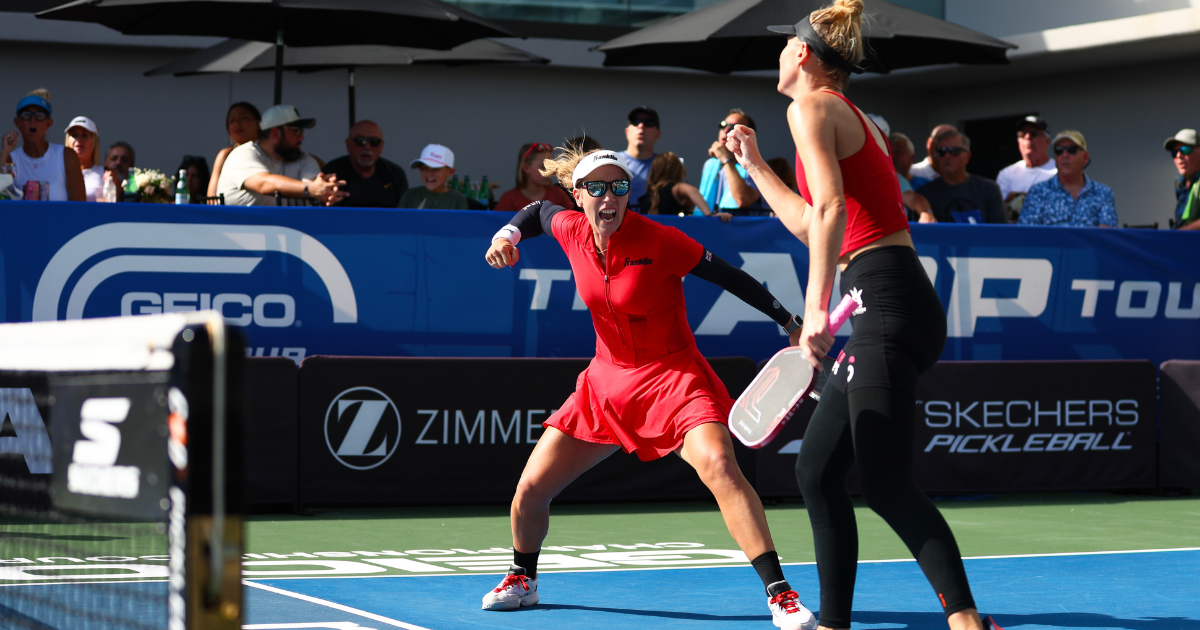
Photo by Association of Pickleball Players (APP)
Pickleball crossed a major credibility threshold in 2025 when Marketing Brew framed the sport as officially “open for business.”
That framing matters. Marketing Brew doesn’t cover hype—it covers where brands are placing real dollars. Their attention signaled that pickleball had evolved from a novelty sponsorship play into a legitimate marketing platform with measurable audiences and long-term potential.
Sponsorships matured. Naming rights, multi-year partnerships, and integrated storytelling became more common. At the professional level, leagues reported record-breaking sponsorship and ticketing revenue. At the grassroots level, smarter partnerships supported events, facilities, and community activations.
What changed in 2025 wasn’t just the amount of money entering pickleball—it was the intent behind it.
The Year Pickleball Got Real Media Attention
Pickleball’s media evolution continued in 2025, moving beyond novelty segments into broader sports business and entertainment conversations.
Media rights discussions, documentaries, and streaming projects reflected a shift in how the sport is perceived. Coverage began focusing not just on growth rates, but on infrastructure, audience behavior, and long-term viability. The announcement of a major motion picture centered on pickleball further signaled the sport’s arrival in mainstream entertainment culture, pushing it beyond sports pages and into broader pop-culture awareness.
That distinction matters. Media legitimacy attracts new fans, new partners, and new investment—and reshapes who feels invited into the sport.
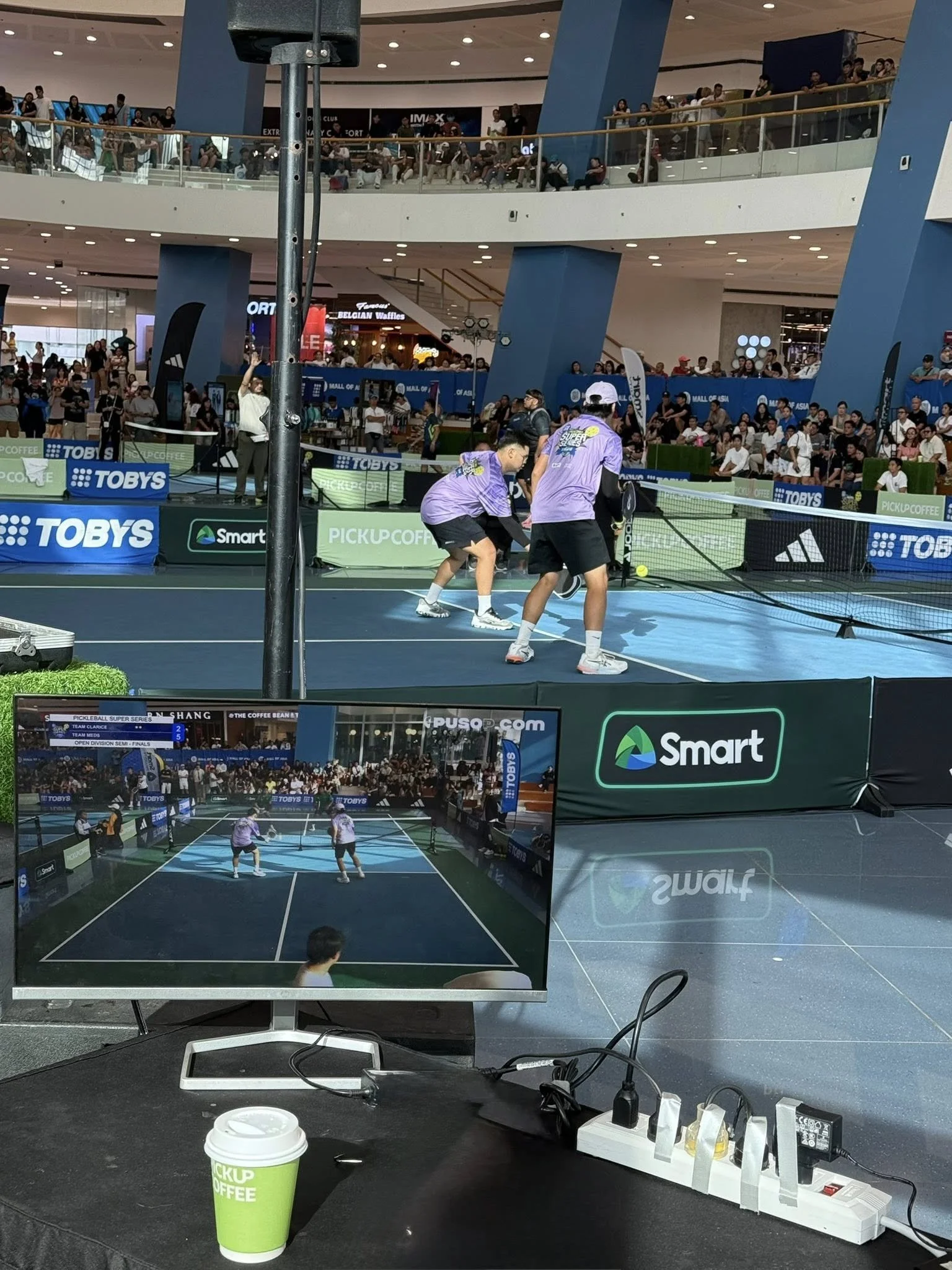
PCL Event in Manila, Philippines
The Global Moment: Pickleball Went International
One of the most overlooked—but most important—stories of 2025 happened outside the United States.
The rise of Pickleball Champions League Asia (PCL) marked a watershed moment for global pickleball.
In 2025, PCL delivered what many thought was still years away:
Over 100,000 fans watching a pickleball match in person, setting a record for live attendance
Millions of views online, signaling global digital demand
Stadium-level excitement, international teams, and mainstream entertainment appeal
This wasn’t just growth—it was proof of concept.
PCL demonstrated that pickleball can succeed as a spectator sport on a global scale when it’s packaged thoughtfully, culturally adapted, and produced at a high level. The league didn’t rely solely on U.S. narratives; it built a product that resonated locally while contributing to the sport’s global legitimacy.
In 2025, pickleball stopped being “America’s fastest-growing sport” and started becoming the world’s next scalable sport.
Cultural Shifts That Defined the Year
College Pickleball Found Its Footing
College pickleball took a meaningful step forward in 2025, moving beyond informal clubs and student-run tournaments into a more structured, nationally visible ecosystem.
Several universities across the U.S. continued to invest heavily in pickleball programming, facilities, and competition infrastructure. Schools such as University of Texas at Austin, University of Florida, University of Virginia, Ohio State University, and Utah Tech University expanded competitive club programs, hosted large multi-day tournaments, and committed significant resources to coaching, travel, and dedicated court access. At several campuses, pickleball programming has moved into seven-figure investment territory, reflecting long-term institutional belief in the sport rather than short-term student interest.
National collegiate championships and regional qualifiers became more organized and more competitive in 2025, creating clearer pathways for student-athletes and raising the overall level of play. These programs are helping normalize pickleball as a legitimate college sport—not just a recreational activity.
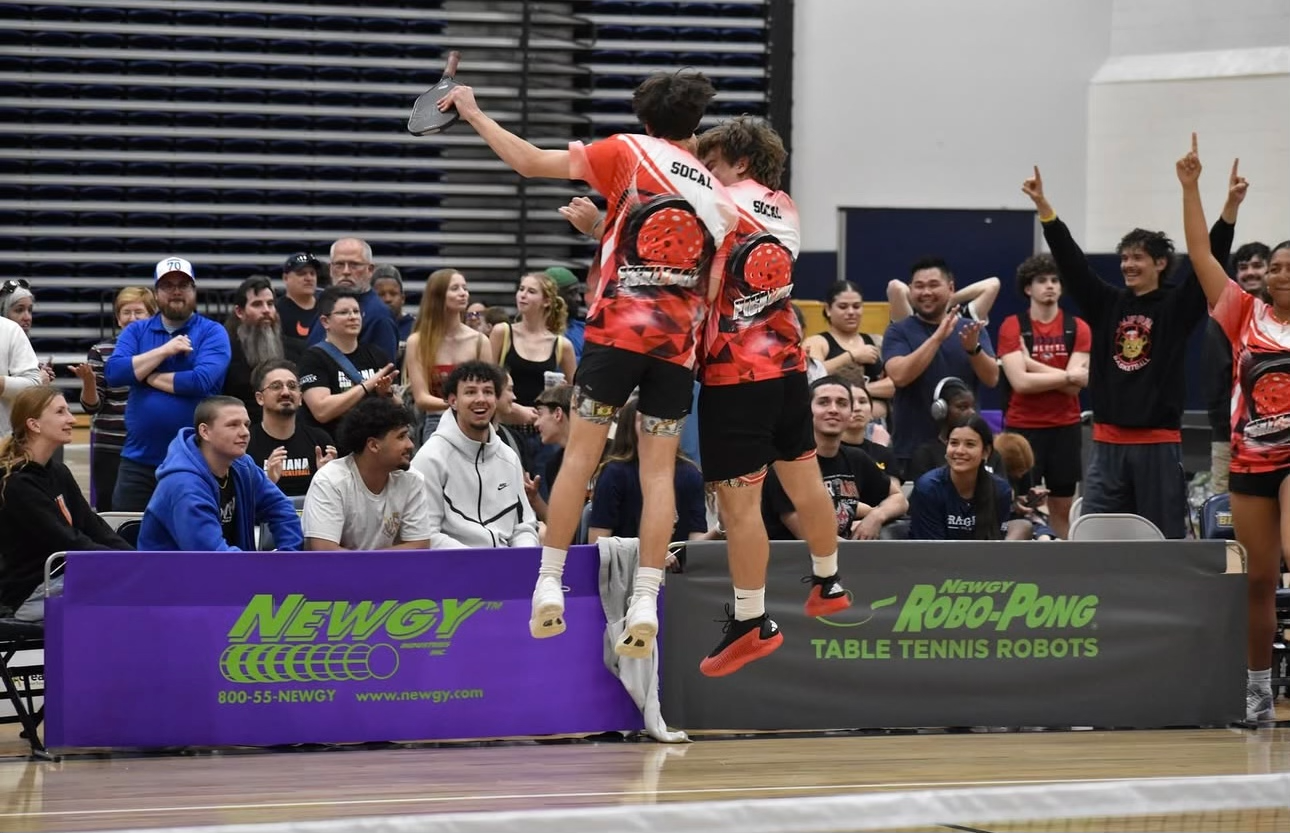
Two players at the first-ever Deaf youth pickleball tournament at Gallaudet University.
One of the most powerful moments of the year came from Gallaudet University, the world’s only university designed specifically for deaf and hard-of-hearing students. In 2025, Gallaudet hosted a multi-state collegiate pickleball tournament that brought together deaf players and teams from across the region. The event wasn’t just symbolic—it was competitive, well-organized, and deeply community-driven.
That tournament underscored something critical about pickleball’s collegiate growth: accessibility and inclusion are not side stories. They are central to the sport’s future.
College pickleball matters because it creates lifelong players, future leaders, coaches, organizers, and advocates. It challenges outdated assumptions about who pickleball is for. And it ensures that as the sport grows globally, it does so with a generation that sees pickleball not as a trend—but as part of their identity.
Youth and Adaptive Play Gained Visibility
Youth and adaptive pickleball made meaningful strides in 2025, moving from the margins toward the center of the sport’s long-term strategy.
On the youth side, structured pathways continued to take shape through school programs, junior leagues, and national competition. Organizations like National Junior Pickleball (NJP) played a key role in legitimizing junior play by creating age-based divisions, rankings, and tournament opportunities designed specifically for young athletes. At the professional level, the Professional Pickleball Association (PPA) expanded its junior ecosystem, reinforcing clearer pathways from youth competition into higher-level play.
Together, these efforts helped shift youth pickleball from casual participation to intentional development—introducing players to the sport early and giving them reasons to stay.
Adaptive pickleball also gained visibility and credibility in 2025. Wheelchair divisions and inclusive formats appeared more consistently at tournaments, while adaptive clinics and exhibitions became more integrated into mainstream events rather than treated as side programming. Leaders in the adaptive community pushed important conversations around accessibility, court design, officiating, and communication—ensuring inclusion was functional, not symbolic.
The result was a broader recognition that pickleball’s strength lies in its adaptability. The sport can meet players where they are—across ages, abilities, and backgrounds—without sacrificing competition or community.
In 2025, youth and adaptive growth didn’t just expand participation. It reinforced a defining truth about pickleball’s future: sustainability depends on who gets access early, and who feels welcome long-term.
Community Became the Feature, Not the Bonus
In 2025, players increasingly chose where to play based on belonging and fit, not just court availability.
As pickleball expanded, players gained more options—indoor clubs, public parks, neighborhood courts, leagues, ladders, clinics, and social play—allowing people to find their community and the level of play that suited them best. This variety made it easier for beginners to feel welcome, competitive players to find strong matches, and social players to build friendships without pressure.
Community-driven facilities and player-led programming leaned into this shift, offering structured play that helped reduce mismatches and improve the overall experience. Leagues, level-based sessions, and curated open play weren’t just convenient—they created trust and consistency.
That focus reinforced pickleball’s greatest strength: connection through shared experience. In 2025, community stopped being a bonus. It became the reason people stayed—and the reason the sport continues to grow sustainably.
The Tensions That Shaped 2025
Rapid growth brought real friction in 2025—and in some cases, real consequences.
Noise conflicts moved beyond neighborhood complaints and into legal, zoning, and enforcement territory. Cities and municipalities were forced to confront how pickleball fits into existing residential and urban environments. In some communities, newly built pickleball courts quickly became popular—then controversial—prompting legal challenges and operational changes tied to noise and neighborhood concerns.
Court access debates also intensified as demand continued to outpace supply. Public parks struggled to balance pickleball use with other sports, while tennis-to-pickleball conversions and scheduling systems became ongoing points of tension.
At the same time, misinformation and governance confusion added strain. Rapid expansion made it difficult for players, facilities, and municipalities to keep up with changing rules, paddle approvals, ratings systems, and leadership structures—fueling frustration and uncertainty.
These challenges weren’t signs that pickleball was failing. They were signs the sport could no longer rely on goodwill and informality to carry it forward. In 2025, pickleball began confronting the realities that come with scale: regulation, accountability, and long-term planning.
The growing pains were real—but so was the progress.
What 2025 Got Right
Grassroots expansion continued worldwide
Player-led initiatives proved scalable
Underrepresented groups gained visibility
Professional standards rose across facilities, events, and media
International markets proved pickleball’s global potential
Most importantly, the sport retained its joy—even as it professionalized.
What This Means for 2026
If 2025 was the year pickleball organized itself, 2026 will be the year it defines what it stands for.
The systems are in place. The money is watching. The global audience is real.
The next chapter will be shaped by decisions around access, representation, storytelling, and community—not just revenue and reach.
And if 2025 taught us anything, it’s this: pickleball isn’t just expanding—it’s evolving.
