

The Cuban Connection: How Carlos López is Building Pickleball From the Ground Up
Have you ever wondered how some countries find out about pickleball? For Cuba, it arrived the way many meaningful moments do: through curiosity, borrowed equipment, and a belief that sport belongs wherever people are willing to play.
“I discovered pickleball through social media during the COVID-19 lockdown," Carlos López said. “At that time, I began researching the sport and quickly understood its potential.”
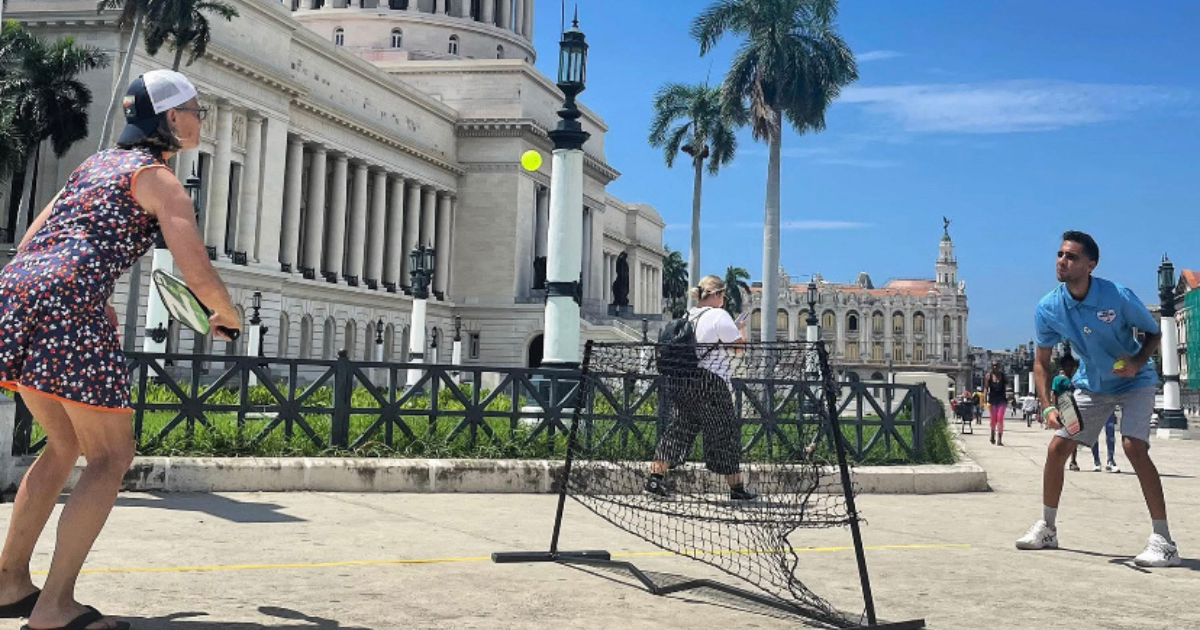
Years earlier, López had already been experimenting with alternative models for sports development. In 2017, he founded EcoTennisCuba, focused on mini tennis using low-pressure balls, portable nets, and whatever spaces a community already had: low-traffic streets, schoolyards, parks. This mission was twofold: make tennis accessible, and bring people to Cuba to teach, run clinics, and help build a wider ecosystem around sports.
So when López realized pickleball thrived in reduced spaces—much like mini tennis—the transition felt natural. He applied the same philosophy and infrastructure, shifting focus from tennis to a sport that presented even fewer barriers to entry.
Starting Without Equipment—and Building Anyway
Every grassroots story has a constraint. In Cuba’s case, it was paddles and balls.
“The biggest challenge was obtaining our first pickleball paddles and balls,” López said.
Pickleball equipment isn’t produced in Cuba, and growth still relies heavily on international support. But López leaned into a reality that most U.S.-based players forget: Havana is not far from the sport’s birthplace.
“We are only 90 miles from the country where the sport was created,” he said. “We trusted that collaborators would come forward to help us with the initial equipment.”
The first courts weren’t courts at all. They were whatever the community could offer: church patios, parks, tourist centers, streets, a former tennis club, schoolyards. It’s a list that sounds improvised, because it was. But that’s also the point. The barrier to entry is low, and a playable space with basic organization is often enough.
Why Pickleball Fits Cuban Life
Pickleball’s growth in Cuba makes sense when you zoom out from facilities and look at the culture.
“It connects very well because Cubans are active people with strong basic motor skills,” López said. “We also have a deep culture of street sports traditionally played in small spaces.”
In places with a strong street-sport culture, pickleball fits naturally into daily life.
“Pickleball is easy and fun, and it is not frustrating for beginners,” López said. “The sound of the ball hitting the paddle adds a unique and appealing element.”
That “not frustrating” point is bigger than it sounds. In a community-building sport, early wins matter. People stay when they can rally, laugh, and learn on day one.
Building the Structure to Sustain It
Today, López serves as the Director of the Cuban Pickleball Association, where the mission is straightforward: get more paddles in hands, get more communities playing, and keep the momentum real.
“Our mission is to promote, popularize, and grow pickleball in Cuba,” he said. “The global pickleball community has greatly contributed to our development on the island through international collaborations.”
International partners have played a critical role in that growth, particularly through equipment donations and shared expertise.
López is specific about what helps: paddles, balls, shorts, shoes, hats, nets, and even sports flooring. The list matters because it reinforces what Cuban pickleball actually runs on: resourcefulness plus community support.
Schools, Youth, and the Pipeline
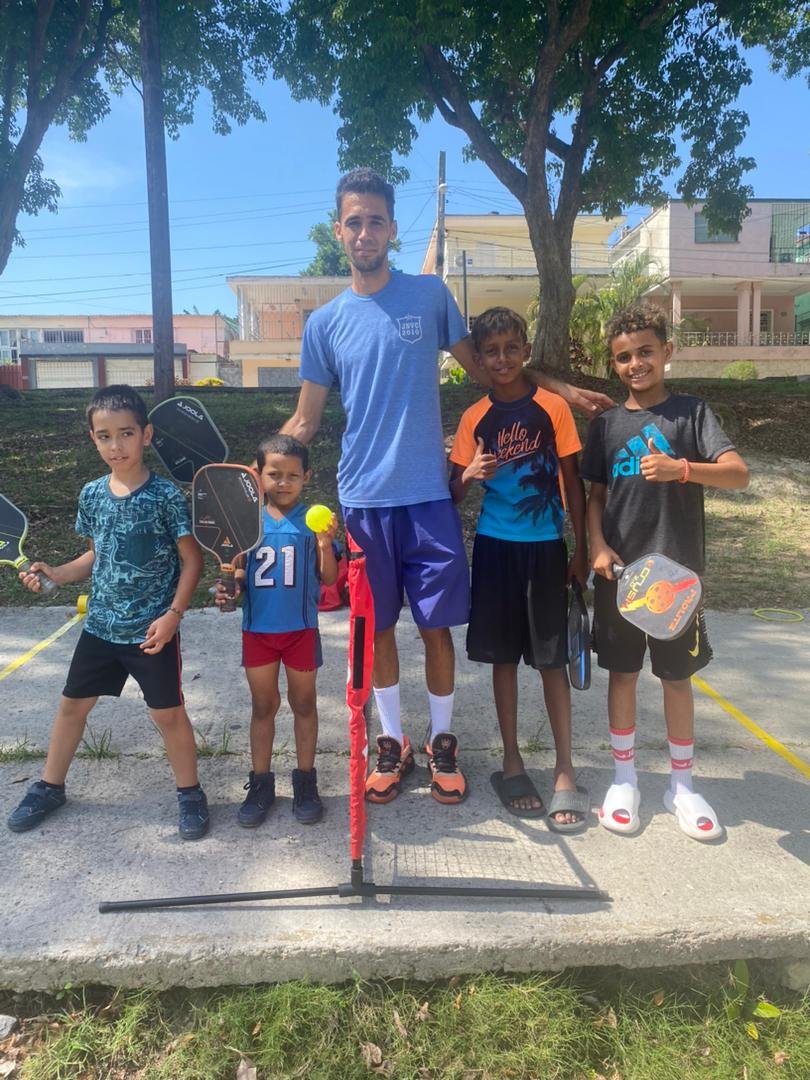
If you want to see where López is placing his biggest bet, look at schools.
“Pickleball in schools is essential for any sports development program,” López said. “It allows many students, for the first time, to hold a paddle and experience hitting a ball.”
Schoolyards can be quickly converted into courts. That’s important anywhere, but especially in places where dedicated facilities are limited. Schools also create continuity. They build familiarity. They normalize a sport so it’s not just “something you try once,” but something you grow up with.
“Pickleball creates social and human opportunities,” he said. “It helps young people build lifelong friendships and promotes positive values from an early age.”
Latin Junior Pickleball and the Bigger Vision
Beyond Cuba, López is also leading Latin Junior Pickleball, an initiative designed to create a junior pipeline across Latin America through public exhibitions, family-based programming, and international exchange.
One of the clearest signals of how he thinks is in the environments he lists: shopping malls, parks, beaches, academies, and schools. The strategy is consistent. Put the sport where people already gather.
“Junior pickleball is growing during one of the most exciting moments in the sport’s history,” López said. “When that day arrives, it will be the juniors who carry the torch.”
His dream is specific: Latin American juniors eventually studying and competing on scholarships at U.S. universities.
And it’s why he describes the program in terms that are bigger than medals.
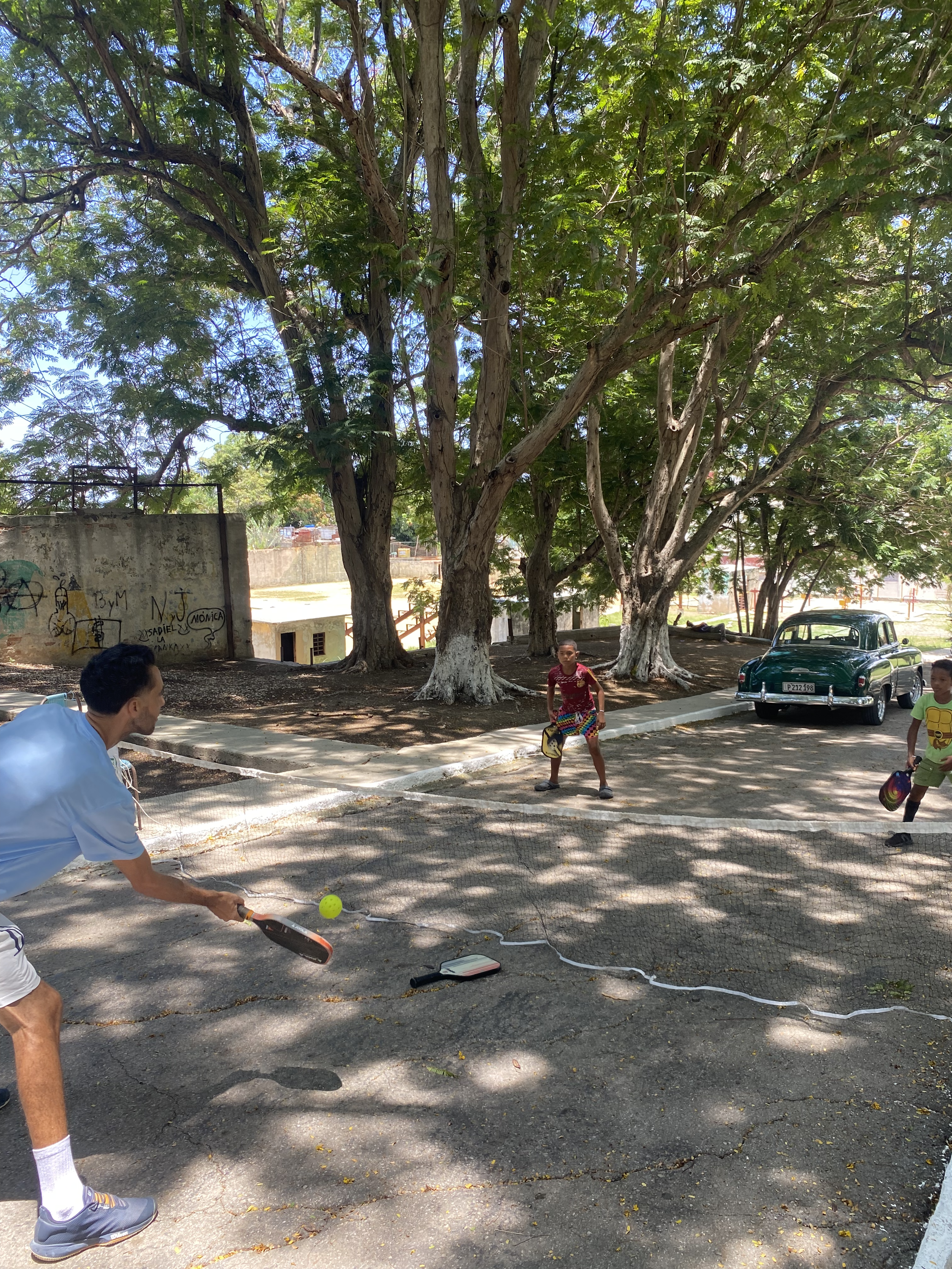
“Through international sports exchanges, we use pickleball as a powerful tool to foster unity, development, and healthy competition,” he said. “With Latin Junior Pickleball, we don’t just develop athletes; we build bridges.”
What Progress Looks Like Right Now
For López, one proud moment stands out: traveling to Peru for the Pickleball World Cup and meeting the wider international pickleball community. Not because it was flashy, but because it was proof that Cuba’s version of the sport, built on borrowed paddles and improvised courts, belongs in the same conversation.
Looking ahead, his vision is simple and conditional. If international support continues, he believes Cuban pickleball can stand at the forefront alongside neighboring islands like the Dominican Republic and Puerto Rico.
While professional pickleball draws attention, much of the sport’s growth is happening in church patios and schoolyards, where access starts with basic equipment. López’s message to the global community is direct: “Let’s continue strengthening collaborative efforts to take pickleball to the highest level of Olympic sport.”