

Pickleball’s Olympic Ambition Meets Reality at the ITA Clean Sport Seminar
Pickleball loves to talk about growth. Participation numbers. Television deals. International expansion. The possibility of the Olympic rings one day hanging next to a paddle.
But at the recent Clean Sport Education Seminar hosted by the Global Pickleball Federation in partnership with the International Testing Agency, the conversation shifted from hype to hard truth.
If pickleball wants to be an Olympic sport, it will have to live by Olympic rules.
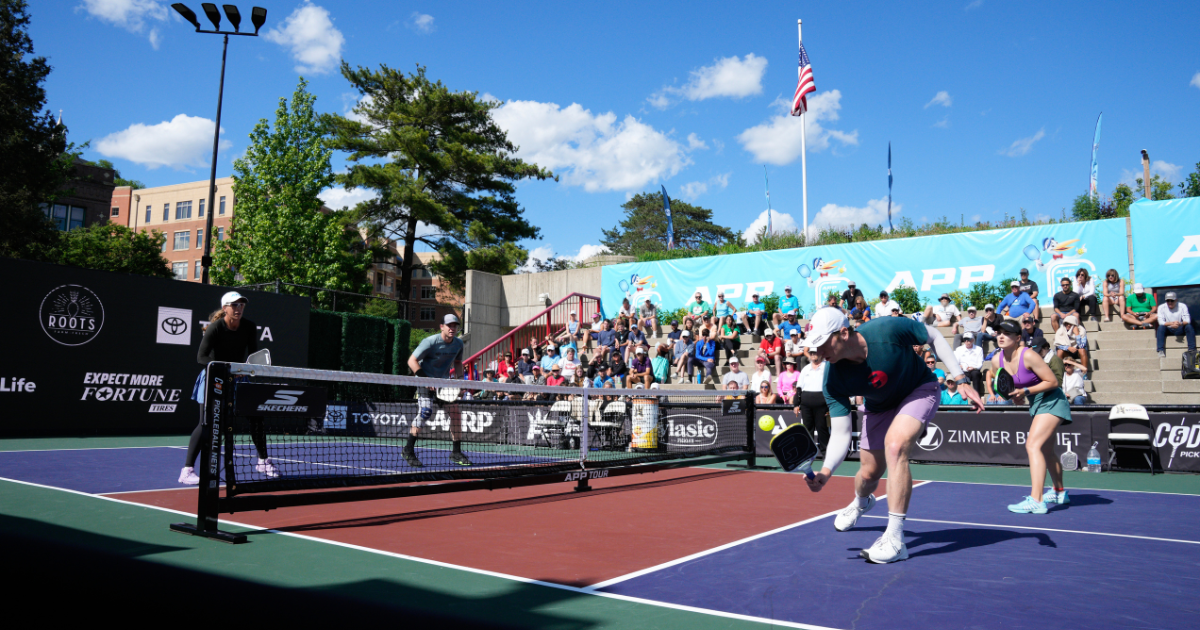
Photo by The APP
And those rules are far stricter than many in the sport may realize.
One story shared during the seminar made that point painfully clear. An Olympic athlete woke up with a cold in the middle of competition. They did what any responsible competitor would do: they went to the team doctor. The doctor prescribed cold medication. The athlete competed, won gold, and stood on the podium believing everything had been properly handled.
After the event, the athlete was tested.
The medication contained a banned substance. The gold medal was stripped.
There was no allegation of intentional cheating. No elaborate doping scheme. Just a common medication with ingredients listed on the prohibited list. Under the principle of strict liability, intent does not matter. Responsibility does not shift to the doctor. It does not fall on the federation. It rests solely with the athlete.
For a sport like pickleball—built on community courts, open play rotations, and a culture that prides itself on accessibility—that level of accountability feels foreign. But it is standard operating procedure for Olympic sports.
The seminar didn’t stop there. Another scenario painted an equally uncomfortable picture. Imagine winning the biggest match of your life. A sponsor is waiting. Media requests are piling up. Your coach is urging you to capitalize on the moment. At the same time, you’ve been selected for doping control.
In that situation, there is only one correct move: report immediately.
Athletes do not get to negotiate timing. They do not get to prioritize sponsorship opportunities. They remain in sight of the doping control officer, comply with the process, and complete testing before anything else. Failing to do so can itself become an anti-doping rule violation.
It’s a reminder that Olympic sports are not casual. They are procedural, regulated, and enforced.
Perhaps the most eye-opening component for many was the requirement for whereabouts filings. Elite athletes in a registered testing pool must provide detailed information about where they will be in the weeks and months ahead: training locations, travel plans, sleeping addresses, and a designated 60-minute window every single day during which they must be available for potential testing. Missing that window repeatedly can become an anti-doping violation.
For a sport that still thrives on spontaneity—“Text me when you get to the courts”—that level of administrative discipline represents a cultural leap.
The seminar also addressed supplements, an area where pickleball culture and Olympic governance may be on a collision course. Many supplements are poorly regulated, contaminated, or mislabeled. Even products that appear harmless can contain substances prohibited in competition. No supplement is 100 percent risk-free. For elite athletes, every scoop, capsule, and energy drink is a calculated decision.
Taken together, the message was unmistakable. Clean sport is not just about catching cheaters. It is about building credibility.
The partnership between the Global Pickleball Federation and the International Testing Agency signals that pickleball’s leadership understands what’s required to enter serious Olympic conversations. Aligning with the World Anti-Doping Code, educating athletes globally, implementing testing programs, and enforcing compliance are not optional steps. They are prerequisites for Olympic inclusion.
But culturally, pickleball still exists in two worlds. One is joyful, community-driven, and refreshingly laid-back. The other—the one governed by Olympic standards—is structured, audited, and uncompromising.
The sport’s rapid rise has sparked understandable excitement about its global future. Yet popularity alone does not earn a place on the Olympic program. Governance does. Integrity does. Infrastructure does.
Listening to the ITA describe an athlete losing a gold medal over cold medicine forces a sobering realization. The Olympic dream for pickleball isn’t just about filling stadiums or securing broadcast deals. It is about accepting that “I didn’t know” is not a defense—and that even the smallest oversight can carry enormous consequences.
Pickleball’s growth has been extraordinary. Its next challenge is maturation.
If the sport truly wants the rings, it must embrace Olympic anti-doping rules fully, rigorously, and without compromise.
