

The “Tennis Elbow” Reality Check: Prevention Strategies for Picklers
Your elbow doesn’t randomly “go bad.”
It usually whispers first. A little soreness after a long session. A dull ache when gripping your paddle. A backhand that suddenly feels… weaker.
Then one day you squeeze the handle and think: Oh. This is a problem.
Let’s call it what it is. “Tennis elbow” in pickleball is almost never a freak injury. It’s load management catching up to you.
This is your reality check.
What Tennis Elbow Actually Is (And Isn’t)

Tennis elbow is the common name for lateral epicondylitis—more accurately called lateral elbow tendinopathy (or epicondylalgia). It’s pain and tendon breakdown where your wrist extensors attach on the outside of your elbow.
The main culprit is a muscle called the extensor carpi radialis brevis (ECRB). Its job is to stabilize your wrist when you grip and strike.
Here’s the key detail most people miss: despite the “-itis” ending, this is usually not an inflammation problem. It's more of a wear-and-overload problem, which is why it can hang around if you keep doing the exact thing that sets it off.
Translation for the rest of us: if it’s persistent, you typically do not rest it back to health. You rebuild capacity.
How Common Is Tennis Elbow in Pickleball?
We need to be honest: we do not yet have perfect pickleball-specific data for clinically diagnosed tennis elbow. Most data comes from:
Self-reported injury surveys
Courtside clinical screening
Emergency department databases (which mostly capture fractures and falls, not chronic tendon pain)
That said, the signal is real.
A 2025 courtside study of recreational players found that only 5.4% had positive screening tests consistent with tennis elbow at the time of testing.
A 2023 recreational survey reported 28% had at least one overuse injury, and tennis elbow was the most common overuse issue in that sample.
A large U.S. nationwide survey reported 18.4% 12-month prevalence of elbow injury complaints. Not all of those were tennis elbow—but the elbow is clearly a frequent problem area.
So while exact “tennis elbow rates” aren’t nailed down, the elbow is one of the most common pain sites in the sport.
Why Pickleball Loads the Elbow
Pickleball is not a low-stress sport for the forearm. It’s a high-repetition, high-grip-demand sport. Here’s what actually stresses the tendon:
The Death Grip
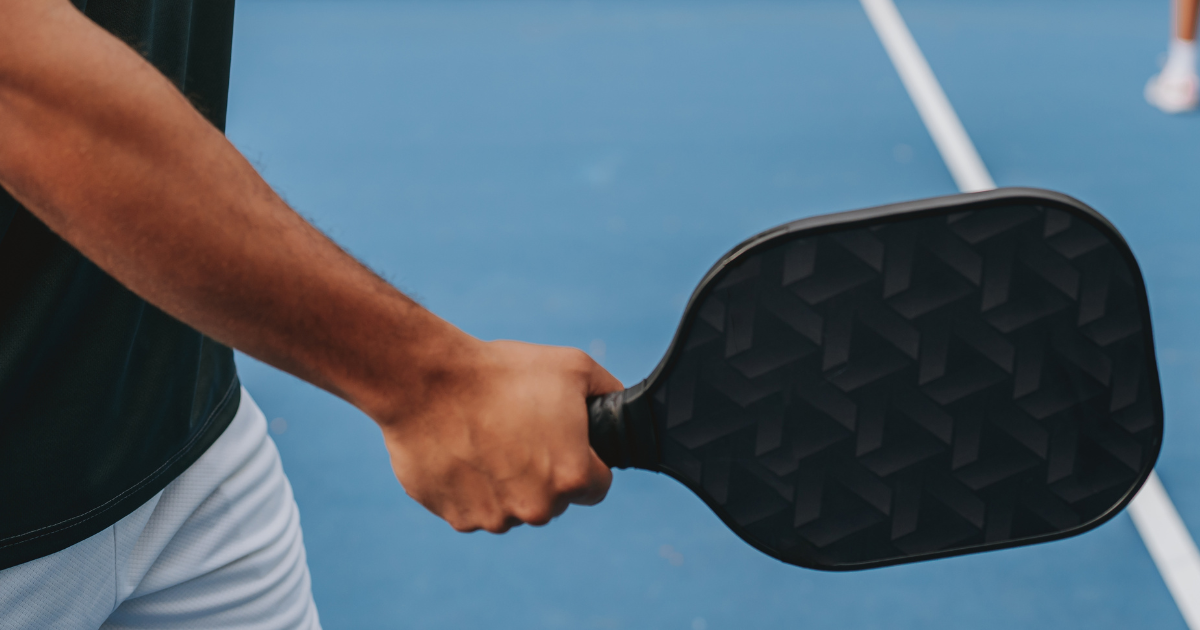
A tight baseline grip has been associated with significantly higher upper extremity injury risk in pickleball surveys. Mechanically, a tighter grip means your forearm muscles stay “on” constantly. That increases strain at the tendon, especially on mishits or fast exchanges.
If you’re squeezing like your paddle might escape, your elbow is working overtime.
Repetitive Dinking
Dinking looks gentle, but its sneaky. Low power, high volume, constant wrist stabilization. That combo is classic tendinopathy territory when your weekly exposure outpaces what your tissues can handle.
Backhand Blocks and Late Contact
This is where people get into trouble fast.
When contact is late and your wrist gets forced backward, your wrist extensors have to fight that force to stabilize the paddle. In normal terms: your forearm is doing a hard “brake” action over and over.
That repeated braking load is the tendon strain moment.
Play Volume
This is a big one, because once you start playing pickleball… it’s hard to stop. Multiple pickleball studies link injury risk with:
More weekly hours
Longer sessions
Consecutive-day play
Tournament density
If you went from twice a week to five days in a row (trust us, we get it!), your tendon noticed.
The Biggest Myth: “I Just Need to Rest It”
Short-term unloading helps calm symptoms. But persistent lateral elbow tendinopathy responds best to progressive resisted loading.
Physical therapy clinical practice guidelines recommend:
Isometric wrist extensor exercises
Concentric/eccentric strengthening
Gradual return to sport loading
Unfortunately, icing and good vibes won’t solve the problem. You have to rebuild the system.
What Prevents Tennis Elbow
Treatments can help symptoms. Prevention is mostly about the stuff you can control.
Manage Volume Like an Athlete
Avoid sudden jumps in weekly hours
Be cautious with consecutive long sessions
Ramp back slowly after time off
Pickleball research consistently links injury risk to play density. So if you want fewer elbow problems, volume has to be part of the plan.
Fix the Grip
Firm handshake, not vice grip. If your forearm is fried after play, you’re probably over-squeezing.
Keep the Wrist Neutral at Contact
Avoid wrist-leading saves. Avoid excessive flicking under pressure. Late contact and wristy bailouts force the forearm to absorb more shock.
Consider a Two-Handed Backhand
In racquet sports, load-sharing can reduce lateral elbow stress. If you’re elbow-prone, it is worth experimenting with drives and blocks.
Strengthen, Don’t Just Stretch
Here are a few core exercises to build capacity:
Wrist extension isometrics: 5 x 30-45 seconds
Slow eccentric wrist extension: 3 x 12-15 reps
Hammer pronation and supination (slow): 3 x 10-12 reps
Submax grip endurance (30-40% effort): 3 x 30-45 seconds
Most meaningful changes take 6-12 weeks. Not six days.
The Truth About Tennis Elbow (And More)
If you’re experiencing any of the following, get evaluated:
True weakness
Numbness
Locking or catching
Rapid worsening
Night pain that’s escalating
Lateral elbow pain is not always tennis elbow. It can be radial tunnel syndrome, elbow osteoarthritis, cervical referral, or nerve irritation. Imaging is sometimes needed when symptoms are atypical or not improving.
And if you’re recovering from tennis elbow, relapse is most likely when you:
Return to the same volume immediately
Keep gripping too tight
Stop strengthening once pain drops.
Capacity is what protects you.
Pickleball doesn’t “cause” tennis elbow. Excess repetition and poor load progression do.
If your elbow is whispering, listen early. If it’s yelling, rebuild smart.
The goal is to still be playing years from now—without wincing every time you shake hands at the net.
