

Types of Spin in Pickleball: When and How to Use Them
If you want to level up fast, don’t just hit harder. Hit smarter.
At higher levels, there is spin on almost every shot. You need to read the spin your opponent puts on the ball and learn how to impart your own spin in response.
Spin is the difference between a ball that simply clears the net and one that forces a weak reply. It dips. It kicks. It skids. It pulls your opponent off the court. It changes contact height.
Most recreational players focus on power. Better players focus on control and manipulation.
Here are the three types of spin that matter in pickleball—and how to use each one.
Topspin
What It Does
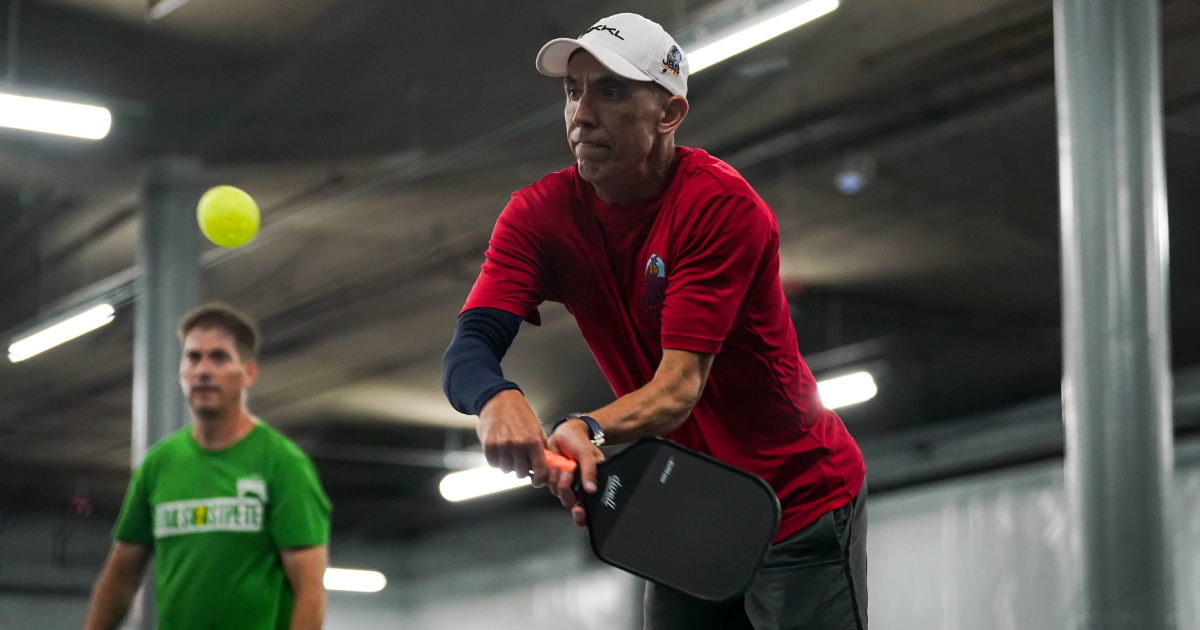
Photo by Champions Series Pickleball
Topspin creates forward rotation on the ball. That forward rotation makes the ball dip faster after crossing the net and jump forward after the bounce.
That means you can swing aggressively and still keep the ball in.
When to Use It
Third-shot drives when you want pace with margin
Passing shots against players crowding the kitchen
Roll volleys at the NVZ line
Dinking crosscourt to push your opponent out wide
Topspin is your green light to accelerate without losing control.
How to Hit It
Use a low-to-high swing path
Brush up the back of the ball
Finish higher than you start
Think “roll up the back” instead of “hit through”
Compact swings at the kitchen line are key. Big backswings kill consistency.
Backspin (Slice)
What It Does
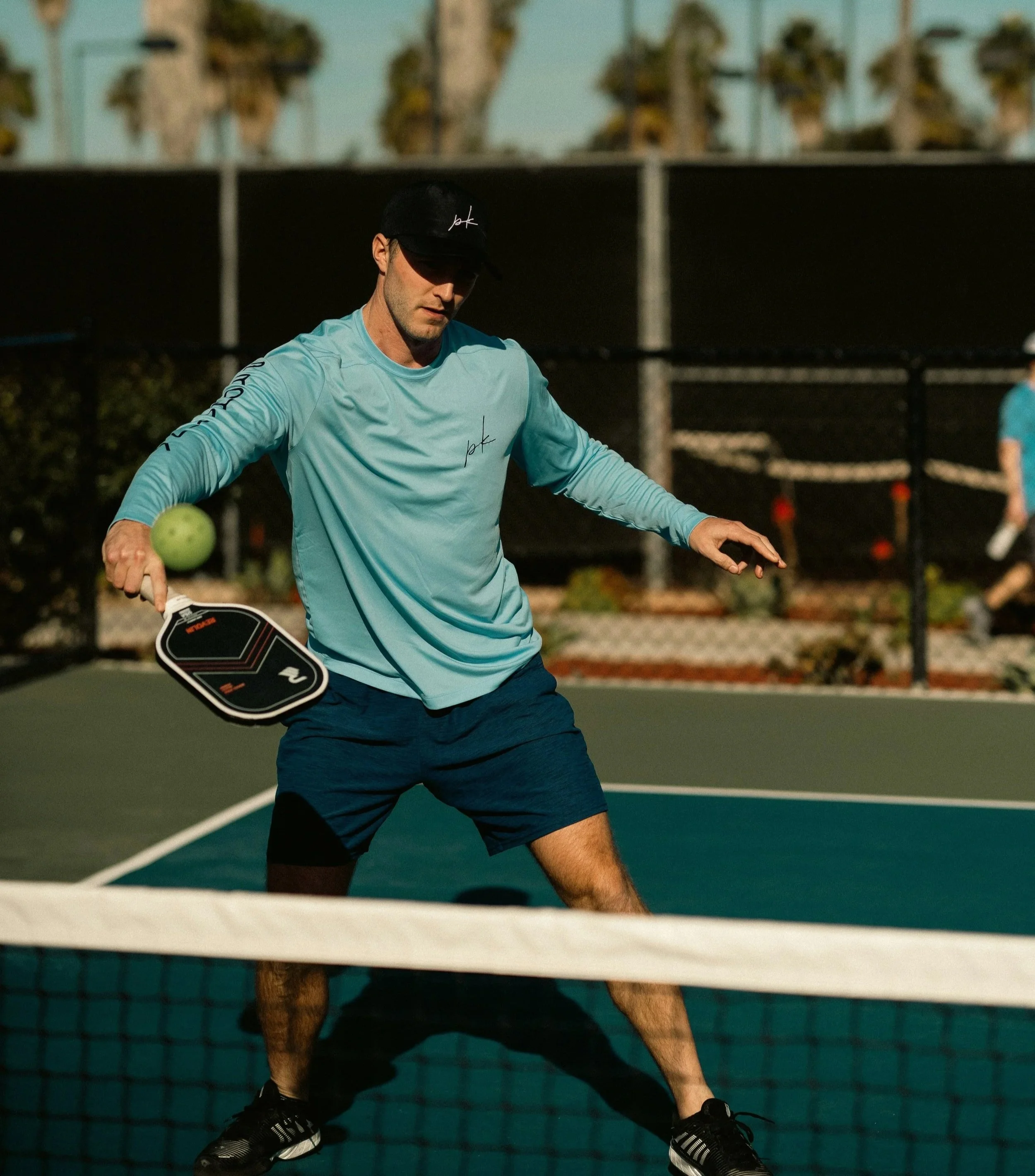
Backspin—often called slice in pickleball—rotates the ball backward. It tends to float slightly in the air but stays low and skids after the bounce.
It’s disruptive. It steals attacking height.
When to Use It
Returns of serve to keep the ball low
Drop shots that die in the kitchen
Block volleys that land at your opponent's feet
Dink rallies to create a pop-up
Backspin is especially effective against players who love waist-high contact. Take that away, and their power disappears.
How to Hit It
Use a high-to-low swing path
Keep the paddle face slightly open
Finish forward, not straight down
Avoid over-slicing. Excess spin without control turns into floaters.
Sidespin
What It Does
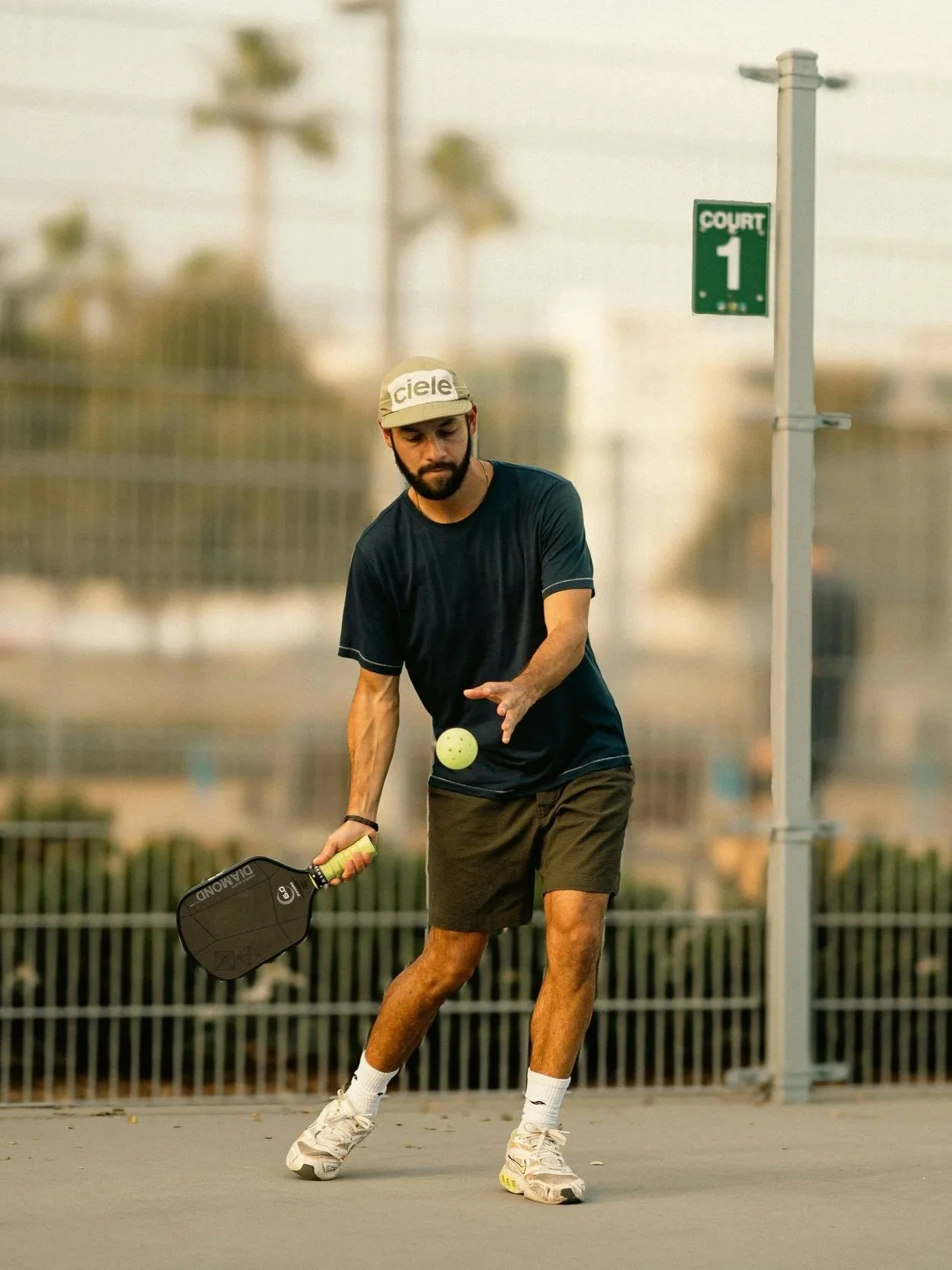
Sidespin makes the ball curve in the air and kick sideways after it bounces.
It creates angles that stretch your opponent beyond their comfort zone.
When to Use It
Wide serves to pull opponents off the court
Inside-out forehands from mid-court
Third-shot drops that move left to right
ATP attempts to bend the ball around the pole
Used well, sidespin opens space. It moves your opponent from side to side and forces them out of position.
How to Hit It
Brush across the outside of the ball
Adjust paddle angle based on direction
Stay balanced—footwork matters more with sidespin
Add sidespin to shots you already control. Don’t build your game around it too early.
How Spin Actually Wins Points
Spin is not about flair.
It’s about managing contact height and positioning. It forces your opponent to hit the ball from an uncomfortable position, such as their shoetops.
Spin also forces your opponent to react more carefully. It’s hard to attack a drive hit with heavy topspin. Now they’re on their heels playing defense, and you can dictate the point.
It’s important to learn all three types of spin, not only to use them offensively but also to defend against them. Great players combine them strategically: a wide sidespin serve, a heavy topspin third shot, a skidding slice reset. Now you’re playing a high-level point.
Where Players Get It Wrong
They chase spin before they master:
Consistent contact
Smart shot selection
Kitchen line comfort
One of the first things new players must learn is to get comfortable at the kitchen line—stepping forward into pressure instead of staying back. Spin amplifies good positioning. It doesn’t fix bad positioning.
A Simple Practice Plan
Next time you drill:
Hit 20 topspin drives with margin over the net
Hit 20 slice returns that land deep and stay low
Hit 20 wide sidespin serves aiming near the sideline
Pro tip: Use a marker to draw a line around the circumference of a ball or color half of it so you can see the spin as it travels through the air.
Focus on repetition and depth control before increasing pace. Spin is a multiplier.
When your fundamentals are solid, it turns good shots into problems—and problems into points.
