

We Got an Early Look at The Power of Pickleball—Here’s What Stood Out.
The Power of Pickleball officially premiered March 16 on Apple and Amazon. We got the chance to watch the documentary before it launched.
Within the first stretch of the documentary, viewers are introduced to many of the people who helped shape the sport—grow it, advocate for it, organize it, and carry it into places the founders probably never could have imagined.
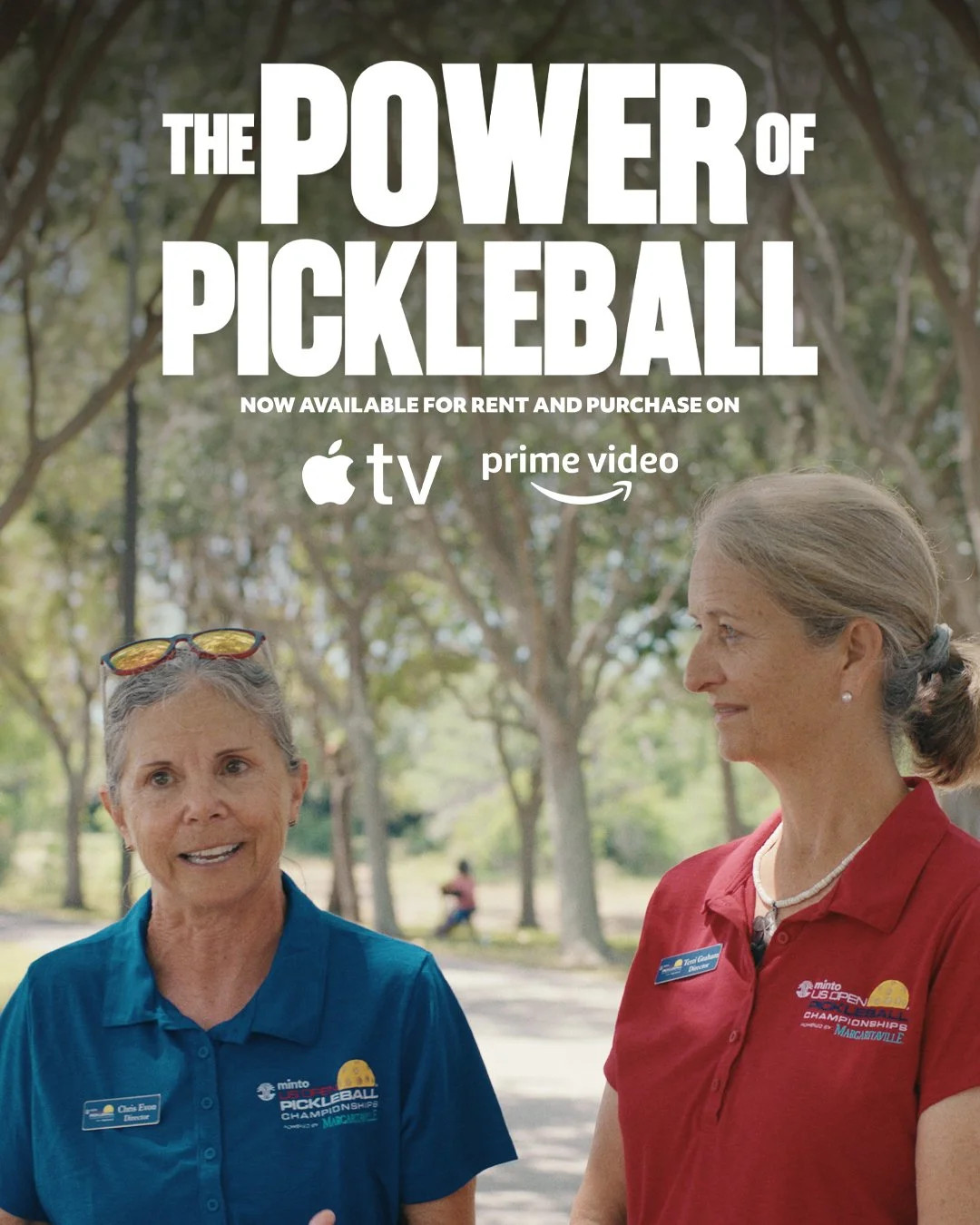
What makes The Power of Pickleball work is that it doesn’t assume the viewer already knows about the sport. If you’ve been around it for years, there are plenty of familiar faces and moments that will make you smile. Even viewers new to pickleball won’t feel left behind.
Director Alexander Jeffery spent more than two years capturing interviews and stories from across the pickleball world.
“We started filming the documentary in April 2022 and our last bit of filming took place at the U.S. Open in 2024,” Jeffery said. “My mom and aunt put pickleball on my radar, and I was so curious about why the sport became so pervasive in our culture. What ended up hooking me as a filmmaker was all of the lives pickleball has changed for the better.”
Jeffery said he didn’t initially come to the sport as a die-hard player.
“I begrudgingly played with my mom before making the movie and now I love it.”
How The Power of Pickleball Brings the Early Days to Life
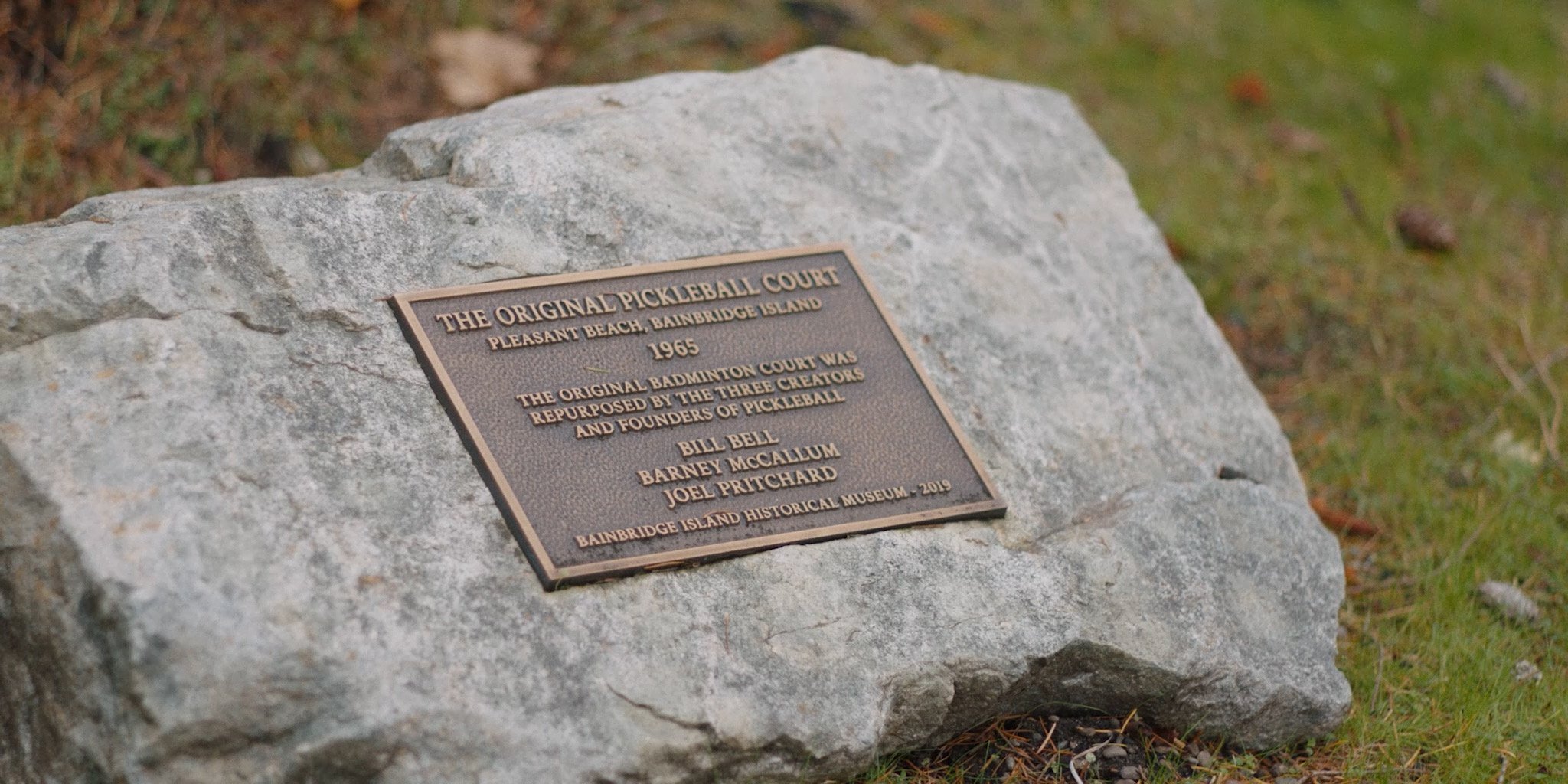
The film uses a mix of old photos, present-day interviews, and archival-style storytelling to show how simple the sport once was. People introduced friends because if they got more people playing, they’d have someone to play with again tomorrow.
There’s also something really enjoyable about hearing the different versions of pickleball history that still exist, especially when it comes to the sport’s name.
As Jennifer Lucore explains, the founders themselves didn’t even realize what they were creating at the time.
“They didn’t know what they were making, so how were they supposed to know?” Lucore says.
The documentary also does a nice job showing that accessibility was baked into the sport early on. Even the messaging on the original pickleball set pointed to that idea. This was a game people believed could get anyone off the sidelines and onto the court.
The People Behind the Power of Pickleball
The Power of Pickleball doesn’t just move through facts and milestones. It lets individual stories carry the emotion. That choice makes the sport feel personal instead of just historical.
For longtime pickleball people, there are plenty of recognizable names throughout the film. Viewers hear from many of the voices who helped shape the sport over the years, including Jennifer Lucore, Rusty Howes, Seymour Rifkind. It also highlights those who have spent decades helping to grow the game. There are moments that hit harder because they remind you how many people quietly helped build this game behind the scenes. Referees, founders, organizers, ambassadors, tournament directors, media voices, fans, and players all have a role in this story.
And honestly, that’s one of the most accurate things about pickleball. Everyone has a story about how they found it. Some are deeply emotional. Some changed the course of a person’s life.
Jeffery said that hearing those personal stories was one of the most powerful parts of making the film.
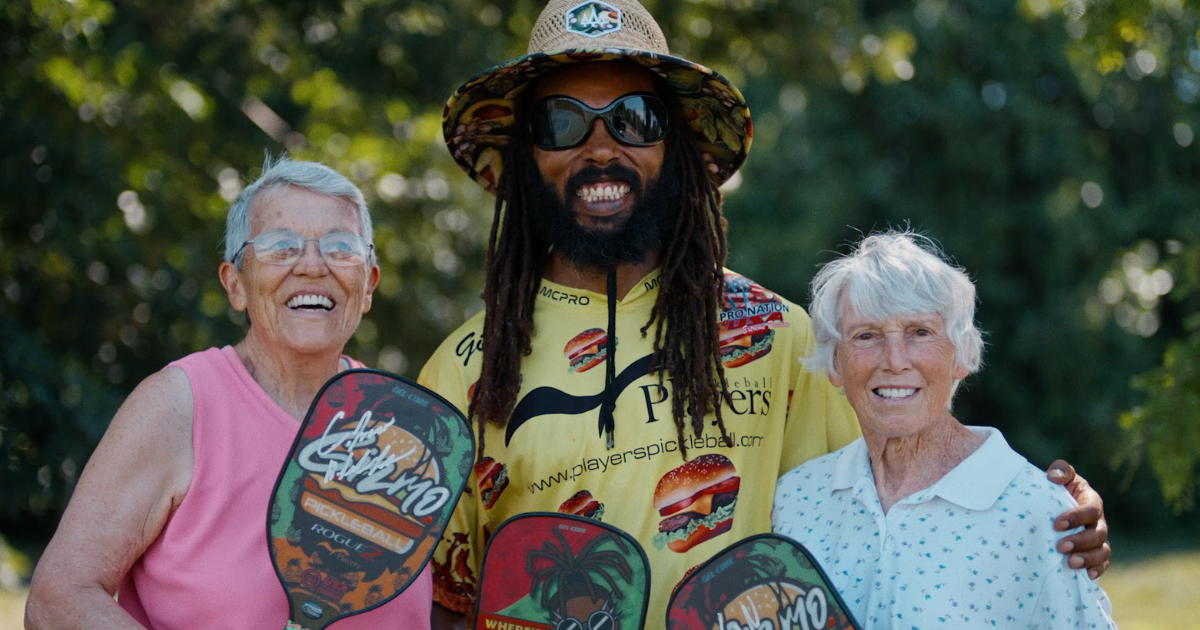
J “Gizmo” Hall with the two individuals who first got him into pickleball.
“A common theme that emerged from everyone in the film was community and volunteerism—people spreading the gospel of pickleball simply for the love of the sport,” Jeffery said. “Gizmo’s story is really special to me, and when Steve Paranto gets emotional talking about sharing his Hall of Fame induction with his father… that part always makes me choke up.”
There’s a line in the documentary about how there isn’t a player out there who isn’t dealing with something. Again and again, people find this sport whenever they need connection, movement, purpose, or a way back into themselves.
How Pickleball Grew Beyond the Pros
Yes, the pros matter. Yes, the big events matter. But the documentary makes it very clear that early ambassadors were crucial. These were the people going to local meetings, pushing for courts, teaching new players, organizing communities, and doing the unglamorous work that helped the game spread.
Figures like Seymour Rifkind and other ambassadors worked tirelessly to introduce the game to new communities. Their work laid the groundwork for the explosion the sport would see years later.
It’s easy to talk about pickleball’s rise now that there’s money, media attention, and major investment. It’s harder, and more important, to remember the people who put in years of effort before any of that showed up.
How the Documentary Explores Pickleball’s Growth
The Power of Pickleball isn’t just nostalgic about the early days. It also explores how the sport has evolved as it has grown.
There’s a contrast between the early stories of players competing together in smaller community settings and the more structured, professional environment that exists today. Growth has naturally brought changes, and the documentary acknowledges that shift while still keeping the focus on the people who helped build the game along the way.
Jeffery says many of the early players he interviewed reflected on how much the sport has changed as it’s grown.
“The biggest change in pickleball is that, seemingly overnight, a lot of people started paying attention and saw the financial opportunity in the sport,” Jeffery said. “Pickleball has changed so much ever since we started filming that we decided to focus on what’s evergreen about pickleball: the grassroots community and ambassadors who grew it long before it became an ‘overnight’ phenomenon.”
Why Pickleball Works as a Storytelling Sport
Can pickleball work as a spectator sport? In some formats, yes. But the bigger point this documentary makes is that pickleball absolutely works as a storytelling sport.
People will watch when they know who someone is and feel emotionally connected to the story. The documentary touches on modern personalities like Sydney Steinaker and content creators who have helped bring new audiences into the sport, while longtime voices like Rusty Howes at Pickleball Channel explain why pickleball’s pace and strategy can make it compelling to watch when presented well.
Pickleball has never been lacking stories. If anything, it has too many. The challenge has always been telling them well. The Power of Pickleball succeeds because it understands that the game itself is only one part of why people care. The people are the reason.
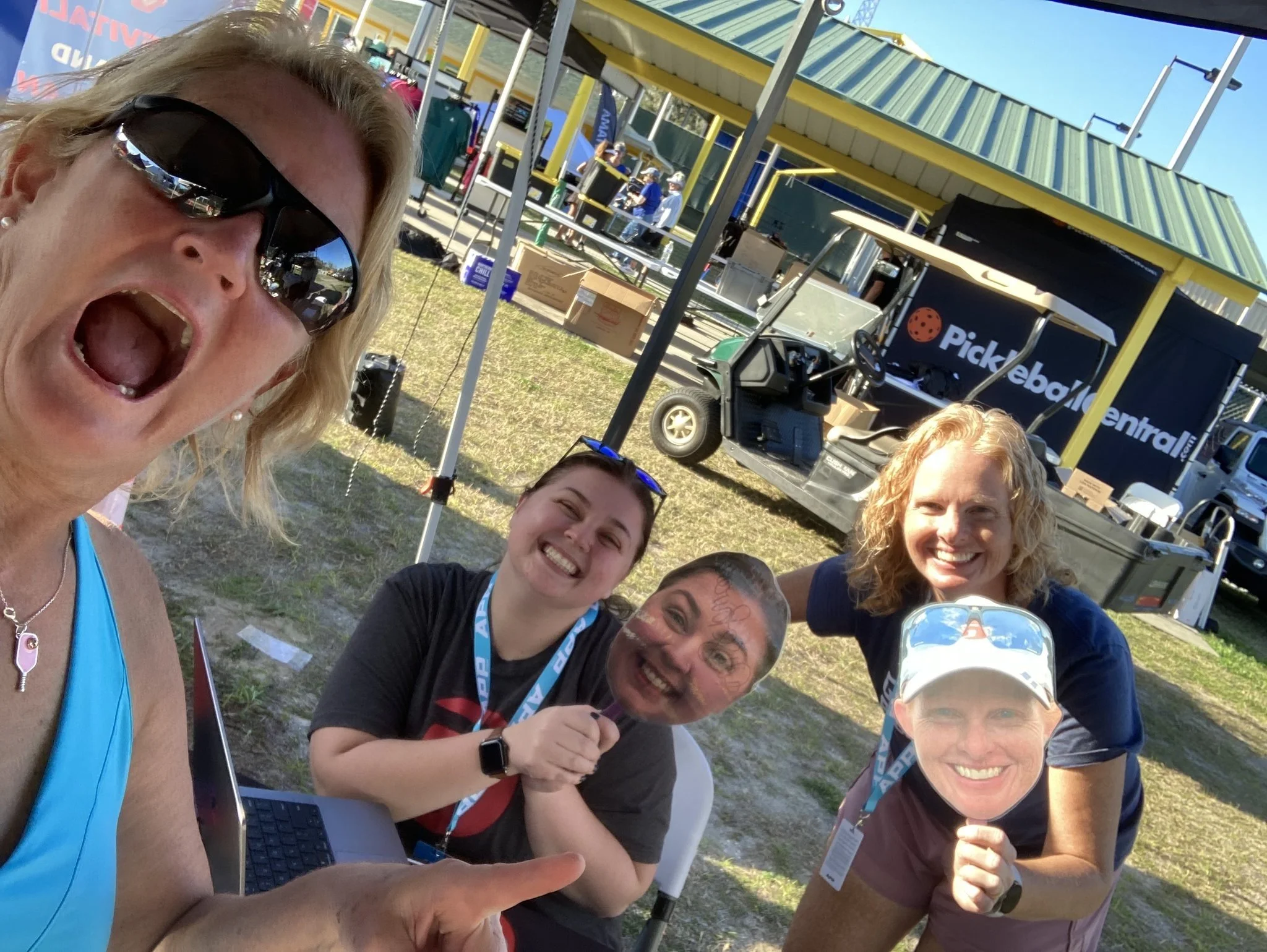
A throwback photo of Kathy Demetri and Paige Powers, with Senior Pro Jen Griffin at an APP tournament in 2023.
The film also highlights some of the personalities that helped shape the culture around pro pickleball, including longtime superfan Kathy Demetri. For years, Kathy has been known for showing up to tournaments with rubber chickens and player heads to hype up the crowd and the athletes.
I’ve been lucky enough to know Kathy over the years and even ended up with my own oversized player head. Watching her appear in the documentary was a reminder that fans have always been part of pickleball’s story too. The energy people like Kathy bring to the sidelines helped shape what pro pickleball crowds feel like today.
The Moments That Go Beyond Professional Pickleball
A few of the most emotional moments in the documentary come from the sport’s broader community, not just its competitive side.
The film touches on adaptive pickleball, accessibility, and the ways this sport meets people where they are. Those scenes are some of the strongest in the entire documentary. They’re a reminder that joy in pickleball isn’t one-size-fits-all, and access to joy isn’t something every athlete has always had in other sports spaces.
Different ages. Different backgrounds. Different bodies. Different entry points. Still one court, one game, one shared experience.
It also highlights international growth, and those sections add another important layer. The game’s expansion around the world still feels connected to the most hopeful, community-driven version of the sport.
What The Power of Pickleball Leaves You Thinking About
By the end of the documentary, what stays with you isn’t just the timeline of pickleball. It’s the people.
The fans. The players. The organizers. The people who found the game when they needed it. The people who gave it shape. The people still trying to protect what made it special.
I’ve been in pickleball since 2019, and one thing I’ve always said is that when you’re in it as deeply as some of us are, the sport starts to feel small. You see the same people. You hear the same names. You realize quickly how interconnected everything is.
The documentary captures that feeling well, but it also reminds viewers that pickleball is much bigger than any one lane of it. Bigger than the pros. Bigger than the drama. Bigger than the business deals.
At its best, pickleball is still about people.
And this is exactly what The Power of Pickleball gets right.
When asked about the future of the sport after hearing so many perspectives, Jeffery points to the same thread that runs throughout the film.
“I do feel a sense of hope from those that have been in the sport for a long time,” Jeffery said. “But I also feel a sense of worry about staying true to the original spirit of the game.”
Yes, the film shows the good, the growth, and the ugly. Yes, it acknowledges the fractures. But it never loses sight of the thing that made people fall in love with the sport in the first place: the connection, the fun, the access, and the stories.