

Inside Project P: Sydney Steinaker’s Night Pickleball Rave in Las Vegas
Pickleball is usually loud in a very specific way—paddles popping, chatter between points, someone calling the score across the court.
This is a different kind of loud.
Before you even reach the entrance of the Plaza Hotel in Las Vegas for the upcoming Project P event, you’ll feel it. The bass. The kind that hits your chest before you see where it’s coming from. The kind of sound that pulls you forward.
You walk through a tunnel, past exotic cars glowing under lights, and into a space filled with EDM, lasers, and a DJ commanding the area.
Then you’ll see it.
There is pickleball happening here.
But it almost feels secondary.
Games are forming naturally. Nobody’s calling levels. Nobody’s asking who has next. People rotate in, step off, and stay to hang out instead of leaving right after a loss. Some players are clearly new, and nobody seems bothered by it.
This isn’t pickleball with entertainment added.
It’s a rave that happens to have pickleball.

(And the crazy part is Sydney put it together in two weeks.)
Who Is Sydney Steinaker?
Sydney Steinaker didn’t become known in pickleball for being the best player in the room.
She became known for noticing the room.
She picked up pickleball in 2020 and started posting about the stuff every player recognizes immediately—the awkward first time you show up to open play, not knowing where to put your paddle, wondering if you’re about to break an unspoken rule, hoping your partner doesn’t apologize after every missed shot.
Her social media personality is what she calls “caffeinated and petty,” which mostly translates to honest observations about pickleball culture. Paddle rack politics. Regulars who treat a Tuesday morning game like Wimbledon. The silent panic of being the new person.
Players saw themselves in it.
Because most people playing pickleball aren’t chasing rankings. They’re trying to find a place they feel comfortable showing up to again.
Sydney understood that before a lot of the industry did.
Project P feels like the physical version of her content. Same humor. Same lack of pressure. Same sense that you’re allowed to just be a person who showed up.
What Happens at a Project P Pickleball Event?
Trying to describe Project P as a tournament doesn’t really work.
There’s music—EDM, dubstep—loud enough that nobody hears every mistake. A light show moves over the courts. Outside, cars glow under UV lights like you accidentally walked into a night meet-up instead of a rec sport.
People play, but they also hang out. Conversations keep going between games. Players bring friends who have never touched a paddle, and within minutes they’re on a court.
No one asks their rating.
That part is important.
For a lot of adults, the hardest part of pickleball isn’t learning how to play. It’s walking into a space where everyone already knows each other.
At Project P, you aren’t interrupting a group.
You’re joining an event.
You can stand around first. You can watch. You can play later. The pressure fades, and once that happens, people actually play more.
The paddle is just the excuse for everyone to be in the same place.
Why Project P’s Night Pickleball Format Works
Facilities everywhere are trying to solve the same problem right now. Beginners love pickleball the first time they try it. But, some of them never come back.
It’s usually not because they didn’t enjoy the game.
They just didn’t feel connected yet.
Pickleball originally grew because someone invited you back—a neighbor, a coworker, a friend. Community happened naturally when courts were scarce and everyone had to mix.
Now there are more courts, but not always an easy social entry point.
Project P shortcuts that.
Instead of:
Learn rules → find group → maybe feel comfortable
It becomes:
Meet people → come back → become a player
That order matters more than mechanics.
How Project P is Changing Social Pickleball
Sydney didn’t redesign pickleball.
She removed the fear around starting it.
The rave atmosphere isn’t really about nightlife. It just lowers the stakes. Nobody feels watched. Nobody feels evaluated. You don’t need a partner. You don’t need experience.
You just show up.
After that, the rest of pickleball takes care of itself. Players come back. They join leagues later. They improve later. But the first step—feeling okay being there—already happened.
Why Project P Matters for Pickleball’s Future
Professional pickleball is focused on spectators right now.
Project P is focused on participants.
Recreational sports last because people attach memories to them, not rankings.
At some point during the night, you notice something: players who met an hour earlier are already planning when they’re playing again.
That’s the real hook.
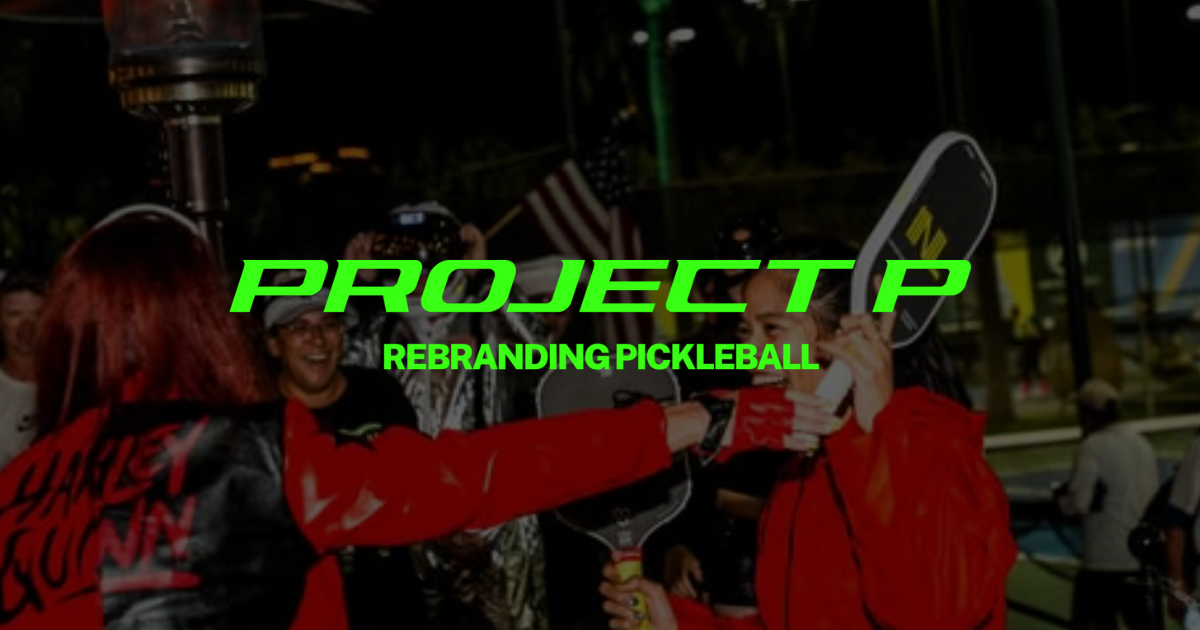
Glow lights. Loud music. Strangers becoming partners for a game they didn’t plan to play that night.
It feels less like an organized activity and more like somewhere you want to return.
A rave.
With a kitchen line.
And, almost as an afterthought—pickleball.
Curious about the next Project P event? You can find Sydney’s upcoming events and updates on her social channels.
