

What the China Masters in Hainan Revealed About Pickleball’s Global Direction
The best pickleball events don’t just produce winners—they tell you something about where the sport is headed. That’s exactly what happened at the WPC China Masters in Hainan. While the brackets were competitive and the talent was obvious, the bigger takeaway came from the atmosphere itself: pickleball is no longer growing in pockets. It’s growing together.
Held in early January, the China Masters brought players from dozens of countries to one place, all sharing the same courts. You could feel the scale immediately—not because it was flashy, but because it was intentional. The event wasn’t trying to prove pickleball belonged on the world stage. It simply assumed it did.
A Tournament That Felt Genuinely International
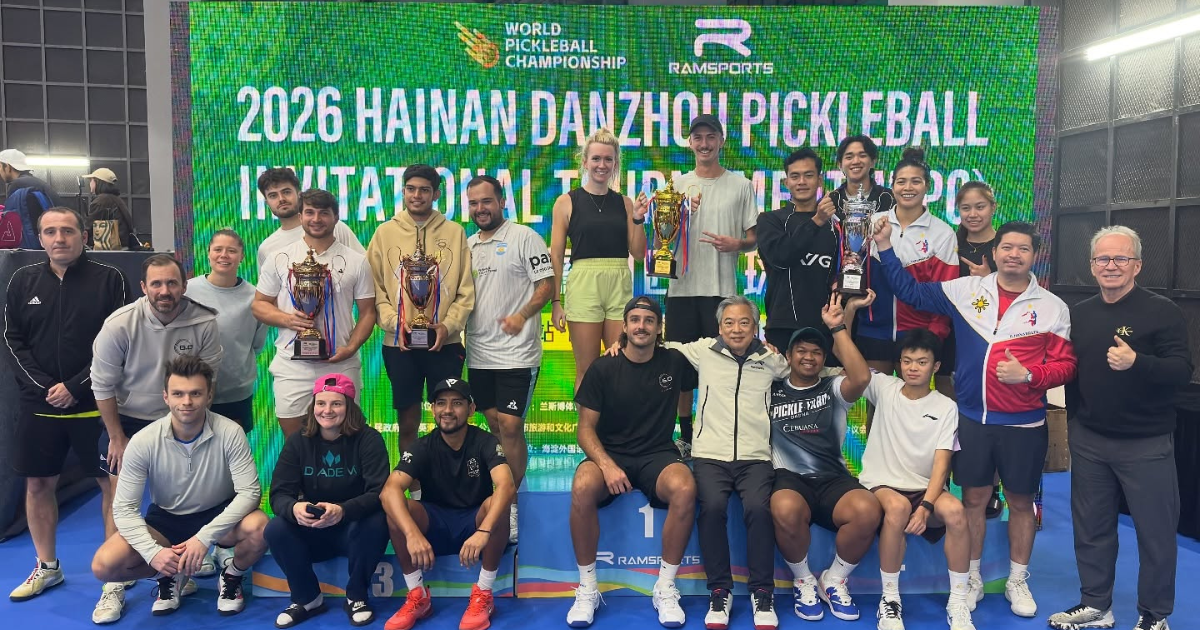
Photo by World Pickleball Championship
What made Hainan stand out was the mix of players. Local Chinese athletes competed alongside players who had traveled from across Asia, Europe, and the Americas. Juniors warmed up next to seasoned masters players. Styles varied, tempos shifted, and yet the flow of play felt natural.
This wasn’t a novelty event built around international participation. It was a competitive tournament where global representation was simply part of the fabric. That distinction matters. It signals maturity—both in how the event was run and in how the sport is evolving outside of North America.
The Quality of Play Told the Real Story
Across divisions, the level of play was consistently strong. Open matches brought speed, creativity, and pressure-heavy rallies. Doubles play leaned into strategy and communication. Age-group divisions showcased experience and patience, reminding everyone that smart pickleball ages well.
Women’s matches in particular reflected depth and confidence. Competitors showed control and consistency rather than relying on occasional bursts of power. It was the kind of play that keeps spectators watching—not because it’s loud, but because it’s sharp.
That balance between competitiveness and composure matters. It shows that international growth isn’t coming at the expense of quality. If anything, it’s raising the bar.
Why Events Like This Matter for Players Everywhere
It’s easy to talk about pickleball’s global expansion in abstract terms. What tournaments like the China Masters do is make that expansion tangible. Players don’t just see international flags—they experience different rhythms, strategies, and approaches to the same game.
That exchange matters. It pushes players to adapt. It builds respect across communities. And it reinforces something pickleball does especially well: bringing people into the same space and giving them a shared language through play.
Asia’s Role in Pickleball’s Next Phase
The takeaway from Hainan isn’t that Asia is “emerging” in pickleball—it’s that Asia is establishing itself. The organization, depth of participation, and competitive structure all point to a region investing thoughtfully in the sport.
This didn’t feel like a one-off showcase. It felt like part of a longer plan. And growth that’s intentional tends to last. Events like this reflect a commitment to building something sustainable rather than rushed.
The Moment That Lingered
Long after matches ended, what stood out most was the energy around the courts—players watching other divisions, sharing conversations between games, and connecting in ways that only happen when competition and community coexist.
That’s the heart of pickleball. Not just the points, but the people.
The China Masters in Hainan didn’t just add another event to the calendar. It offered a clear signal: pickleball’s future is global, competitive, and still deeply human. And if this is the direction the sport is moving, it’s a future worth showing up for.
