

Should You Attack Your Opponent’s Dominant Side in Pickleball?
For years, the strategy in pickleball was simple: find the opponent's backhand and attack it.
It was the safest place to apply pressure, the side most likely to break down, and the foundation of smart, percentage-based play.
But the game has changed!
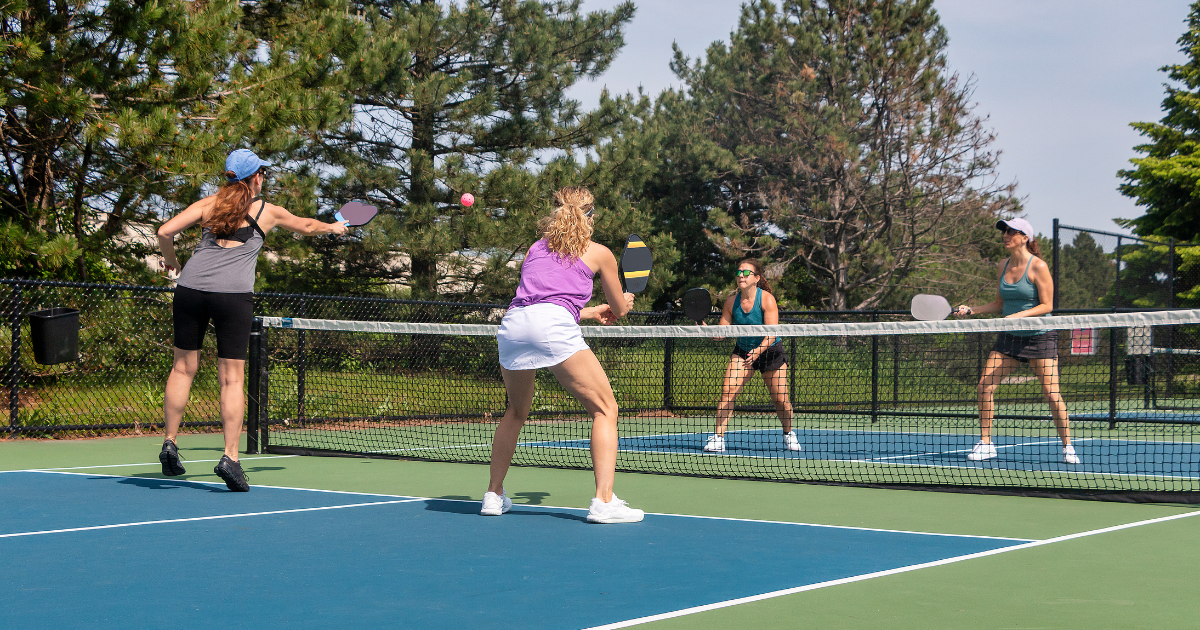
Today, players aren’t just surviving on their backhands. They’re turning them into weapons. At higher levels, and even more so at the recreational level, players are drilling backhand counters, backhand rolls, and two-handed backhand speed-ups.
What used to be a liability is now, in many cases, a strength.
Some players are so comfortable there that they want you to hit to their backhand. They’re sitting on it, anticipating it, and ready to crush it.
That shift alone should make you rethink the automatic “target backhand” mindset.
Why Targeting the Backhand Isn’t Always Effective Anymore
When a player knows the ball is coming to their backhand, they can lock in.
Their timing improves, their confidence grows, and suddenly that “safe target” becomes predictable.
And in pickleball, predictable is dangerous.
You’re no longer applying pressure. You’re feeding into their game plan.
Why Attacking the Forehand (Dominant Side) Can Work
The dominant side, usually the forehand, is often treated like a no-go zone.
But that’s not always the right read anymore.
In fact, there are moments when attacking the dominant side creates more disruption than targeting the backhand. Not because the forehand is weaker, but because it’s more exposed.
Players rely on it. They sometimes overuse it. And when something is heavily relied on, it can be manipulated.
Players who favor their forehand (like me) will often take extra space to use it. That shifts positioning and can open up their body.
That’s where smart attacks come in.
A ball driven into the dominant side, tight to the hip or shoulder, can jam them and take away their ability to extend and generate power.
What looks like you’re “giving them a forehand” is actually you taking control of their contact point.
The Psychological Advantage
There’s also a psychological element.
When you consistently avoid the forehand, you allow your opponent to feel comfortable. They know where the ball is going and can settle into a rhythm.
But when you mix in attacks to their dominant side, especially at the right moments, you disrupt that rhythm.
You force hesitation. You make them second-guess.
Where This Matters Most: The Kitchen Line
In fast exchanges at the kitchen line, this matters even more.
Players who are geared up to counter off the backhand can get caught off guard when the ball is redirected to their dominant side with pace and precision.
If the contact point is taken away or rushed, even a strong forehand can break down.
The Real Strategy Shift
None of this means that you abandon the backhand as a target.
It’s still a critical part of the game. But it’s no longer the automatic answer it once was.
The evolution of the backhand has changed the equation.
The best players today aren’t confined to one pattern. They recognize when a backhand isn’t a weakness anymore, when it’s being anticipated, and when it’s time to shift.
Pressure doesn’t come from simply choosing a side. It comes from taking away time, space, and predictability.
So yes, target the backhand when it makes sense. But don’t ignore opportunities to cause discomfort on the dominant side.
Because in today’s game, sometimes the most effective place to attack is exactly where your opponent feels strongest.
About the Author: Gina Cilento is a top 10 Senior Pro and multi-APP medalist who splits her time between competing and coaching. She’s the co-founder of The Pickleball Lab, a pod player for the Denver Iconics in the Champions Series Pickleball League, and co-host of Keeping It Real with Gina & Neil. Off the court, Gina shares her passion through her apparel line, The Pick, and her work with Empower Pickleball.
