

Coach “Tree” Capozzoli Is Growing Special Olympics Pickleball in Florida
If you spend five minutes with Theresa “Coach Tree” Capozzoli, you’ll hear one phrase more than any other:
They’re people. They’re athletes.
And she means it.
Based in Bradenton, Florida, Coach Tree is the head coach of Special Olympics Pickleball in Manatee County. She was recently selected as head coach for Team Florida at the 2026 Special Olympics USA Games in Minnesota—a milestone moment as pickleball continues expanding within the Special Olympics nationwide.
What started as something deeply personal has grown into one of the most impactful Special Olympics pickleball programs in her region.
From Sister to Special Olympics: Why Coach Tree Started
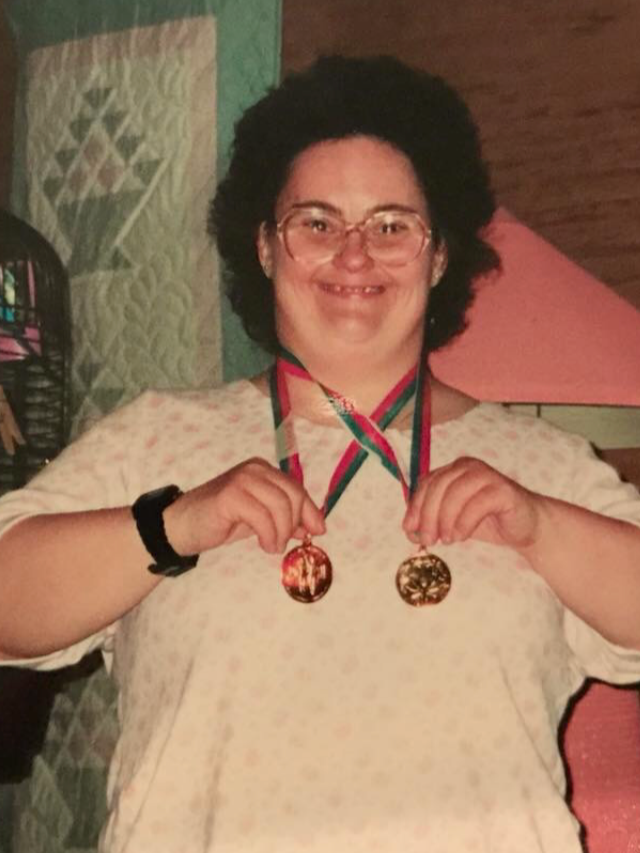
Theresa’s sister Anne Marie with her medals.
Theresa’s sister had Down syndrome and was a longtime Special Olympics athlete. She passed away eight years ago, but her influence is still everywhere in Theresa’s life—especially on the court.
“You can do it,” her sister would say.
When Theresa relocated to Florida, pickleball was exploding everywhere she looked—except inside her local Special Olympics district. The sport hadn’t fully taken hold there yet.
So she wrote a letter. She shared her sister’s story. She asked how she could help. They told her to start a program. So she did.
Four years later, what began with seven athletes has grown to 28 adult athletes, ranging from their early 20s into their 50s. They compete across area, regional, and state competitions—and now at the national level.
Inside Special Olympics Pickleball in Manatee County
Athletes train in seasonal sessions from August through November, practicing one to two hours at a time. They compete in:
Area Games
Regional Games
Florida State Games
Special Olympics USA Games
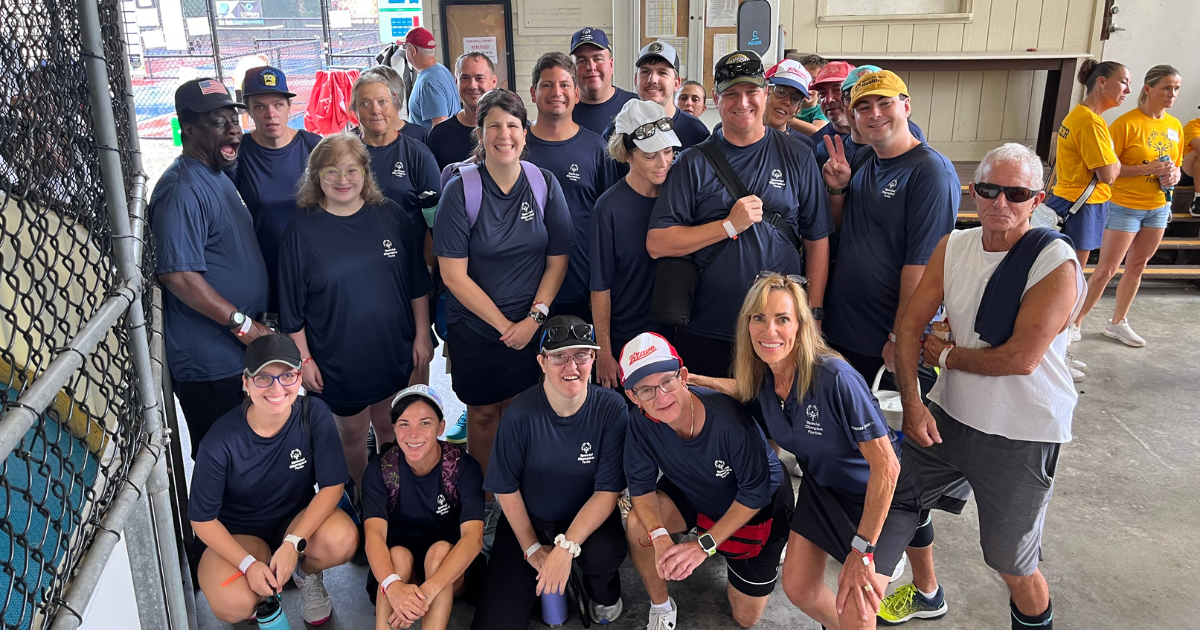
The local Manatee County Special Olympics team
Skill divisions range from foundational skills training to athletes competing at what would be considered a 3.0-4.0 level in traditional recreational play.
Yes, adaptive adjustments exist. Court sizes may be modified at lower skill levels. An indoor ball may be used before transitioning outdoors. But the structure, sportsmanship, and competition remain intact.
As Theresa puts it:
“Nothing changes in the game at all. It’s still pickleball.”
Selected for the 2026 Special Olympics USA Games
In June 2026, eight pickleball athletes from Florida will compete at the Special Olympics USA Games in Minnesota—the first time pickleball has been included at this level. Theresa was selected as head coach for Team Florida.
Athletes will compete in:
Unified Doubles (Special Olympics athlete + qualified unified partner)
Mixed Doubles
Level-based divisions (Level 3 is the current USA Games competition tier)
World Games are the long-term goal.
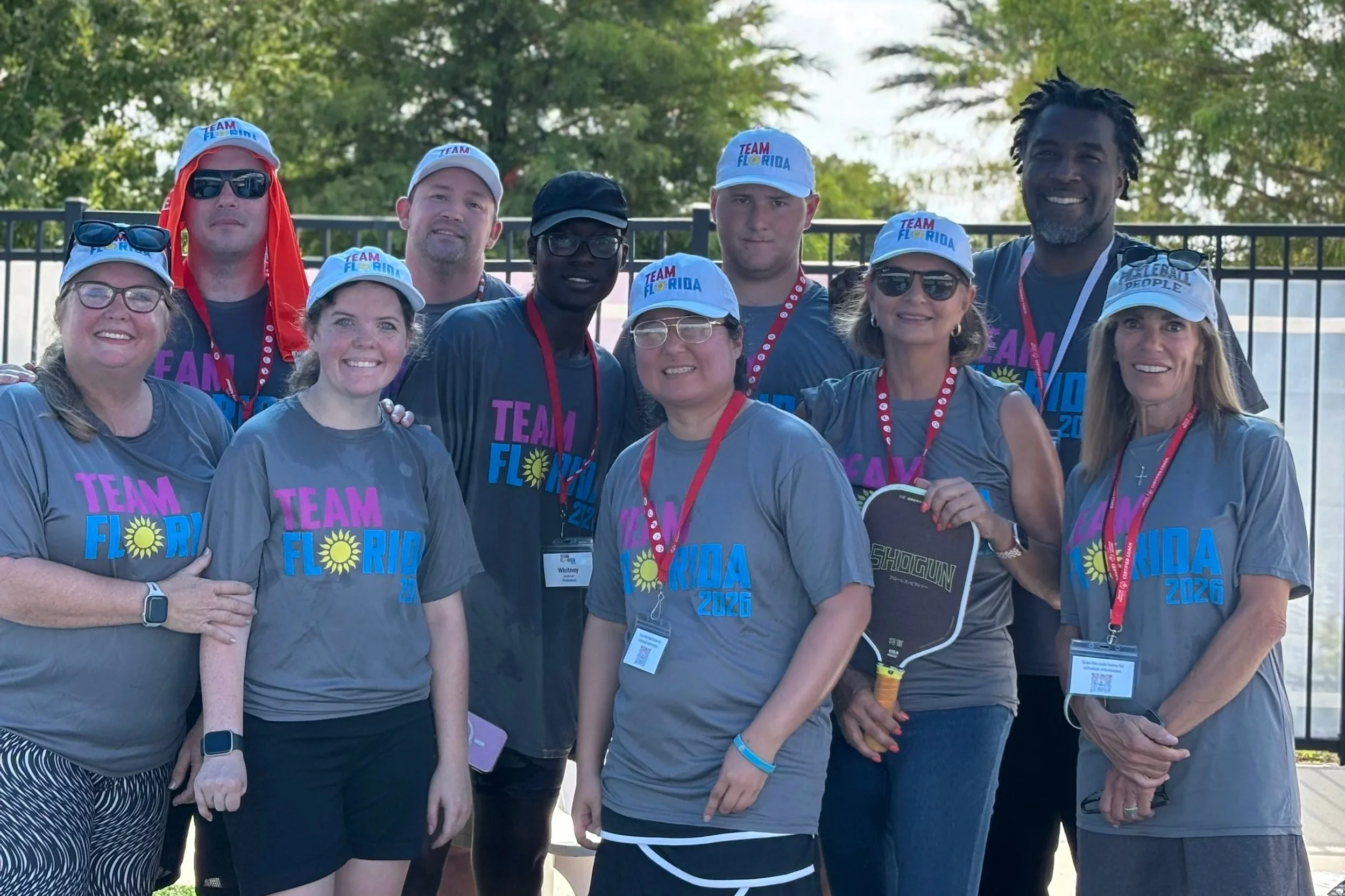
The USA Special Olympics Team Florida pickleball players
“They want to go,” she says about her athletes. “And we’re going.”
What Coaching Special Olympics Athletes Taught Her About Pickleball
Theresa has coached at the YMCA. She’s PPR certified. She’s also a USA Pickleball ambassador.
Her coaching philosophy hasn’t changed.
Safety first. Foundations matter. Every athlete deserves the same instruction and respect, whether they’re at the Y or competing at States.
What has changed is her perspective.
Traditional rec play can sometimes lean individual. Competitive. Protective of court time.
On her courts, the camaraderie is immediate. Paddle taps, high-fives, genuine celebration.
Special Olympics pickleball removes the ego. What’s left is the team.
The Line She Wants Everyone to Hear
Coach Tree doesn’t sugarcoat this part. Sometimes volunteers show up unsure of how to interact. Nervous. Overcorrecting. Talking differently.
Her advice is simple: “Just talk to them like people.” Because that’s what they are.
She avoids labels. She avoids defining athletes by diagnoses. She doesn’t see limitations first. She sees competitors.
And she reminds us of something most of us conveniently forget: “Do we not all have handicaps? Some of ours just don’t show.”
The Standard Coach Tree Sets
Pickleball is growing fast. New facilities. Bigger tournaments. Louder conversations about ratings, gear and money.
Coach Tree is focused on something simpler—and arguably more important. More athletes on court. More structured competition. More pathways forward.
She doesn’t describe it as inspiring. She describes it as necessary. Because when you strip away the hesitation and the assumptions, what remains is simple: They’re people. They’re athletes. And they belong on the court.