

Why Doing Less Is Actually the Ultimate Pickleball Strategy
Pickleball is fast, chaotic, and reactive. On any given court, you see arms swinging away, feet popping, and players overhitting. But here’s the truth: the player who does less and stays calm often wins more.
I used to think I was Serena Williams out there, grinding and whaling all over the place. It wasn't until I steadied myself that I achieved better results.
It’s ironic, but it happens all the time. Players don’t lose because they aren’t trying hard enough. They often lose because they’re trying too hard. They swing bigger than necessary. They move more than needed. They rush. They crash the net prematurely on thirds. They overplay neutral balls. In short—they feel compelled to “do something” on every point, instead of letting the rally unfold.
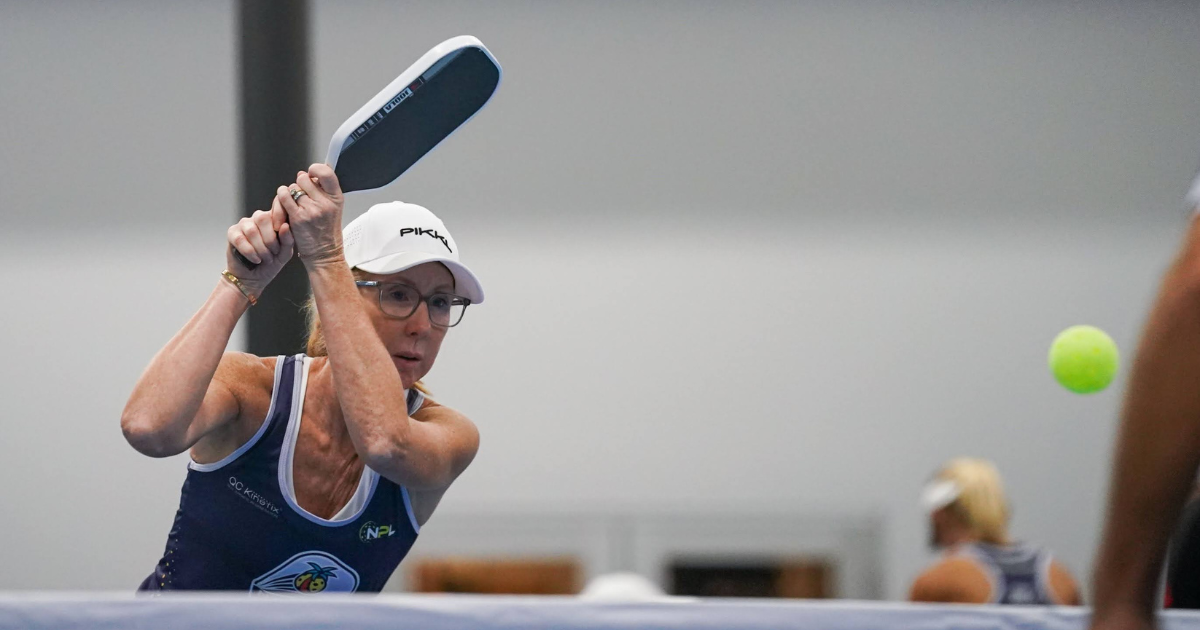
Photo by Champions Series Pickleball
Meanwhile, the calmest player, the one who seems almost boring, quietly controls the game. It really is a sight of beauty. (AKA my pal Scott Fliegelman.)
Over-Playing: The Hidden Rally Killer
Over-playing shows up in subtle ways. It might be pulling your paddle back before every shot, swinging through volleys instead of blocking, running through contact instead of stopping, or backing up when you feel pressure.
It’s often fear disguised as aggression: the belief that if you don’t do more, you’ll lose control.
But in pickleball, true control doesn’t come from force. It comes from positioning, discipline, and knowing when to act. Court awareness is huge. It sets you up to be more consistent on execution.
Neutralize First. Attack Second.
Every rally has phases: defense, neutral, and offense.
Most players try to skip neutral. They attack from disadvantage, speed up from below the net, or swing big when stretched. I used to do that all the time. I had to work on slowing down and showing self-control. Not easy!
Great players do the opposite. They neutralize first.
Neutralizing doesn’t mean being passive. It means resetting the ball softly into the kitchen, blocking instead of counterpunching at times, and slowing the tempo to regain balance. I feel that if you get into a firefight, countering hard mostly works if you don't overswing. Staying in for one more ball is what eventually makes it attackable.
Do Less With Your Paddle
Mechanics matter as much as strategy.
Your paddle should be out in front of your body, not pulled back, not flailing. When your paddle stays out front, your reaction time improves, your contact point is more consistent, your swings get shorter, and your margin of error is less.
Volleying is a perfect example. The best volleyers barely move their paddle. They hold firm, absorb pace, and guide the ball. Small motion. Big results.
On kill shots, I actually use more wrist than arm.
Stop Before You Hit
One of the most overlooked fundamentals in pickleball is stopping before you hit.
Many struggling players are still moving when they make contact. Their feet are running, their weight is shifting weirdly, and their balance is compromised.
High-level players take small, deliberate steps. They plant, they hit, and they recover.
Balance equals control. Control equals patience. Patience equals winning.
Backing up creates space for your opponent. Running through shots creates inconsistency for you. When pressured, lower your base, keep your paddle out front, block or reset, and hold your ground.
Less panic, less motion, less drama, more stability.
The Mental Side of Doing Less
Doing less isn’t just physical, it's mental.
You don’t need to win every rally, prove you’re the better player, or respond to every fast shot. The calmest player wins most exchanges.
When you don’t overreact, opponents start pressing. When they press, they overplay. When they overplay, they miss. Let them self-destruct. It's so gratifying playing someone who overhits every ball. Once you can make them slow down, they will implode.
Why Doing Less Works
Doing less conserves energy, reduces unforced errors, improves consistency, slows the game down, and frustrates aggressive players.
It’s not about being passive, it's about being deliberate. It’s about controlling the tempo instead of being controlled by it. Efficiency beats explosiveness. The player who remains the calmest usually walks off the court with the win.
About the Author: Gina Cilento is a top 10 Senior Pro and multi-APP medalist who splits her time between competing and coaching. She’s the co-founder of The Pickleball Lab, a pod player for the Denver Iconics in the National Pickleball League, and co-host of Keeping It Real with Gina & Neil. Off the court, Gina shares her passion through her apparel line, The Pick, and her work with Empower Pickleball.
