

The Myth of the “Good Partner”: Why Over-Accommodating Hurts Your Pickleball Doubles Game
In doubles pickleball, we’re taught to “be a good partner.” Cover the middle. Help when they’re struggling. Take pressure off them. Step in when things feel shaky.
But here’s the uncomfortable truth: sometimes what feels supportive is actually destructive. Over-accommodating in doubles doesn’t build safety. It erodes trust.
The Hero Syndrome: When Helping Becomes Hijacking
You’ve seen it—and maybe you’ve done it. Your partner misses a ball or two. You decide to “take more court.” You start poaching balls that aren’t yours. You squeeze the middle tighter. You drift further into their lane. It feels protective. It’s not.
When you take shots that aren’t yours, you create hesitation. Your partner doesn’t know whether to swing or pull back. They start second-guessing. Confusion replaces clarity. Instead of building safety, you’ve introduced chaos.
Great pickleball doubles teams don’t have two heroes. They have two players who understand roles, spacing, and responsibility. Over-poaching doesn’t say, “I’ve got you.” It says, “I don’t trust you.” And your partner feels that—even if you never say it.
Trusting the Process: Let Them Play
Here’s something that’s hard to accept: your partner might need to miss. Rhythm in pickleball isn’t found by avoiding contact. It’s built through repetition. Touch. Adjustment. Problem-solving in real time.
When you step in too early, you rob your partner of the opportunity to settle in. You can’t create confidence by taking over. You have to let them earn it.
Trusting the process means understanding that one missed third shot or one popped up dink isn’t the end of the match. It’s part of the rhythm-building cycle. Strong teams allow space for growth inside the point.
Lane Discipline: The Foundation of Clarity
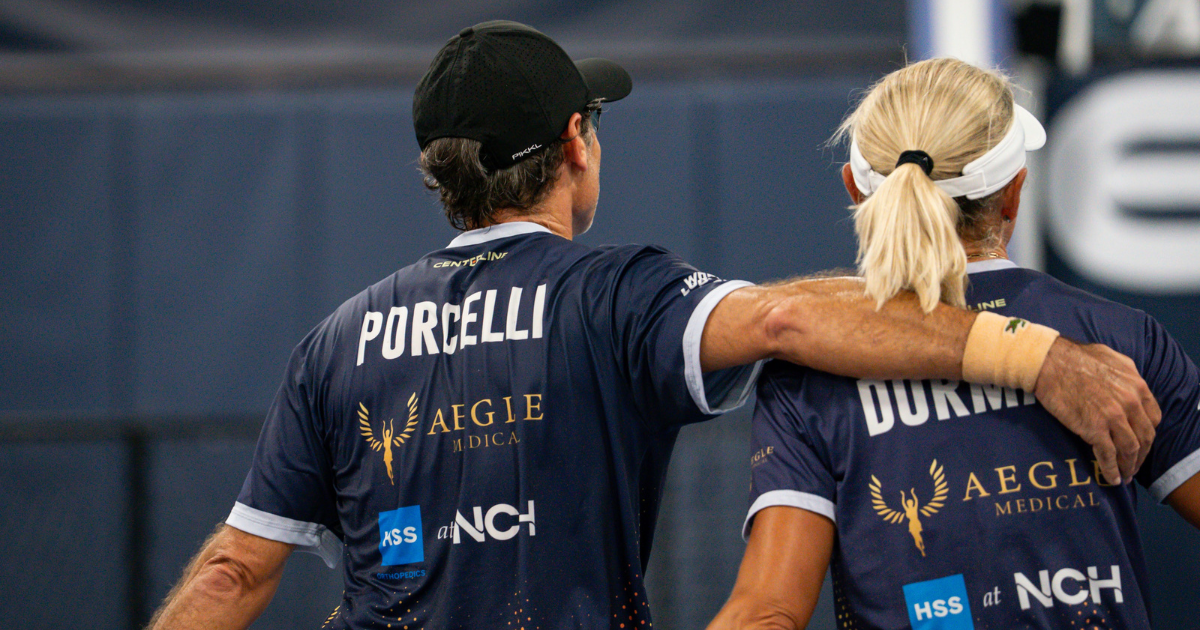
Photo by Champions Series Pickleball (previously known as National Pickleball League)
Healthy boundaries in doubles start with lane discipline. Every player owns a zone. When both partners stay predictable within their lanes, something powerful happens: clarity.
Your partner always knows where you are. They know what’s yours. They know what’s theirs. The best doubles teams look calm not because they cover everything—but because they cover their area exceptionally well.
Lane discipline isn’t passive. It’s controlled, intentional aggression. It means taking charge when the ball is truly yours, not when impulse or emotion pulls you out of position.
The Mindset Switch: From Saving to Trusting
The shift that transforms partnerships is subtle but powerful.
Instead of thinking, “I need to save them.” Shift to, “I need to trust them.”
Saving creates dependency. Trust creates partnership.
When both players commit to owning their responsibilities, communication improves, tension drops, and confidence rises.
What a Healthy Partnership Looks Like
A strong doubles partnership is built on:
Clear roles
Defined space
Calm communication
Emotional steadiness
Mutual accountability
And most importantly—trust.
The next time you feel the urge to over-cover the middle or poach a ball out of frustration, pause. Ask yourself, “Am I helping or am I trying to control?”
The fastest way to elevate your pickleball doubles game isn’t by becoming the hero. It’s by becoming the partner that your teammate can rely on—without fear of being overridden.
Trust the process. Trust your partner. That’s how real doubles teams win.
