

How Much It Actually Costs to Build a Pickleball Court
If you’ve ever Googled “how much does it cost to build a pickleball court,” you’ve probably experienced a full range of emotions. Hope. Confusion. Suspicion. And maybe a little rage when you see someone claim they built a “full court” for the price of a new paddle bag.
Here’s the truth: pickleball courts can be relatively affordable or they can cost a small fortune. Both things can be true at the same time. The problem is that most articles don’t explain why, and that’s where expectations fall apart.
So let’s talk real numbers, real projects, and real-world costs—no fantasy pricing, no contractor smoke and mirrors.
Public pickleball courts are where reality usually sets in first. People assume that because pickleball courts are smaller than tennis courts, they must be cheaper. In theory, sure. In practice, public courts are treated like permanent infrastructure, not pop-up play spaces. Cities have to worry about drainage, accessibility, fencing, surfacing, permits, and long-term durability. All the unsexy stuff that doesn’t show up in Instagram photos but absolutely shows up in the budget.
A realistic cost for an outdoor public pickleball court built from scratch usually lands between $28,000 and $75,000 per court, and yes—sometimes more. The lower end usually means a flat site with minimal extras. Once you start adding lighting, seating, shade, walkways, or noise mitigation (hello, neighbors), costs climb fast. And when you see six-figure price tags on public projects, it’s often because multiple courts, pathways, and park upgrades are bundled together—not because pickleball suddenly became a luxury sport.
Backyard pickleball courts are where the internet really gets creative. When someone says they built a backyard court for under $10,000, what they usually mean is that they already had concrete. They cleaned it up, painted some lines, added a coating, and dropped in a net. And honestly, that can be a great setup. If the slab is in decent shape, a backyard court like this can realistically cost $8,000 to $20,000. It’s fun, it’s playable, and it scratches the pickleball itch.
But that’s not a full build—and this is where people get tripped up.
A true backyard court, the kind where you start with dirt and end with a real playing surface, is basically a small construction project. You’re talking excavation, grading, drainage, base work, new concrete or asphalt, surfacing, and often fencing or lighting. That kind of backyard court typically costs $25,000 to $80,000 or more, depending on the site. Sloped yards, poor soil, or added lighting can push costs toward the higher end very quickly. At that point, you’re not building a hobby space—you’re building a permanent asset.
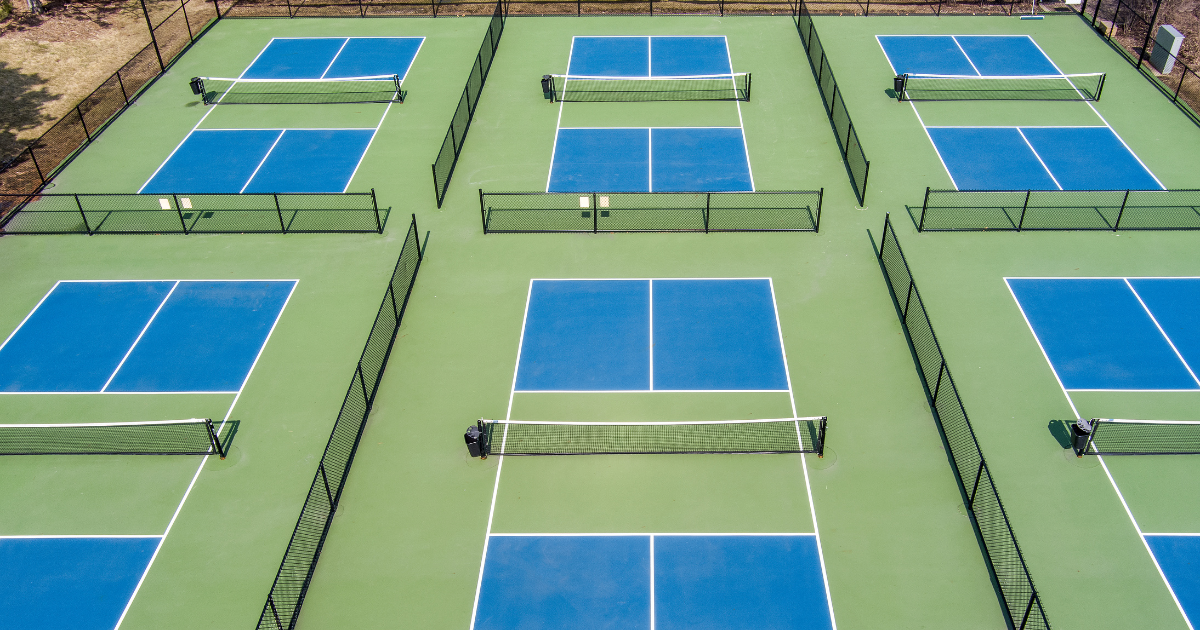
Then there’s the commercial side of pickleball, which is where budgets can jump from “reasonable” to “wait, how much?” Outdoor commercial courts often look similar to public builds, with per-court costs commonly falling between $30,000 and $80,000 before shared infrastructure like lighting systems, fencing, drainage, and parking enter the chat.
Indoor pickleball facilities are a completely different beast. Yes, the courts themselves are often priced around $15 to $40 per square foot, but that number is wildly misleading on its own. That’s just the court area—not the building that holds it. Once you factor in the building shell, HVAC, electrical upgrades, bathrooms, locker rooms, fire suppression, sound treatment, offices, and common spaces, you’re suddenly playing in a whole different financial league.
This is why so many indoor pickleball facilities cost millions of dollars to build. Even warehouse conversions, which sound simple on paper, often end up well into seven figures once code compliance and occupancy requirements are met. Purpose-built destination facilities can climb even higher.
And then there’s food and beverage—because pickleball players don’t just want dinks, they want snacks. Adding even a modest concession setup can cost $50,000 to $100,000 once plumbing and electrical work are involved. A full commercial kitchen? Think $150,000 to $300,000 or more, especially when ventilation, grease traps, and fire suppression systems are required. Add a bar or alcohol service, and costs climb again thanks to licensing and build-out requirements. These features can absolutely boost revenue and hang time, but they’re not small add-ons.
One of the biggest reasons pickleball court costs vary so wildly is what happens underground. Drainage and base work don’t look exciting, but they determine whether a court lasts five years or twenty. Skipping them might save money upfront, but it almost always leads to cracking, pooling water, and expensive repairs down the road. Lighting, fencing, and permitting have a similar way of quietly inflating budgets—especially when they weren’t planned for from the start.
This is where the internet’s “fantasy numbers” fall apart. Claims of building a brand-new pickleball court for $5,000 or $10,000 usually rely on perfect conditions, existing pavement, and zero infrastructure. Technically possible in very specific situations? Sure. Representative of most real-world projects? Not even close.
The smarter way to think about pickleball court costs is to focus on longevity instead of shortcuts. Courts that are built properly cost more upfront, but they last longer, require less maintenance, and offer a far better playing experience. When you ask for quotes, push for transparency. You want to know what’s being spent on site work, base construction, surfacing, fencing, lighting, permits, and—if it’s an indoor project—the building itself.
Pickleball doesn’t need gold-plated courts to thrive. But it does need honest planning and realistic budgets. Whether you’re building a backyard court, upgrading a public park, or dreaming up the next big indoor pickleball destination with a kitchen and bar, understanding the true costs upfront is the difference between a great project and an expensive headache.
