

Why Rotational Strength Matters More Than Raw Power
Have you ever walked off the court wondering why your opponent’s ball is so hard to handle—even when it doesn’t seem like they are hitting any harder? You’re not alone. It’s a common pickleball experience, especially when the player across the net doesn’t look bigger or stronger than you. The reason usually isn’t muscle. It’s rotation.
In pickleball, real power doesn’t come from muscling the paddle or swinging harder. It comes from how well your body rotates and transfers energy from the ground up. That’s why rotational strength matters far more than raw strength—and why players who generate the most consistent, effortless power aren’t swinging harder—they’re rotating better.
Once you understand this, the way you play and train will start to change.
Pickleball Power Starts From the Ground Up
In pickleball, almost every shot involves rotation. Every forehand, backhand, drive and serve involves twisting your torso, shifting your hips, and transferring force from your feet through your core and out through your paddle. Your arms don’t create power–they deliver it.
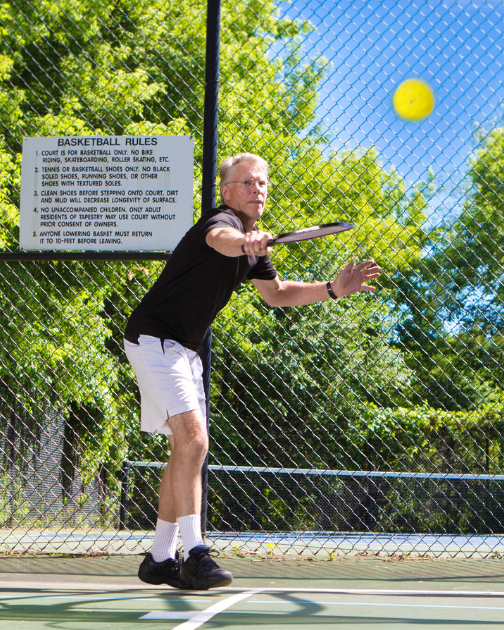
When you push off the court with your feet, rotate your hips, and let your torso follow, your paddle becomes the final link in a chain. When this kinetic chain works smoothly, the ball jumps off your paddle without extra effort, creating more speed and spin with better control. When it doesn’t, things start to feel weak or out of control.
This is why relying only on arm strength rarely works. Without proper rotation, raw muscle can only do so much. Traditional strength exercises like bench presses or deadlifts build muscle–yes, but they don’t teach your body how to coordinate movement. Simply having bigger muscles doesn’t guarantee better movement patterns for rotational sports.
Why Raw Strength Alone Isn’t Enough
Pickleball doesn’t happen in straight lines. It happens in rotation, quick stops, and sudden changes of direction. If your body isn’t trained to rotate efficiently, extra strength doesn’t always translate to better shots. Players who rely on arm strength alone often hit a ceiling. There’s only so much power your shoulders can produce without help from the rest of your body.
Rotational strength training fills that gap. It teaches your body how to use the strength you already have—especially through your hips and core, where most power actually comes from.
Exercises That Build Pickleball-Specific Power
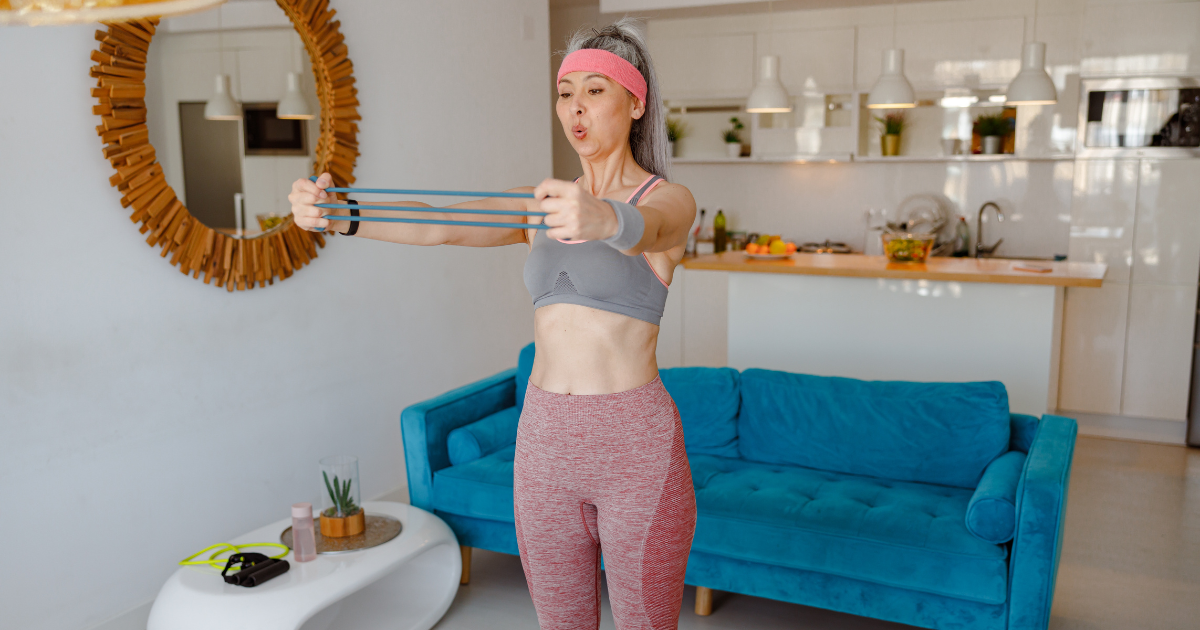
You don’t need a long workout to train rotation effectively. A few focused movements can make a big difference when done consistently:
Rotational Chops: Stand with feet shoulder-width apart, hold a band or cable at chest height, and rotate your torso while keeping your hips engaged. Let your arms follow the movement naturally, mimicking the twisting motion of forehands and backhands.
Medicine Ball Rotational Throws: Hold a medicine ball at chest level, rotate explosively through your hips and torso, and release the ball against a wall or to a partner. Focus on smooth energy transfer from your lower body to your upper body, like hitting a strong drive.
Single-Leg Rotational Reaches: Balance on one leg while rotating your torso and reaching your arms across your body. Start slowly, then increase speed as you gain control. This improves balance, hip stability, and control during off-center shots.
Core Stability Press (Anti-Rotation): Stand sideways to a cable or resistance band anchored at chest height. Press the handle straight out in front of you while resisting any twist from your torso. This builds core stability to be able to rotate efficiently.
These exercises teach your body to create and control rotation the same way you use it on the court.
Stability Comes Before Power
Before your body can rotate powerfully, it needs to know how to control rotation. Anti-rotation work teaches your core to resist twisting while your arms move. It builds control that protects your spine and allows energy to flow cleanly through your shots, especially during fast rallies and awkward positions.
The more stable your core is, the easier it becomes to generate power without forcing it. That’s when shots feel controlled instead of chaotic.
What Changes When You Train Rotation
Players who focus on rotational strength usually notice the difference pretty quickly.
Power starts to feel available instead of forced. Drives feel heavier without swinging harder. Serves gain depth and pace. Fast exchanges feel more controlled. And perhaps most importantly, the body holds up better—less shoulder fatigue, fewer nagging back issues, and more confidence playing multiple matches in a day.
The Takeaway
Pickleball power isn’t about raw muscle. It’s about timing, rotation, and control.
Train rotational strength through smart, pickleball-specific exercises, and you’ll move better, hit cleaner, and protect your body along the way. Raw strength is only part of the story—rotational strength is what unlocks true performance.
