

Why So Many Players Back Up at the Kitchen Line (And Why It Hurts Their Game)
One of the most common habits I see in beginner and intermediate pickleball players is backing up at the kitchen line. It’s almost automatic. The ball feels fast, it feels uncomfortable, and there’s a need to create space. Sometimes bangers make players feel like a target, too. However, this instinct can work against you in pickleball. In the non-volley zone, you need to focus on position.
Most players back up because they don’t yet trust their hands, reactions, or footwork. A ball dipping at your feet feels threatening, especially if you’re not confident taking it out of the air. So, players retreat, thinking it buys them time. It actually buys the opponent time and gives them an advantage.
When you back up even one foot from the kitchen line, you create a lot of room for error. Balls that could have been taken comfortably out of the air now drop lower. Instead of volleying, you’re letting the ball get behind you or down at your feet.
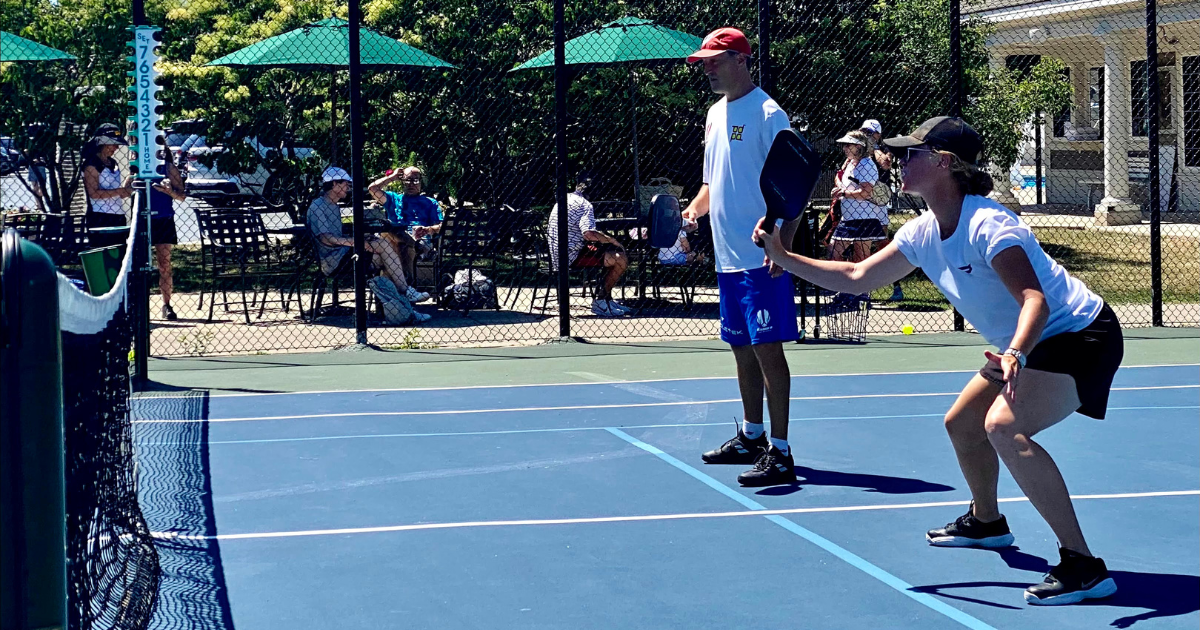
You lose the ability to take time away from your opponent. You’re forced into defensive shots instead of neutral or offensive ones. You start hitting off your back foot, which kills balance and control. Over time, this becomes a bad habit. Players get stuck playing pickleball reactively instead of proactively.
Why Staying at the Kitchen Line Matters
Staying at the kitchen line allows you to take more balls out of the air, keeping the ball in front of you. You cut off angles and apply pressure without hitting harder. When you volley in front, you don’t need power; you need positioning. And the more balls you take early, the more attacking opportunities present themselves. Yes, I know it’s uncomfortable at first, but that’s part of the learning curve.
When Backing Up Is the Right Move
Let's switch gears and talk about how advanced players back up, because sometimes it is okay—and there’s an important difference. With the amount of topspin coming off high-level dinks today, sometimes stepping back is necessary. When a ball is dipping hard at your feet, backing up can buy you time and give you a better contact point. The key difference is how it’s done.
Advanced players step back quickly, move through the ball as they hit, and transfer weight forward. They regain position at the kitchen line immediately. Beginner and intermediate players often back up slowly, hit off their back foot, and stay back. That’s the trap.
Footwork Is the Separator
Good footwork is the separator at every level. Staying on the balls of your feet, not flat-footed, allows you to adjust quickly, move in or out when needed, and stay balanced. Backing up isn’t the enemy. Backing up without intention, timing, and recovery is.
If you’re a beginner or intermediate player, I’d rather see you force yourself to stay up at the kitchen line, even if you miss a few volleys early on. That’s how you build better hands, better instincts, and better habits. Scary and awkward as it can be at times, down the road, it will pay off!
Learn to live in that uncomfortable space. It’s where real improvement happens.
Once you have the footwork, balance, and confidence to move back and move forward again, then backing up becomes a tool, not a weakness.
And that’s when your whole game changes.
About the Author: Gina Cilento is a top 10 Senior Pro and multi-APP medalist who splits her time between competing and coaching. She’s the co-founder of The Pickleball Lab, a pod player for the Denver Iconics in the National Pickleball League, and co-host of Keeping It Real with Gina & Neil. Off the court, Gina shares her passion through her apparel line, The Pick, and her work with Empower Pickleball.
