

How to Cover the Middle in Doubles Pickleball
The middle is where points are won—and lost—in doubles pickleball. It’s the most contested space on the court, the area most likely to cause hesitation, and often the easiest place to exploit if a team isn’t aligned.
If you and your partner can confidently control the middle, you’ll eliminate confusion, cut off attacks, and force your opponents into lower-percentage shots.
Here’s how to do it.
Why the Middle Matters
Most players instinctively protect “their side” of the court, but in doubles pickleball, the middle is actually the highest-value real estate.
It’s the shortest distance between opponents, making it easier to attack
It creates indecision between partners
It’s the safest target over the net (lower risk of hitting out)
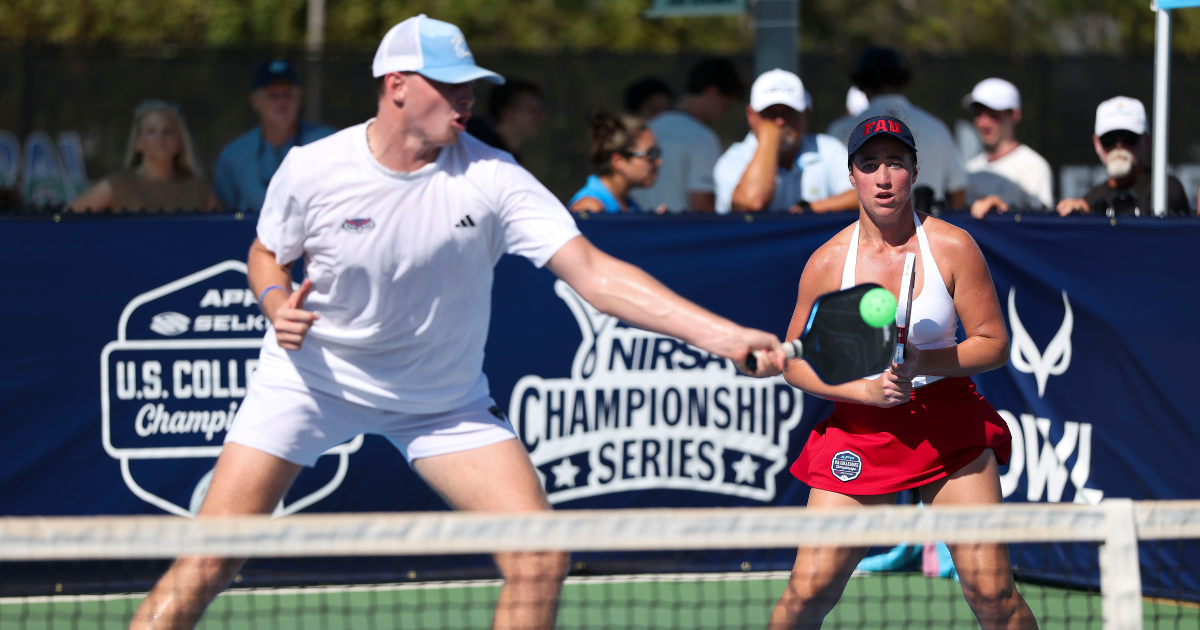
Photo by The APP
Strong teams don’t just defend the middle—they own it.
The Golden Rule: Forehand Takes the Middle
If you remember one thing, make it this:
The player with the forehand should take the middle whenever possible.
Why?
The forehand is typically stronger and more controlled
It allows for more offensive options (rolls, speed-ups, angles)
It reduces hesitation by creating a clear default
Quick Example:
If you’re on the left side, your forehand is in the middle → you take more middle balls
If you’re on the right side, your backhand is in the middle → your partner should step in more often
This simple rule eliminates a huge percentage of confusion.
Communication Beats Talent
Even with the forehand rule, communication is what separates good teams from great ones.
Before the point:
Decide who is more aggressive in the middle
Identify strengths (e.g., “You crash middle on thirds”)
During the point:
Use simple, quick calls:
“Mine”
“Got it”
“Yours”
After the point:
If there’s confusion, fix it immediately
“I’ll take more middle next time”
Silence is where mistakes live.
Positioning: Close the Gap
Many middle balls drop simply because there’s too much space between partners.
Key positioning principles:
Stay about an arm’s length apart at the kitchen line
Move as a unit—if one shifts, the other mirrors
Avoid drifting too wide unless necessary

Advertisement
Think of it like you’re connected by a rope. If one player moves, the other moves with them.
Force your opponent to target the sidelines instead of the middle. Make them hit precise shots and risk the ball going out instead of letting them hit safely into the middle of the court.
Who Covers the Middle on Specific Shots?
Understanding situational coverage is where most teams improve quickly.
1. Third Shot Drive
When you see they are targeting the middle shift slightly towards to the middle for better coverage
Left-side player lean into the kitchen to prevent the ball from hitting the ground
Right-side player leans middle but deeper than your partner to provide a second line of defense
2. Crosscourt Dinks
The crosscourt player often gets pulled wide
The partner should lean middle to protect the gap
3. Speed-Ups
Most speed-ups come through the middle
Be ready with your paddle up and slightly favor middle coverage
4. Lobs
Call it early: “Switch!” if you’re changing sides
One player takes the ball, the other slides middle immediately
The “Alpha” Mindset (Without Overdoing It)
Every team benefits from one player taking slightly more control of the middle—especially if they have:
A stronger forehand
Faster hands
Better anticipation
But this only works if:
It’s understood and agreed upon
The other player is ready to adjust and support
Over-aggression without communication leads to collisions and frustration.
Common Mistakes to Avoid
1. “That’s Yours” Syndrome
Both players assume the other will take it → ball drops untouched.
2. Hugging the Sideline
Leaving a massive gap in the middle makes you an easy target.
3. No Clear Roles
If you haven’t defined who takes more middle balls, you’re guessing in real time.
4. Overcorrecting
One player starts taking everything, leaving their sideline exposed.
Balance is key.
All About Communication
Middle coverage isn’t just about positioning—it’s about trust and clarity.
The best teams don’t hesitate. They move together, communicate early, and attack with purpose.
If you can eliminate confusion in the middle, you’ll win more points without hitting a single better shot.
And in pickleball, that’s a serious edge.
