

The Highlight Reel: Mastering the ATP, Erne, and Tweener Without Losing the Point
There’s a moment in every pickleball player’s journey when the fundamentals stop feeling like enough.
You can dink. You can reset. You can block hard drives. But then someone rips an Around-the-Post winner, leaps the kitchen for an Erne, or chases down a lob with a Tweener—and suddenly the court feels bigger.
The ATP. The Erne. The Tweener.
They’re pickleball’s highlight shots. They make crowds gasp. They light up social media. And when used correctly, they’re not just flashy—they’re deadly.
The problem? Most players try them at the wrong time.
Let’s break down how to master each shot—and more importantly, when to pull the trigger without giving the point away.
The ATP (Around-the-Post): Geometry Wins Games
The ATP isn’t magic. It’s math.
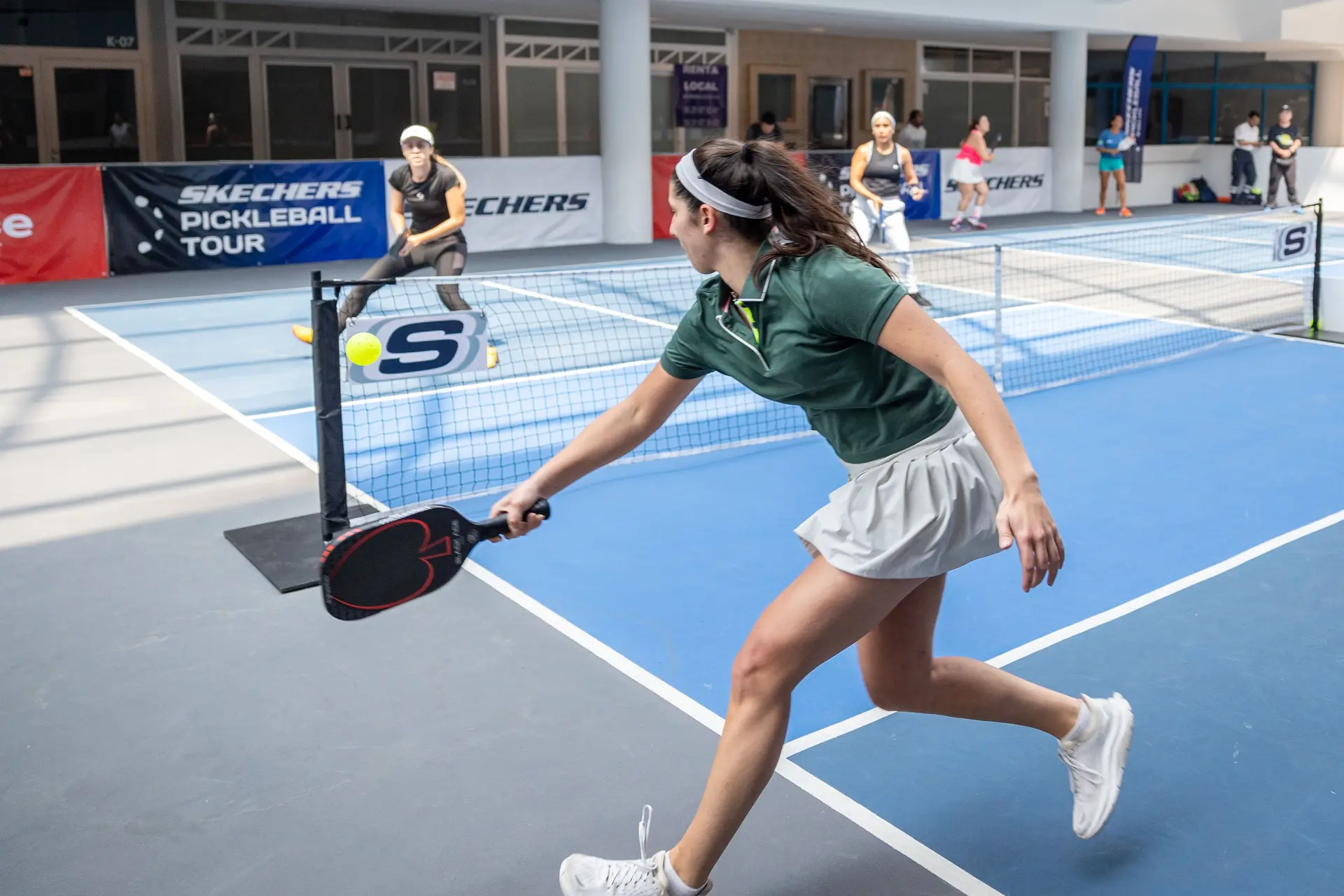
Photo by bounce.game
When your opponent pulls you wide with a sharp cross-court dink and the ball travels outside the net post, you’re allowed to return it around the net—without passing over it.
When to Go for the ATP
The ball has clearly traveled beyond the net post
You’re wide enough that going around is easier than lifting it back cross-court
You can contact the ball in front of your body
When Not To
The ball is still inside the post
You’re off balance and reaching backward
Your partner isn’t ready if you float it
Most failed ATPs happen for two reasons: players hit them too early, or they aim too short.
1. Be Patient — Let It Travel
This is the biggest separator.
You need to let the ball travel as wide as possible before striking it. The wider it gets:
The better your angle becomes
The more court opens up
The easier it is to drive through the shot
Yes, that often means contacting the ball lower than you’re used to—sometimes near knee height or below. If you hit it too soon, you shrink your angle and turn a clean ATP into a risky sideline drive.
Wait. Then strike.
2. Aim Deep, Not Cute
Here’s the mistake most players don’t realize they’re making:
Their ATP clears the post—but doesn’t go deep.
Instead of driving the ball through the court, they aim too close to the sideline and leave it short.
Try to:
Aim well inside the opposite court
Favor depth toward the baseline
Prioritize penetration over sideline precision
Pro Tip: Don’t admire it. Recover immediately. Elite opponents can still track down a great ATP—and the point isn’t over until it’s over.
The Erne: Controlled Chaos at the Kitchen Line
The Erne looks reckless. It isn’t.
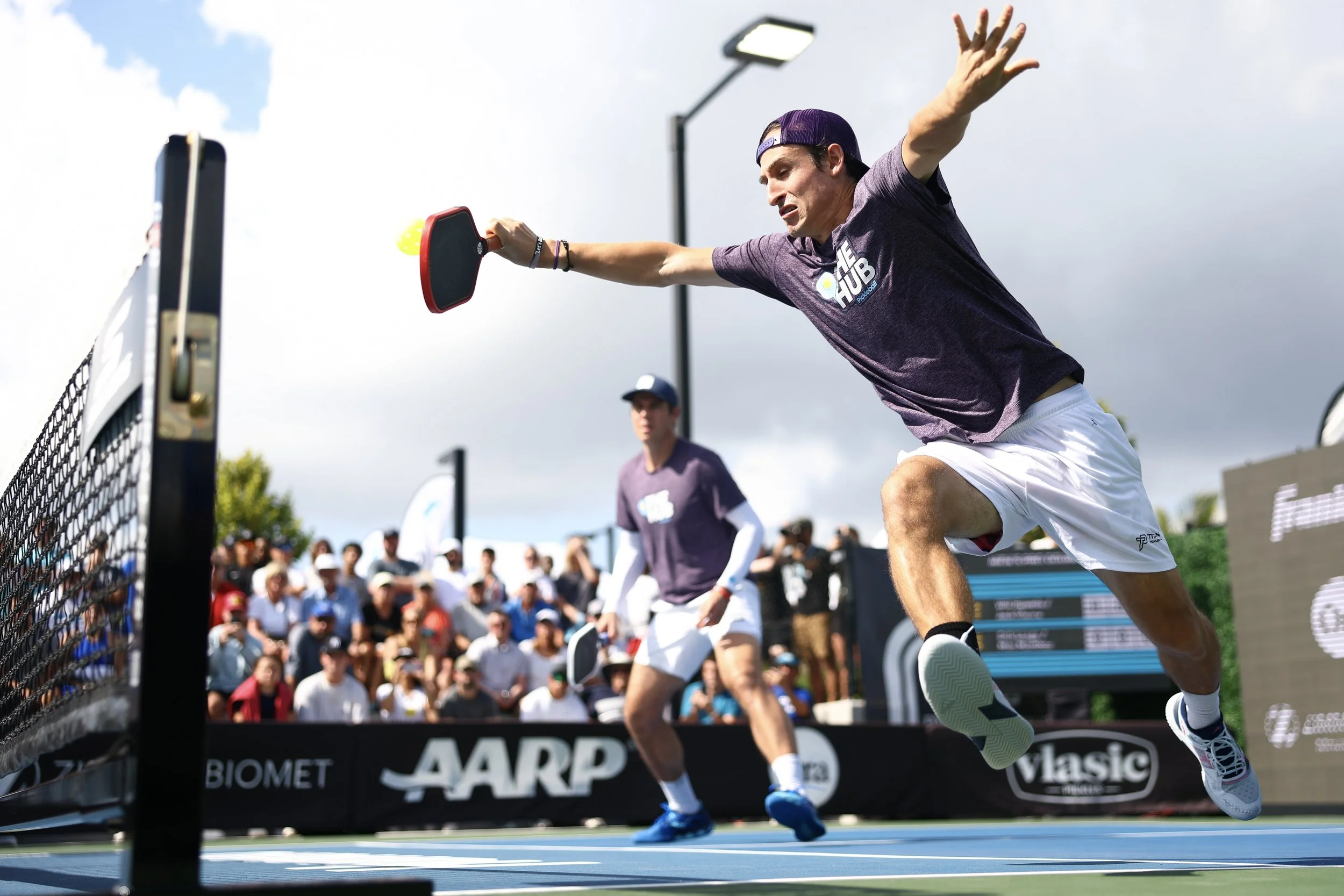
Photo by The APP
An Erne happens when you step or jump outside the sideline near the kitchen and volley the ball before it bounces—without touching the non-volley zone. It’s not a gamble. It’s a positioning ambush.
When to Go for the Erne
Your opponent dinks predictably down the line
They’re turned toward the sideline after being pulled wide
Their head drops to play a ball near their feet
Most failed Ernes happen because players attack the wrong ball—or leave too early.
1. It’s All About the Setup
You should know an Erne will work before you even move.
The best setup is a dink that lands between your opponent’s outside foot and the sideline—ideally near the intersection of the kitchen line and the sideline. When your opponent turns and shifts their momentum toward the sideline, that’s your green light.
Step or jump around the kitchen and ambush from outside the court.
2. The Footwork
Footwork is the hardest part—and where most kitchen violations happen.
For a left-side player executing a jumping Erne:
Shuffle your left foot toward the sideline
Plant and load that left leg
Launch, striding your right leg over the sideline
Make contact while airborne or just as your right foot lands outside the court
Land balanced, with your right foot parallel to the sideline
Pro Tip: After the Erne, stay outside the court and be ready for the next ball. That follow-up attack is often called the “double Erne.”
3. Contact Point
Your goal is to contact the ball as close to the net as possible:
It reduces net errors
It cuts down your opponent’s reaction time
It allows you to hit down at their feet
The Erne is an attack—not a celebration. Recover quickly.
The Tweener: Last Resort or Legit Weapon?
The Tweener (between-the-legs shot) might be pickleball’s most controversial highlight.
Most of the time, it’s desperation. But with faster foot speed and lighter paddles, it’s becoming a legitimate counter to deep lobs.
When to Go for the Tweener
You’re chasing a lob and can’t get around the ball
The ball is dropping quickly behind you
Your pursuit angle makes a standard overhead unrealistic
When Not To
You can comfortably run around it
There’s limited space behind the baseline due to a wall, fence, or other barrier.
You’re trying to impress someone in rec play
How to Execute the Tweener
1. Preparation is Key
Run directly at the ball and center it between your hips.
Your final step before swinging should be with your paddle-side foot (right foot for right-handers). You’ll likely need to take a few small steps as you get close to the ball to get the timing right.
2. Time to Swing
After you plant your paddle-side foot, take a long, wide stride with your opposite foot to create space.
Step over the ball so that it is in line with your right leg, or better yet, behind your body. This will allow you to hit the ball in an upward motion and clear the net.
3. Contact
Swing downward between your legs and make contact just below knee height. Be careful not to follow through too far or you could add injury to the insult of losing a point.
Pro Tip: If you’re forced into a Tweener, you’re usually on defense. Don’t be afraid to go for a winner. Advanced players can even hit a Tweener drop to buy time and recover.
Practice Without the Pain
If you want these advanced pickleball shots in your arsenal:
Drill sharp cross-court dink patterns for ATP reps
Practice sideline movement and recovery for Ernes
Have a partner feed controlled lobs for Tweener timing
Always rehearse the recovery step after the shot
The highlight ends when the rally does.
Style Points Don’t Count
The ATP. The Erne. The Tweener.
They’re electric. They’re addictive. They’re fun.
But they’re not the foundation of winning pickleball.
Master the basics first. Recognize the moment. Strike with purpose. Recover fast.
Because the highlight only gets posted if you win the point.
