

One of the Most Overlooked Skills in Pickleball (And It’s Not What You Think)
When players talk about getting better at pickleball, the conversation usually centers on shots: the third ball drop, better dinks, harder serves, cleaner footwork, or smarter strategy. Rarely does anyone mention one of the most important skills of all: sportsmanship.
Yet sportsmanship is the foundation that keeps the game enjoyable and welcoming, especially as pickleball continues to grow.
Court etiquette and sportsmanship go hand in hand. When one is missing, the entire dynamic on the court suffers.
Good sportsmanship isn’t about being overly nice or avoiding competition. It’s about understanding how your behavior affects others—your opponents, your partner, and the overall atmosphere on the court. In many ways, it’s a learned skill that requires awareness, restraint, and respect. Like any skill, it takes practice. And too often, players lack the self-awareness to see how their behavior can really take the fun out of pickleball.
When Winning Starts to Crowd Out Common Decency
Unfortunately, when a game gets tight and "ratings" are on the line, egos can overshadow common decency.
One of my first non-sanctioned tournaments was a mixed doubles event. My partner was in his late 60s, and I was in my late 40s at the time. We were down in the game. I went for an overhead and hit the ball directly into the throat of the woman across the net. She immediately went down and struggled to breathe.
I’ll never forget my partner turning to me and saying, “Leave her!”
I couldn't believe those words came out of his mouth. She was hurt, and this was just pickleball. I went over, sat with her, and stayed until she felt better to finish the game. I felt horrible.
That moment stuck with me. It really struck me how easily the desire to win can take precedence over kindness. I know that case is extreme, but it still makes the point.
Where Court Etiquette Often Breaks Down
At open play and even in tournaments, poor etiquette often shows up in subtle but damaging ways. People question every close call. They celebrate their opponents' mistakes. Sometimes players start coaching their partner when it's unsolicited. Other times, a ball rolls through from another court and no one has the courtesy to stop and get it for them.
One of the worst examples is when people treat rec games like they’re playing a PPA gold medal match. There's nothing wrong with being competitive—but at what cost?
None of these are technical errors, but all of them change the tone of the game instantly.
Why This Matters More Than Ever
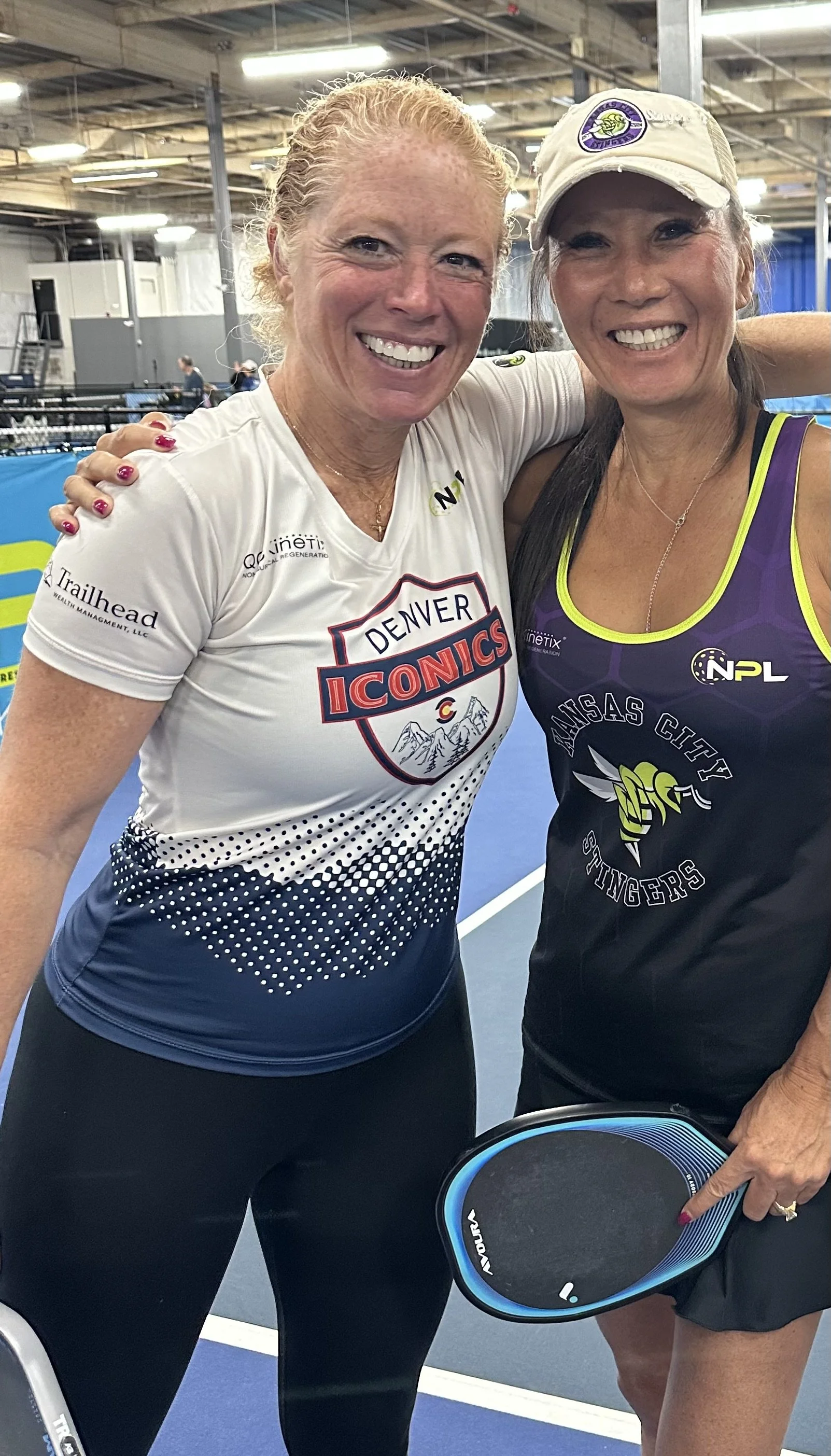
Senior Pro Gina Cilento (left) alongside Hall of Famer Jennifer Dawson
Pickleball is unique because it blends competitive athletes, social players, beginners, and advanced players on the same court! So great!
However, without strong sportsmanship, the balance breaks down. New players feel intimidated. Regulars grow frustrated. What should feel welcoming starts to feel tense.
The Quiet Advantage of Good Sportsmanship
I’ve found that players who consistently show good etiquette often play better under pressure, get asked to play more, and earn the respect of those around them—even if they lose. You just want to be around that kind of person. At least I do.
There’s a player who stands out in my mind that I had the pleasure of being on the court with many times, both at tournaments and in NPL play. Jennifer Dawson is a Hall of Famer, a triple-crown winner, and has been one of the top players in the country for a long time. I’ve had the honor of playing against her many times, and win or lose, she was always the same person.
When she was losing, she never lost her temper or showed anything but support for her partner. When she was winning, she never showed ego or inflated emotions. She was just cool. Calm. A total class act.
I admired her not just for her ability, but for how she handled both the wins and the losses. Someone like that stands out for reasons that go far beyond the scoreboard.
Sportsmanship Is a Competitive Advantage
Sportsmanship isn’t just good for the game. It’s good for your game.
Remember, pickleball is supposed to be fun. The better we are at protecting that, the longer people will want to keep playing.
About the Author: Gina Cilento is a top 10 Senior Pro and multi-APP medalist who splits her time between competing and coaching. She’s the co-founder of The Pickleball Lab, a pod player for the Denver Iconics in the National Pickleball League, and co-host of Keeping It Real with Gina & Neil. Off the court, Gina shares her passion through her apparel line, The Pick, and her work with Empower Pickleball.
