

Why the Lob Is the Most Underrated Shot in Pickleball
The lob might be the most misunderstood and misused shot in pickleball.
For some players, it’s hit out of panic when they feel desperate. For others, it’s used to annoy their opponents. And then there’s a small group of players who truly understand that the lob can be a strategic weapon that can change the flow of a point or an entire match.
I don't think the lob itself is a “bad shot.” I think it’s overused by players who don’t fully understand why they’re hitting it.
At higher levels, the lob becomes more situational and intentional. It’s used to disrupt, not escape. It’s hit with purpose, not panic. At its core, a lob is a high, controlled shot meant to clear your opponents and land deep on the court, forcing them to move backward and reset the point.
When used correctly, it can disrupt rhythm, buy time, and shift momentum. When used poorly, it is a disaster and can even put your partner at risk.
When a Lob Actually Makes Sense
The lob is smart when both opponents are tight at the kitchen and leaning forward, when you need a reset under pressure, or when you’re facing players with weak overheads or poor backward movement. I love it when the team across the net has nothing but intense sun in their eyes! It’s most effective as a change-up, not a pattern. The element of surprise is what makes it work.
As a pro player and coach, I see lobs hit more frequently than ever. Most of them shouldn’t be. But when a lob is hit at the right time, with the right intention, it can be one of the smartest shots in the game. I use it when I’m dinking at the kitchen and disguise it as a dink.
What the Lob Actually Is
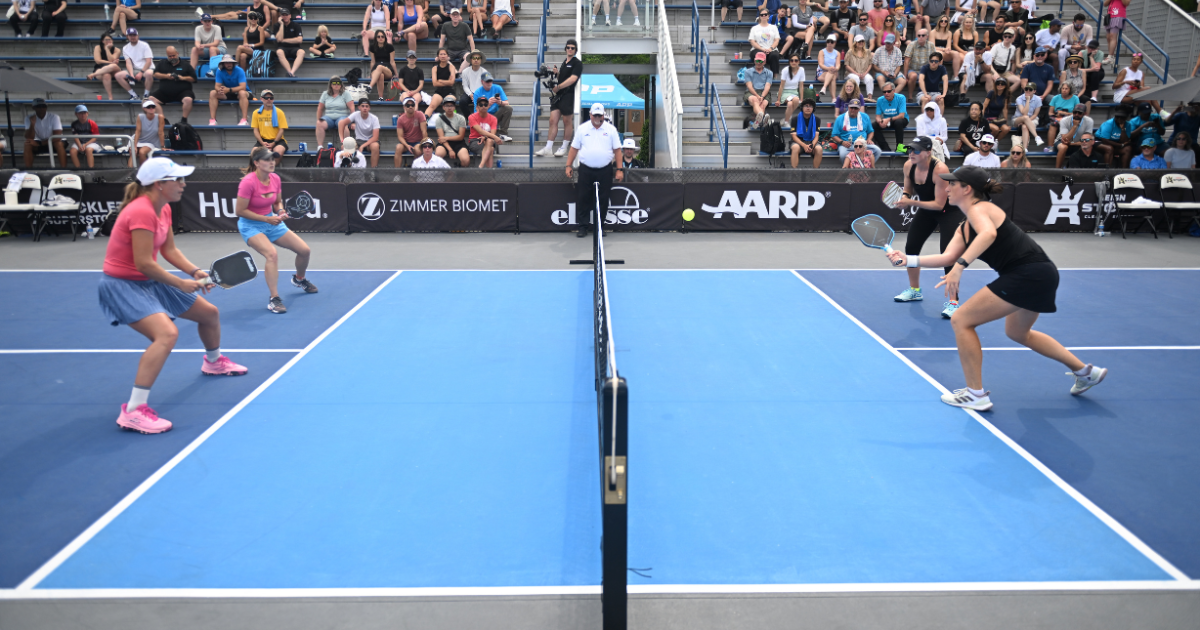
Photo by Association of Pickleball Players
A lob is a high, controlled shot designed to travel over your opponents’ reach and land deep near the baseline. The purpose isn’t to win the point outright, although sometimes it does. The real purpose is to reset the point, change positioning, or force your opponents to hit a shot they don’t want to hit.
Sometimes you’re late, stretched, or defending hard volleys. A well-executed lob can give you and your partner time to recover, reestablish balance, and get back into the point instead of trying to force a low-percentage counterattack.
Not everyone moves well backward. Not everyone hits clean overheads. At the recreational level and even at higher levels, this matters. If an opponent consistently mishits overheads or backs up awkwardly, the lob becomes a legitimate tactic.
Again, the lob only works when it’s unexpected. When used sparingly, it keeps opponents honest and prevents them from sitting on dinks or speed-ups. The moment it becomes predictable, it loses its power.
Control Matters More Than Creativity
This is where it gets real: if you can’t control a lob, you shouldn’t be hitting it!
A reckless lob doesn’t just cost points. It creates safety issues. A short lob forces your partner to defend an overhead coming at their body, head, or face. Not pretty.
I’ve experienced this firsthand. In one tournament, there was a lob gone wrong by my opponent that gave me an overhead. I smashed the ball into the throat of the opponent across the net from me. Obviously not on purpose, but it happened because she didn't have her paddle up to protect herself. I felt horrible. Her partner put her in harm's way.
If you want to add the lob to your game, earn it. Practice it. Learn when it makes sense. And most importantly, understand that sometimes the smartest play is not hitting it at all.
About the Author: Gina Cilento is a top 10 Senior Pro and multi-APP medalist who splits her time between competing and coaching. She’s the co-founder of The Pickleball Lab, a pod player for the Denver Iconics in the National Pickleball League, and co-host of Keeping It Real with Gina & Neil. Off the court, Gina shares her passion through her apparel line, The Pick, and her work with Empower Pickleball.
