

The "Shake & Bake" Deconstructed: How to Master Pickleball's Best 1-2 Punch
It’s no secret that in pickleball, the serving team is at a disadvantage. The returning team gets to advance to the kitchen line first, giving them a better court position. The serving team is left in the difficult position of hitting a third shot.
One way the serving team can neutralize that advantage is with a coordinated, aggressive attack— cue the shake and bake.
In its simplest form, the shake and bake is a third shot drive by one player, followed by an aggressive volley from their partner. When it comes to execution, that’s easier said than done. Let’s take a closer look.
The Roles
The shake and bake is a great example of two players working on the same page to create offense. It’s like pickleball’s version of the pick-and-roll, and each player has their own role.
Player one is responsible for hitting a sharp, low drive that puts their opponent in a difficult situation. The goal is to force a pop-up that can be easily put away by their crashing partner.
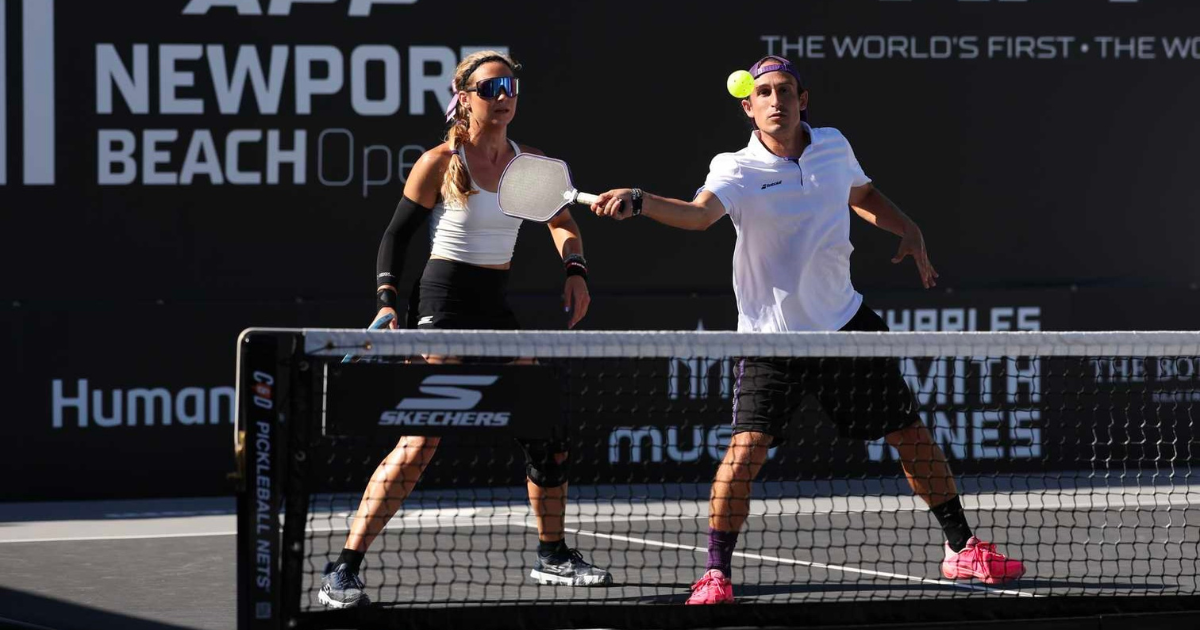
Photo by The APP
Player two is responsible for getting into a good position for the next shot and hitting an aggressive volley to end the point. They must hustle up to the kitchen line and trust that their partner will be able to execute an effective drive.
If the drive is a dud, it’s likely that player two will pay the price with a hard-hit ball at their feet or at their body.
Remember, timing is crucial here. The key is to start moving when you see a return that your partner is going to drive. Don’t wait to evaluate whether the third shot is a good one. Get in position and get ready to put the next ball away.
The Target
One way to upgrade your shake and bake is to have a specific target in mind. The drive should target the opponent directly in front of the player driving the ball. This will give the opposing team less time to react than a cross-court drive.
It also allows both partners to be on the same page. Player two can crash more effectively when they know where the ball is headed and don’t have to cover the whole court.
Pro tip: Target the paddle-side hip of the straight-ahead opponent to make a pop-up more likely and reduce the odds of the drive being turned against you.
The Situation
A third shot drive is most effective on a shorter return. If the serve return is deep and pushes you off the baseline, the shake and bake becomes riskier.
Look for a return in the midcourt that bounces up high to break out the shake and bake.
The Cleanup
If the first drive is unsuccessful and the opponent blocks the ball back to player one, don’t panic. Remember that your partner is in a vulnerable spot at the kitchen line.
If you’re able to reload in time, hit another drive with the same target in mind. If you’re caught in a tough position, try to land a drop in the kitchen and advance forward at a normal pace.
Any attack in pickleball is more effective when it’s coordinated. Get on the same page with your partner about how often you’d like to drive the ball and when you’d like them to crash. As you execute the shake and bake time and again, you’ll develop trust and timing with your partner.
After a while, you’ll be thinking as one and staying two steps ahead of your opponents.
