

Why Women Need to Stop Apologizing on the Pickleball Court
There’s a sound that shows up on pickleball courts everywhere.
It’s quick. Automatic. Almost invisible.
“Sorry.”
You hear it after missed dinks, balls down the middle, or moments of uncertainty. And while it’s usually meant as courtesy, it’s become one of the most counterproductive communication habits in women’s doubles.
If 2026 is about playing with more confidence, clarity, and intention, this is a habit worth breaking. Not because mistakes don’t happen. But because how we respond to them matters more than we’ve been taught to believe.
Why “Sorry” Becomes a Reflex—Especially for Women
Women don’t apologize more because they mess up. They apologize more because the bar for what feels “apology-worthy” is lower.
Research consistently shows that women are socialized to prioritize harmony, likability, and emotional smoothing. On the court, that often translates to apologizing preemptively. Not just for actual errors, but for taking space, asserting a call, or trying something aggressive that doesn’t land.
Underneath that reflex is usually a quiet message: Please don’t be upset. I don’t want to disappoint you.
The problem is that repeated apologizing subtly trains your brain to associate mistakes with personal failure. Over time, that erodes confidence. It reinforces self-doubt. And it shifts your internal focus away from execution and toward judgment.
Apologizing when you’ve genuinely done something wrong is fine. Apologizing every time a point doesn’t go your way is not. On the court, it reads less like accountability and more like uncertainty—even when that’s not what you intend.
How Over-Apologizing Disrupts Rhythm and Partnership Trust
Pickleball moves fast. Doubles especially. Momentum matters.
Every unnecessary apology pulls attention backward. Instead of resetting for the next point, both players are momentarily stuck in the last one. Rhythm breaks. Energy dips. The mistake lingers longer than it should.
It also places emotional weight on your partner. They don’t need reassurance duties mid-game. They don’t need to manage your confidence while also tracking the score, the strategy, and the opponents.
Over time, frequent apologies can quietly undermine partnership trust. Not because your partner is annoyed, but because it signals hesitation. And hesitation creates doubt.
In strong doubles partnerships, communication stays practical and forward-looking, even after mistakes.
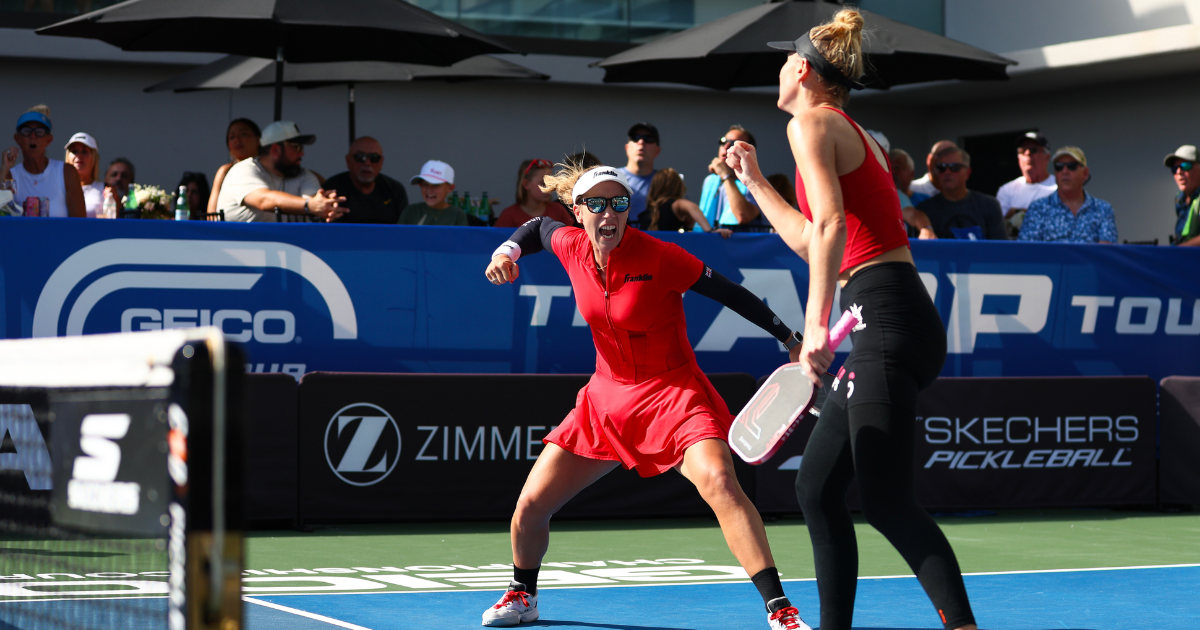
Photo by Association of Pickleball Players
What to Say Instead: Communication That Actually Helps
The goal isn’t silence. It’s useful communication.
Here are simple replacements that do real work on the court:
“Mine.” Clear ownership. Prevents confusion. Shows confidence before the ball becomes a problem.
“Yours.” Just as important. Communicates trust and decisiveness instead of hesitation followed by regret.
“Switch.” Short, tactical, and necessary when positioning changes. This is information, not emotion.
“Nice try.” Keeps aggression alive. Reinforces effort and decision-making without assigning blame.
Non-verbal cues matter too. Paddle taps, nods, eye contact. Sometimes acknowledgment without commentary is the most efficient reset.
If something truly needs to be owned, a quick “my bad” works. Neutral. Brief. Then move on. The difference is intention. You’re not shrinking yourself to keep the peace. You’re keeping the team moving forward.
Confident Communication Strengthens Doubles Chemistry
Doubles chemistry comes from staying level, not from playing flawless points.
Teams that communicate clearly stay calmer under pressure. They recover faster from mistakes. They trust each other to take space, make decisions, and stay aggressive when it counts.
Confidence is contagious. So is uncertainty.
When you remove constant apologies from your game, you create space for better things: trust, flow, and shared momentum. You stop narrating mistakes and start playing the next ball.
It directly affects how well a partnership holds up during tight games.
The Reset for 2026
Mistakes are part of the game. Apologizing for them doesn’t make you a better partner.
Clear, neutral communication does.
If you want to play with more confidence this year, start by paying attention to what you say after points don’t go your way. Replace reflexive apologies with language that supports execution and partnership.
Your partner doesn’t need “sorry.”
They need someone ready, composed, and focused on the next shot.
That’s the shift.
And it’s one worth making.
